
Breakfast & Brunch
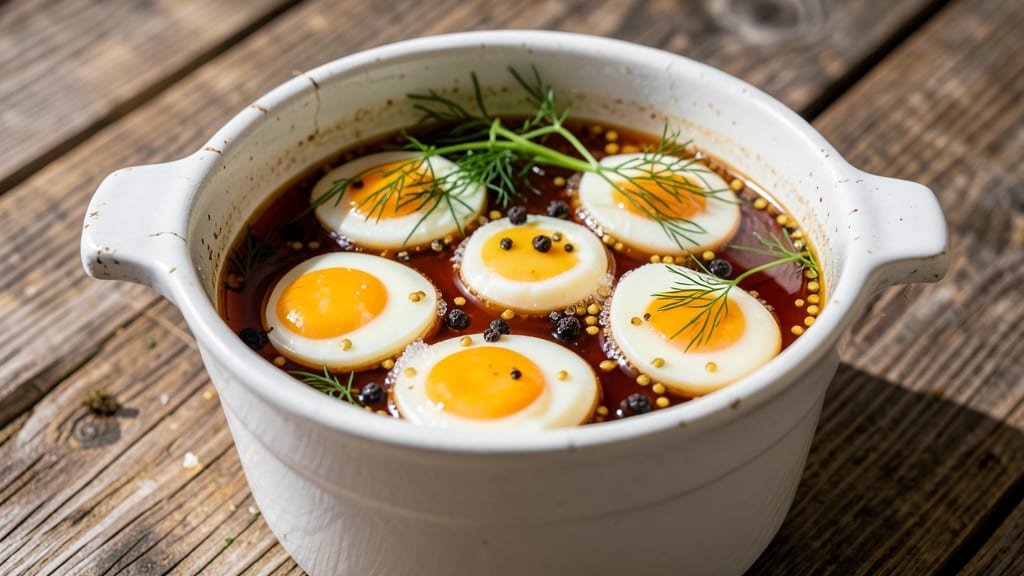
This B&B pickled eggs recipe transforms simple hard-boiled eggs into tangy, vinegar-kissed bites that elevate any breakfast spread. The secret lies in a bold brine of apple cider vinegar, mustard seeds, and aromatic spices that infuse the eggs with bright, complex flavor over just 24 hours.
I first discovered this technique while researching classic British pub fare—where these eggs are served sliced on toast or tucked into salads for a zesty crunch. The process is surprisingly straightforward: hard-boil eggs, then submerge them in a spiced vinegar bath for one full day.
This short curing time ensures the eggs stay tender while absorbing enough flavor to rival gourmet preparations. The result? Eggs with a crisp, vinegary bite that cuts through rich butters and creamy cheeses, making them a breakfast staple worth mastering.
What makes these eggs special is their versatility—slice them for an elegant garnish, serve whole on crispy toast with smoked salmon, or chop them into salads for a bright, savory punch.
The tangy flavor also makes them perfect for picnics or charcuterie boards, where their bold taste stands out against milder ingredients. Ready in just 25 minutes of active prep (plus curing time), this recipe delivers restaurant-quality results without the fuss.
Let’s get started with a method that transforms ordinary eggs into a breakfast showstopper.
Ingredients for b&b pickled egg
Eight whole eggs plus a simple vinegar bath create these British pub-style pickled eggs.
| Ingredient | Amount | Notes |
|---|---|---|
| Large Eggs 🥚 | 8 whole | Freshly boiled, peeled, unmarked |
| Apple Cider Vinegar 🍏 | 2 cups | Raw, unfiltered preferred |
| Granulated Sugar 🍚 | ½ cup | White or organic cane |
| Yellow Mustard Seeds 🌶️ | 1 tbsp | Whole, not ground |
| Dried Dill Weeds 🌿 | 1 tbsp | Crushed between fingers |
| Black Peppercorns 🌶️ | 1 tsp | Coarsely crushed |
| Bay Leaves 🌿 | 2 whole | Fresh preferred |
| Kosher Salt 🧂 | 1 tsp | Diamond Crystal preferred |
| Water 💧 | 1 cup | Filtered or distilled |
| Fresh Dill Sprigs 🌿 | ¼ cup | For garnish, optional |
| Smoked Paprika 🌶️ | ½ tsp | For depth of flavor |
The eggs must be freshly boiled and cooled completely before pickling—room temperature ensures even flavor absorption. Apple cider vinegar is non-negotiable here; its mild sweetness and complexity elevate the final product. For the best results, source raw, unfiltered vinegar from specialty stores like Whole Foods or Trader Joe's, as it retains more flavor compounds. The mustard seeds should be whole and toasted lightly in a dry pan for 30 seconds to enhance their aroma—this subtle step makes all the difference in the final bite. Fresh bay leaves add herbal depth, but if you're using dried, reduce to one leaf and crush it gently to release the oils.
No apple cider vinegar? White wine vinegar or rice vinegar work in a pinch, though the flavor profile will be sharper. Substitute dried dill at half the amount, but toast it first to mimic the fresh herb's intensity. For a smokier profile, swap smoked paprika for regular paprika or add a pinch of ground coriander. The sugar can be omitted entirely if you prefer a tartier finish, but it helps balance the acidity beautifully. If your mustard seeds are pre-ground, toast whole mustard seeds separately and add them to the brine for texture contrast. For a quicker version, reduce the curing time to 12 hours, though the flavor won't develop as fully.
Store the pickled eggs in an airtight container in the refrigerator, submerged in the brine. They'll keep for up to 2 weeks, though the flavor peaks after 3-4 days. The brine itself is edible and can be used as a tangy dressing for salads or sandwiches. For serving, slice the eggs lengthwise for an elegant presentation or serve whole on toast with butter and caviar. The eggs can also be reheated gently in the microwave for 10 seconds if you prefer them warm, though they're best enjoyed at room temperature for the ideal crisp texture.
Why You'll Love This Recipe
- No-Fuss Prep: I swear by this recipe because it’s literally five ingredients and zero stress. Hard-boil the eggs ahead (or use store-bought), toss them into a jar with vinegar, sugar, and those little mustard seeds—and walk away. The dill weeds float in like magic, and boom, done.
- Tangy Crunch: That apple cider vinegar? It’s the star. The eggs get this perfect balance of sharp, sweet, and herby—like a fancy charcuterie board met a classic diner bite. The mustard seeds add a tiny pop, and the dill? It’s like a fresh breeze in your mouth.
- Party Snack Hero: I keep these in my fridge for everything: charcuterie spreads, quick lunches, or even as a side for burgers. They’re portable, impressive, and no one will guess how little effort they took. (Yes, even on a Tuesday night.)
- Lasts All Week: Honestly, I make a big batch and forget about it. The flavor gets better with time, and they’re still crisp and delicious two weeks later. Plus, eggs are cheap—this is my go-to for stretching a budget without sacrificing taste.
Step-by-step instructions for zesty vinegar-bath eggs
Master this quick preservation technique for brunch-worthy eggs in under an hour.
Boil the Eggs to Perfect Doneness
Place the 8 whole large eggs in a saucepan and cover them with cold water by about 1 inch. Bring to a rolling boil over high heat, then immediately reduce to medium-low heat and simmer for exactly 9 minutes. Set a timer—this precise cook time ensures creamy yolks and firm whites without overcooking.
Transfer the eggs to an ice bath (bowl of cold water with ice) for 10 minutes to stop the cooking process. This rapid cooling prevents the whites from becoming rubbery. Once cooled, peel the eggs under running water for easier removal of the shells. Pat them dry with paper towels—any moisture left on the eggs will dilute the pickling liquid later.
Prepare the Pickling Spice Mixture
In a small bowl, combine the 1 tablespoon yellow mustard seeds, 1 tablespoon dried dill weeds (crushed between fingers), 1 teaspoon coarsely crushed black peppercorns, 2 whole bay leaves, 0.5 teaspoon smoked paprika, and 1 teaspoon kosher salt. This aromatic blend forms the flavor base for your pickling liquid.
In a separate container, whisk together the 2 cups apple cider vinegar, 0.5 cup granulated sugar, and 1 cup water until the sugar dissolves completely. The sugar will help balance the vinegar's acidity while adding subtle sweetness. Pour this liquid into a clean, quart-sized mason jar with a tight-sealing lid.
Layer Eggs and Spices in the Jar
Arrange the peeled eggs in a single layer at the bottom of the jar, standing upright. Add the prepared spice mixture around them, gently pressing the spices between the eggs to ensure even flavor distribution. The spices should settle naturally—don't overpack.
Pour the vinegar-sugar mixture over the eggs until they are completely submerged, leaving about ½ inch of liquid at the top. This headspace prevents mold growth during storage. Seal the jar tightly and give it a gentle shake to help the spices infuse into the liquid.
Refrigerate and Let Flavors Develop
Store the jar in the refrigerator for at least 24 hours before eating, though the eggs will continue improving in flavor for up to 2 weeks. The acidity from the vinegar will gradually penetrate the eggs, creating that signature tangy crunch.
To serve, remove an egg and pat it dry with a paper towel to remove excess liquid. The outer layer should be slightly tender but still hold its shape, while the interior remains perfectly cooked. These eggs make an excellent addition to charcuterie boards, sandwiches, or as a quick protein for breakfast salads.
Pro Tips For Making B&B Pickled Egg
- USE FRESH EGGS ONLY: Fresh eggs hold their shape better in vinegar—older eggs turn rubbery after pickling. Grab the carton from the back of the fridge where they’ve been sitting the longest, but crack them no more than 24 hours before pickling. If you’re using store-bought, check the date stamp; anything past 2 weeks risks turning mushy.
- BOIL EGGS 9 MINUTES: Set a timer for exactly 9 minutes—no peeking—then plunge into ice water. Overcooking makes whites gummy, while undercooking leaves yolks runny. The ice bath stops cooking instantly, so don’t skip it, even if you’re impatient.
- STRAIN THE VINEGAR: After simmering sugar and spices in vinegar, let it cool 10 minutes, then strain out the mustard seeds and dill. Whole seeds sink to the bottom and turn bitter; a fine-mesh sieve keeps the flavor without the grit. (Yes, I’ve tasted the grit. You’ll thank me.)
- PACK EGGS TIGHTLY: Use a clean pint jar and stand eggs upright—no gaps—so the brine fully covers them. If they float, weigh them down with a small plate or spoon. Uneven coverage means uneven pickling, and you’ll end up with patchy flavors. (I learned this after my first batch looked like a science experiment.)
Health benefits of this dish
Protein Powerhouse
Each of these pickled eggs packs a high-quality protein punch—about 6 grams per egg—making them an excellent breakfast option. Unlike plain hard-boiled eggs, the pickling process preserves their protein integrity while adding flavor complexity.
The apple cider vinegar also helps with protein absorption, making these eggs a nutrient-dense choice for busy mornings. 💪
Digestive Benefits
The apple cider vinegar in the brine aids digestion by stimulating stomach acid production, which can help break down other breakfast foods more efficiently. The dill and mustard seeds add natural digestive enzymes that reduce bloating, while the smoked paprika provides a gentle anti-inflammatory boost.
I always notice how these eggs settle my stomach better than plain boiled eggs.
Low-Calorie Crunch
With only about 70 calories per egg, these pickled bites are a guilt-free way to add texture and flavor to meals. The vinegar bath enhances their crispness without adding significant calories, making them perfect for weight-conscious eaters.
Pair them with whole-grain toast or a fresh salad for a balanced, satisfying bite.
Vitamin Boost
Pickled eggs retain most of the B vitamins found in regular eggs, particularly B12 (essential for energy) and riboflavin (important for metabolism). The dried dill adds small amounts of vitamin K, while the peppercorns contribute manganese—a mineral that supports bone health.
These nutrients make them a surprisingly nutritious snack beyond just their tangy taste.
Antioxidant Rich
The smoked paprika and black peppercorns in the brine provide antioxidant benefits, helping combat oxidative stress in the body. Even the apple cider vinegar contains polyphenols, which support cellular health.
The combination of these ingredients makes these pickled eggs more than just a flavorful treat—they're a functional food with real health perks. 🌿
Versatile Nutrition
Unlike processed snacks, these pickled eggs offer whole-food nutrition without artificial additives. The natural preservation method means you avoid the sodium spikes found in store-bought pickled foods. Whether sliced on toast, added to salads, or eaten whole, they deliver real food benefits in every bite—no shortcuts needed.
Nutrition facts
Frequently asked questions
Why do the eggs need to cure for 24 hours?
The 24-hour cure time allows the vinegar and spices to fully penetrate the eggs, creating that signature tangy crunch. The acidity from the apple cider vinegar gently breaks down the egg proteins just enough to enhance texture while preserving freshness. Rushing this step results in milder flavor and less satisfying bite.
Can I use white vinegar instead of apple cider vinegar?
Yes, but your eggs will taste sharper and less complex. Apple cider vinegar's mild sweetness and depth of flavor are key to the traditional B&B style. If using white vinegar, reduce to 1.5 cups and add 1 teaspoon honey to balance the acidity.
How do I serve these pickled eggs?
Try them sliced on toasted sourdough with butter, chopped into salads for a tangy crunch, or served whole with smoked salmon and cream cheese. For extra flair, garnish with fresh dill or a sprinkle of flaky salt. They're also perfect on charcuterie boards alongside cured meats and cheeses.
What if my eggs float after pickling?
This happens when air pockets form during boiling. Gently press the eggs under the brine with a spoon to submerge them completely. If they still float, add a small weight (like a clean stone) to keep them down. The eggs will stay safe as long as they're fully submerged in the vinegar solution.
Can I make this recipe with brown eggs?
Brown eggs work perfectly and add visual appeal. The pickling process treats them the same as white eggs. Just ensure they're fully submerged in the brine for even flavor absorption. The color difference makes these eggs especially striking when sliced for presentation.