
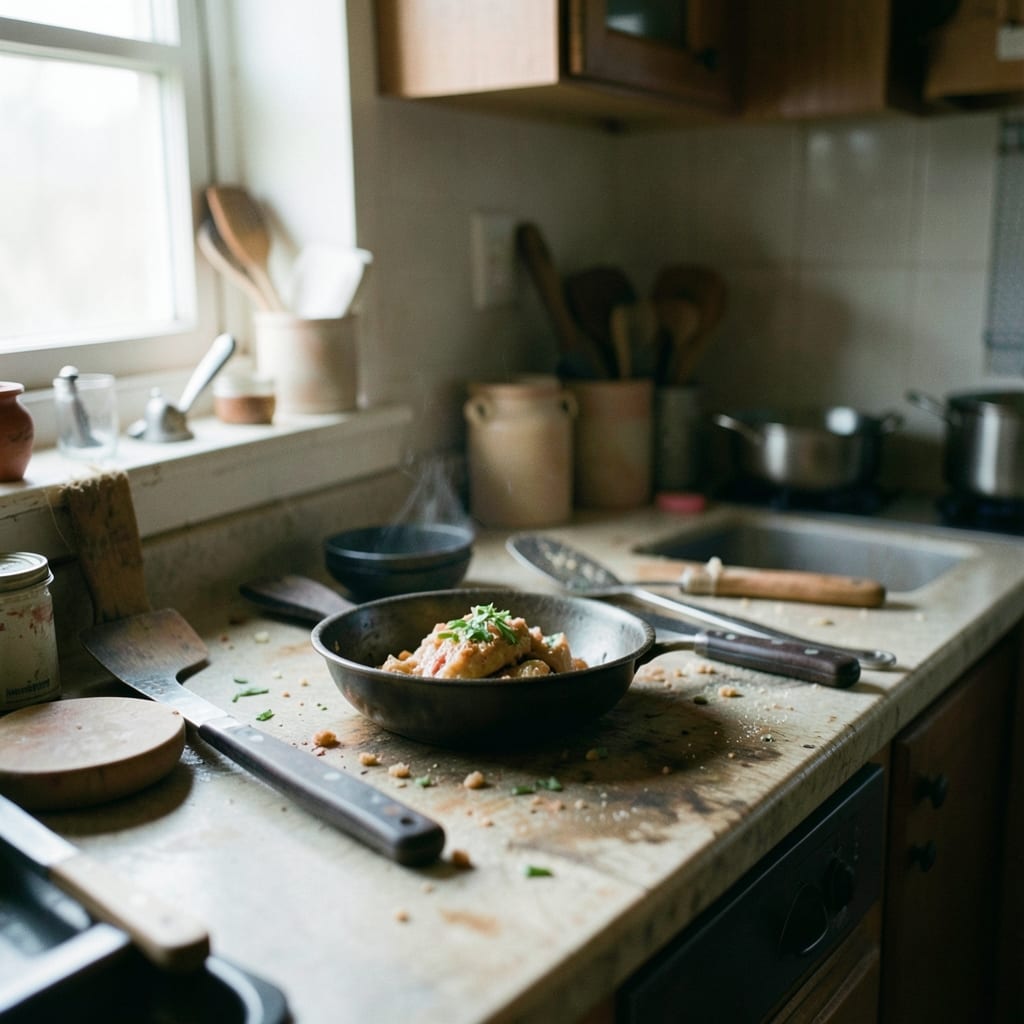
It started with one thing that kept failing
It was a sunny afternoon in early spring, and I was trying to make a perfect omelette—light, fluffy, with eggs that held their shape but still melted on the tongue. The first attempt came out rubbery, the second greasy, the third burnt on the edges while the center stayed raw.
I’d cracked the eggs into a bowl, whipped them just until the yolks and whites were barely blended, and then—nothing. The pan hissed, the eggs clung, and no matter how gently I folded them, the texture was wrong.
The recipe called for a nonstick pan, medium heat, and constant stirring, but the eggs always seemed to fight me. They’d either turn into a dense slab or a runny mess, no matter how carefully I timed the cooking.
I’d adjust the temperature, use less butter, even try adding a splash of cream to loosen the texture—nothing worked. The kitchen filled with the smell of overcooked eggs, and I’d start over, only to repeat the same mistakes.
By the fifth attempt, I was frustrated enough to scrap the whole method. I tossed out the eggs, wiped down the pan, and decided to try something radical: no stirring at all. Just letting the eggs cook undisturbed.
That time, they set too fast, forming a tough crust before the center was done. I’d failed again, but this time, I’d at least learned what *not* to do.
Nine tries before it worked
The next morning, I started over, this time keeping a strict log of every change. The sixth attempt involved preheating the pan for exactly three minutes, using only cold eggs straight from the fridge, and letting them sit in the pan for a full minute before folding.
The result was better—the eggs were tender, but the edges still browned too quickly. I adjusted the heat to low and tried again, only to watch the eggs turn into a watery pile.
On the seventh try, I added a pinch of salt to the eggs before whipping them, which helped, but the texture was still uneven. The eighth attempt introduced a new variable: a splash of cold water into the pan before adding the eggs.
That time, the omelette held together, but the flavor was off, bland where it should have been rich. I realized I’d overcomplicated it—sometimes, less interference is better.
It wasn’t until the ninth try, late in the afternoon, that I finally got it right. I used a well-seasoned cast-iron skillet instead of nonstick, let the eggs cook on low heat for exactly 45 seconds before folding, and resisted the urge to peek.
The result was golden on the outside, creamy inside, with no rubbery bits or raw centers. I’d spent hours, ruined multiple batches of eggs, and nearly given up—but that perfect omelette was worth every mistake.
The mind behind these pages

I’m Vivian Salazar, and I’ve spent my life chasing the kind of meals that feel like a hug—whether it’s a weeknight dinner or a dessert that stops people mid-conversation. My grandmother’s chicken and dumplings were the first dish I ever stole bites of, and that obsession never left me.
Now, I spend my days testing recipes, tweaking flavors, and sharing the kind of dishes that make cooking feel like alchemy.
I’m the kind of person who doesn’t just try something once. If a recipe fails, I’ll remake it nine times before I give up—or until I’ve figured out why it didn’t work. My kitchen looks like a war zone after a long day of testing, but I don’t care.
My grandmother used to say I had ‘a stubborn streak wider than a river,’ and she wasn’t wrong. That same stubbornness is what keeps me here, turning mistakes into lessons and lessons into recipes.
When I’m not in the kitchen, you’ll find me with a book on my lap, a garden trowel in hand, or sneaking bites of whatever I’m cooking before it’s done. I’ve never met a plant I couldn’t kill, but I’ve also never met a recipe I couldn’t fix.
This site exists because of that omelette—the one that took nine tries to get right. Every recipe here is written the same way: with patience, attention to detail, and a refusal to accept failure as the end of the story.
Everything here is written the way that was
Every recipe on *Egg Recipes Sizzle* starts with a failure. Not always a spectacular one—sometimes it’s just a quiet disappointment, like eggs that didn’t hold together or a sauce that separated. But every mistake is logged, every adjustment noted, and every near-success dissected.
We don’t just write down what worked; we write down *why* it worked, so you can trust the process even if your first attempt isn’t perfect.
The notes you’ll find in these recipes aren’t just extra steps—they’re the scars from the battles fought before the dish ever made it to the page.
If a recipe says ‘let it rest for 10 minutes,’ it’s because we learned the hard way that skipping that step means a dry cake or a broken crust.
If it warns about overmixing, it’s because we’ve seen the difference between a tender omelette and a dense one, and we’re not letting you make the same mistake.
Six months after a recipe is published, we test it again—sometimes because a reader asked, sometimes just to make sure it still holds up. If it doesn’t, we rewrite it. That’s the deal: no shortcuts, no assumptions, and no recipes that haven’t earned their place here.
What that means for you
You’ll find no shortcuts here, no ‘trust me’ moments, and no recipes that haven’t been tested until they’re foolproof.
Every dish is written with the same care we put into that first omelette—because we know how easy it is to get frustrated, how quickly a recipe can turn into a disaster if one step is missed.
But you’ll also find something else: the confidence that comes from knowing someone has already failed (and fixed) the things that could go wrong.
What you won’t find are vague instructions, overcomplicated techniques, or recipes that sound good on paper but fall apart in practice. If a dish requires a specific tool or ingredient, we’ll tell you why it’s worth it.
If there’s a trick to getting it right, we’ll share it—not as a secret, but as a lesson learned.
If a recipe here didn’t work for you—or if you’ve got a question about something we missed—send us a message. We’d love to hear what went wrong, what you tried, and how you fixed it. Your feedback is the only thing that keeps these pages improving.
Now, go try it again.
The recipes are grouped by category: Appetizers, Beverages, Breakfast & Brunch, Desserts, Main Courses and Reviews.