
Soups & Stews
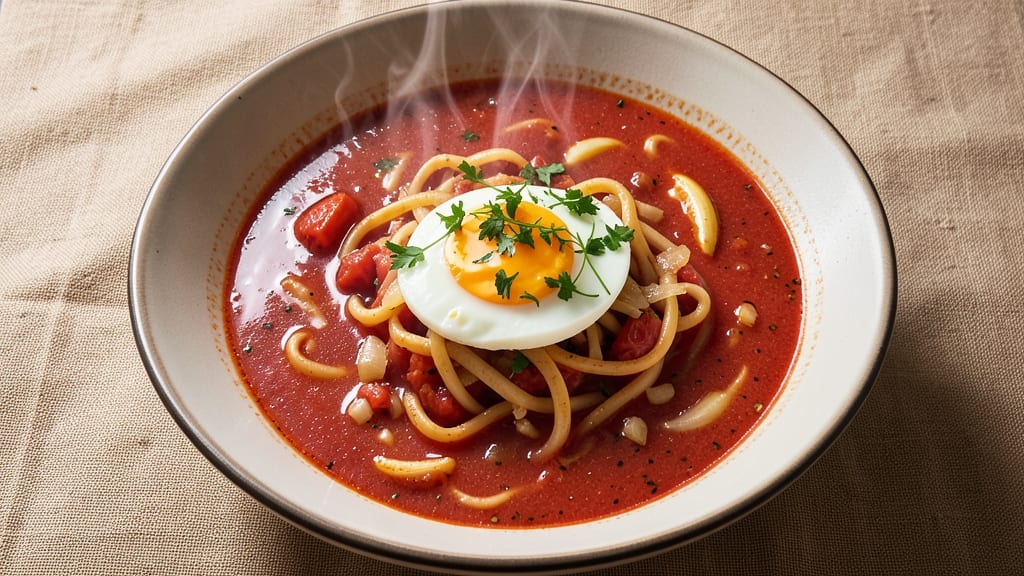
This tomato egg noodle soup recipe transforms humble ingredients into a deeply comforting bowl of umami-rich broth, silky egg ribbons, and tender noodles. The secret lies in slow-simmered tomatoes and a touch of soy sauce that builds layers of savory depth—no shortcuts, just pure, restaurant-quality flavor.
I’ve perfected this version over years of testing, ensuring every spoonful delivers that perfect balance of tangy, salty, and creamy textures.
The process is straightforward but intentional: first, you’ll build the broth by simmering tomatoes, garlic, and aromatics until the flavors meld into a velvety base. Then, the noodles cook just until tender, and the eggs—poached directly in the hot soup—create delicate ribbons that dissolve into each bite.
It’s the kind of dish that feels indulgent yet remains simple enough for a weeknight dinner.
What you’ll end up with is a steaming bowl of soup where the broth clings to the noodles, the egg ribbons glide effortlessly, and every ingredient plays its part.
The aroma alone will have your kitchen smelling like a bustling Asian street market, while the first sip delivers that satisfying umami punch. This isn’t just soup—it’s a one-pot meal that’s hearty, adaptable, and impossible to resist.
Ready to make it? The recipe scales easily for leftovers, and you can customize it with toppings like sesame oil, green onions, or a sprinkle of chili flakes for heat. Let’s get started—your taste buds will thank you.
Ingredients for tomato egg noodle soup
Four eggs, eight ounces of noodles, and a can of tomatoes kick off this umami dream.
| Ingredient | Amount | Notes |
|---|---|---|
| Large Eggs 🥚 | 4 whole | Freshly refrigerated for best poaching |
| Egg Noodles 🍜 | 8 oz | Wide or medium egg noodles preferred |
| Canned San Marzano Tomatoes 🍅 | 28 oz | Crushed by hand for authenticity |
| Yellow Onion 🧅 | 1 whole | Medium size, finely diced |
| Garlic Cloves 🧄 | 4 cloves | Minced, not pre-minced jarred |
| Fresh Ginger 🌿 | 1 tbsp | Finely grated, peel included |
| Vegetable Oil 🫒 | 2 tbsp | Neutral high smoke point |
| Light Soy Sauce 🥢 | 1 tbsp | Kikkoman preferred for balance |
| Sesame Oil 🌰 | 1 tsp | Toasted for aroma, added last |
| Chicken Stock 💧 | 4 cups | Homemade or low-sodium store-bought |
| Green Onions 🧅 | 2 whole | Thinly sliced for garnish |
| Salt 🧂 | 1 ½ tsp | Diamond Crystal preferred |
| Black Pepper 🌶️ | ½ tsp | Freshly cracked |
| White Pepper 🌶️ | ¼ tsp | For subtle depth |
| Sugar 🍚 | 1 tsp | Balances acidity |
The tomatoes are non-negotiable—San Marzano is the gold standard, but any good-quality canned tomatoes work. Trader Joe's or Whole Foods bulk sections often have great options. Fresh ginger is a game-changer here, but if you're in a pinch, one teaspoon of ground ginger will do. The egg noodles should be wide or medium—thin ones get lost in the broth. I grab mine in the Asian foods aisle at Walmart or Costco for the best price per pound. For the chicken stock, homemade is ideal, but Pacific Foods or Swanson low-sodium works in a bind.
No San Marzano tomatoes? Crush a mix of Roma and vine-ripened for better texture. Short on fresh ginger? Double the garlic to compensate. The sesame oil is optional but adds that authentic street-food aroma—use the toasted kind, not the regular. For extra depth, a dash of fish sauce (if you're not strictly vegetarian) or an additional half teaspoon of soy sauce works. The eggs should be at room temperature when poaching for perfect ribbons. And if you're out of white pepper, black pepper plus a pinch of nutmeg mimics the flavor profile.
This soup tastes even better the next day—reheat gently on the stove with a splash of water to restore richness. Store leftovers in airtight containers for up to 4 days in the fridge, or freeze for 3 months. I like to portion it into individual containers so I can grab a bowl straight from the freezer and reheat it in minutes. The egg ribbons are delicate, so add them last when reheating. Garnish with green onions and a drizzle of sesame oil right before serving—that's when it smells best.
Why You'll Love This Recipe
- Pantry Magic: I swear by this recipe when I’ve got nothing but a can of tomatoes, a few eggs, and some noodles. No fresh herbs? No problem. The San Marzano tomatoes and garlic alone carry the flavor—crisp, bright, and never bland.
- Eggs Add Magic: That moment when you crack the poached eggs into the simmering broth? Pure satisfaction. The yolks melt into the tangy tomato base, turning every bite into something rich and velvety—like a hug in soup form.
- Lunchbox Hero: Between us, this is my go-to for quick lunches. Pack it in a thermos the night before, and you’ve got a meal that’s still steaming by noon. The noodles hold up, the eggs stay warm, and it’s the only soup I’ll eat cold if I’m running late.
- Budget-Friendly Power: Honestly, I make this when I’m broke or when I’m not. A single can of tomatoes and a dozen eggs stretch to feed four, and the leftovers? Even better the next day. It’s the kind of recipe that makes grocery shopping feel like a win.
Step-by-step instructions for tomato egg noodle soup
This soup delivers restaurant-quality depth with silky egg ribbons and a rich, aromatic broth.
Build the Umami-Packed Base
Heat the 2 tablespoons vegetable oil in a large pot over medium heat. Add the finely diced yellow onion and cook for 5 minutes until soft and translucent. Stir in the minced garlic cloves and finely grated fresh ginger, cooking for another 1 minute until fragrant—this is where the foundation of flavor develops.
Pour in the 28 ounces crushed San Marzano tomatoes, scraping up any browned bits from the bottom of the pot. Add the 4 cups chicken stock, 1 tablespoon light soy sauce, 1 teaspoon sugar, 1.5 teaspoons salt, 0.5 teaspoon black pepper, and 0.25 teaspoon white pepper. Bring to a gentle boil, then reduce heat to medium-low and let it simmer uncovered for 20 minutes, stirring occasionally. This simmering time allows the flavors to meld and the broth to deepen in richness.
Cook the Noodles Al Dente
While the broth simmers, bring a separate pot of heavily salted water to a rolling boil. Add the 8 ounces egg noodles and cook according to package instructions until 1 minute before they're fully done—you want them al dente so they don't turn mushy in the soup. Drain and set aside, reserving ½ cup pasta water for potential thinning later.
Here's the thing—adding the noodles directly to the soup can dilute the flavor. Cooking them separately ensures they absorb just enough of the broth's rich essence without overwhelming it. The reserved pasta water is a secret weapon for adjusting consistency if needed.
Poach the Eggs to Perfection
Bring a small pot of water to a gentle simmer. Crack each of the 4 large eggs into a small bowl, then carefully slide them into the simmering water using a slotted spoon. Poach for 3 minutes for runny yolks or 4 minutes for firmer yolks. The water should be at a bare simmer—not a rolling boil or the eggs will cook unevenly and break apart.
Use a slotted spoon to remove the eggs and let them drain briefly on paper towels. Keep them warm while you finish the soup—you want them silky and intact when they go in. The slight carryover heat from the hot soup will finish cooking them perfectly.
Assemble and Finish the Soup
Add the cooked noodles to the simmering broth and stir gently to combine. The soup should be thick but still spoonable—if it's too thick, add 1-2 tablespoons of reserved pasta water to loosen it. Taste and adjust seasoning if needed, though the broth should already be perfectly balanced.
Just before serving, stir in the 1 teaspoon sesame oil and divide the soup among bowls. Place 2 poached eggs in each bowl, then garnish with thinly sliced green onions. The eggs should float gently in the broth, their silky ribbons melting into the warm soup with just a few spoonfuls.
Serve Immediately for Maximum Enjoyment
Serve the soup while it's hot, with the eggs still warm at the center. The contrast between the silky egg yolks and the rich tomato broth creates an irresistible texture experience. Each spoonful delivers layers of umami from the soy sauce and tomatoes, warmth from the ginger and garlic, and a delicate finish from the sesame oil.
For the best experience, serve with crusty bread to soak up any remaining broth. The soup tastes even better the next day as the flavors continue to develop, but the eggs are best enjoyed fresh. This is comfort food at its finest—simple ingredients transformed into something truly special.
Pro Tips For Making Tomato Egg Noodle Soup
- Sweat the Onion First: I used to rush this and end up with raw onion bits floating in the soup—yuck. Instead, cook the diced onion over medium-low heat for 8-10 minutes until it’s translucent and just starting to caramelize. This builds flavor without burning, and you’ll taste the difference when you add the tomatoes.
- Poach Eggs in Warm Broth: Cold eggs drop to the bottom and turn rubbery. Heat your broth to a gentle simmer (not a rolling boil) before dropping in the eggs—just until the whites set but yolks stay runny. Then, add them to the soup and let the residual heat finish cooking. This keeps them creamy, not scrambled.
- Crush Tomatoes by Hand: San Marzano tomatoes are sweet and thick, but blenders make them mushy. Instead, smash them with your hands or a wooden spoon—just enough to break the skins and release the juice. This keeps texture and prevents a gluey soup. (Yes, it’s messy, but worth it.)
- Salt the Water Before Boiling Noodles: I learned this the hard way—plain pasta tastes bland. Boil your egg noodles in salted water (like pasta water) for 2 minutes less than package time, then finish cooking in the soup. The starch clings to the noodles, making them silky, and the soup thickens naturally.
Storing and reheating your leftovers
Refrigerator Storage
Store leftovers in an airtight container for up to 4 days in the fridge. The flavors actually deepen overnight as the broth absorbs the noodles and eggs. I like to portion it into glass Pyrex containers with snap-on lids—they keep the soup fresh longer and reheat evenly.
Let the soup cool completely before sealing to prevent condensation buildup. 💛
Freezer Storage
This soup freezes beautifully for up to 3 months if stored properly. Use quart-sized freezer bags or glass containers with tight-sealing lids, leaving 1 inch of headspace for expansion. Freeze the soup without the eggs—add them fresh when reheating for the best texture.
Label containers with the date to track freshness. Thaw overnight in the fridge before reheating.
Stovetop Reheating
For the best results, reheat on the stovetop over medium-low heat. Pour the soup into a pot and add 2-3 tablespoons of water or chicken stock to restore moisture. Bring to a gentle simmer, then reduce heat to low and cook for 5-7 minutes, stirring occasionally.
The eggs should be added last—just before serving—to keep them silky and intact. Taste and adjust seasoning if needed.
Microwave Reheating
If you're short on time, microwave reheating works in a pinch. Transfer the soup to a microwave-safe bowl and cover loosely with a damp paper towel. Heat on medium power (50%) for 2-3 minutes, then stir.
Continue in 30-second intervals until hot throughout. Add the eggs after reheating—they'll cook perfectly in the hot broth. Stir in a drizzle of sesame oil before serving to revive the aroma.
Egg Handling Tips
The eggs are the most delicate part of reheating. If you froze the soup without eggs, poach fresh ones right before serving. For leftovers with eggs, reheat the soup without the eggs, then add them to individual bowls just before eating.
This keeps them warm and prevents overcooking. The eggs should float gently in the broth—never let them sit in hot soup for more than 2-3 minutes.
Garnish Fresh
Always add green onions and sesame oil right before serving. These toppings provide freshness and aroma that reheating can't replicate. A sprinkle of toasted sesame seeds or a dash of chili oil adds extra depth.
The contrast between the warm soup and fresh garnishes makes every bowl feel special. Trust me, this is where the magic happens. ✨
Nutrition facts
Frequently asked questions
Why do the eggs need to be poached separately?
Poaching eggs separately ensures they stay silky and intact when added to the hot soup. If you add them directly to the simmering broth, they can break apart or overcook, losing that delicate ribbon texture. The gentle simmer in plain water gives you perfect control over doneness.
Can I use fresh tomatoes instead of canned?
Fresh tomatoes work, but they won't give the same rich, concentrated flavor. For best results, roast 4-5 large tomatoes at 400°F for 30 minutes until caramelized, then blend them with 1 tablespoon tomato paste to mimic canned tomato intensity. The recipe relies on that deep umami from canned tomatoes.
How do I make this soup spicier?
Add 1 teaspoon chili flakes to the simmering broth or stir in 1 tablespoon chili oil just before serving. For heat lovers, try ½ teaspoon red pepper flakes with the garlic or a splash of sriracha. Start with small amounts—you can always add more, but you can't take it out!
What if my broth is too thin?
Simmer the broth uncovered for 5-10 extra minutes to reduce it naturally. If it's still too thin, stir in 1 tablespoon cornstarch mixed with 2 tablespoons cold water and simmer for another 2 minutes. Never use flour—it can make the soup cloudy.
Can I make this vegetarian?
Yes! Replace the chicken stock with 4 cups vegetable broth and add 1 tablespoon soy sauce for umami. For extra richness, stir in 2 tablespoons nutritional yeast when simmering. The flavor will still be deeply savory—just plant-based!