
Breakfast & Brunch
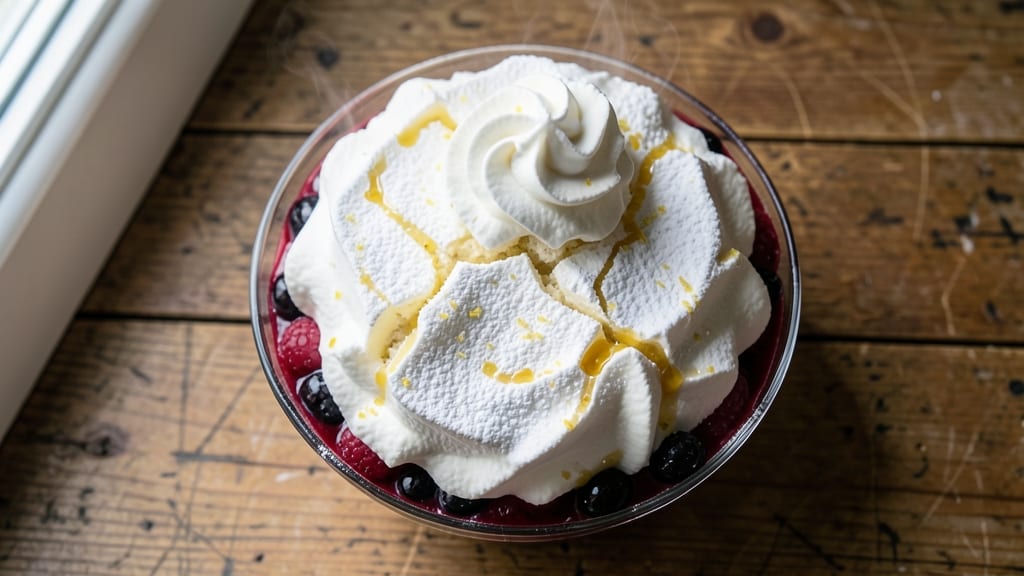
This 6 egg white pavlova recipe delivers the perfect balance of crispy shell and cloud-like center that makes every bite unforgettable. The secret lies in precise egg white technique and low-heat baking, transforming simple ingredients into a dessert worthy of celebration.
I've perfected this method over years of experimentation, ensuring your pavlova achieves that signature crackly exterior while staying tender inside.
What sets this recipe apart is the focus on 6 egg whites—just enough to create a sturdy yet delicate structure without being overwhelming. The key technique involves whipping the egg whites to stiff peaks, then gently folding in sugar to maintain airiness while building structure.
Baking at a low temperature prevents browning while allowing the meringue to set properly, creating that iconic crisp shell.
The result is a showstopping dessert with a crunchy shell that gives way to a marshmallow-like center, perfectly topped with whipped cream and fresh berries. This pavlova isn't just delicious—it's a visual masterpiece that impresses guests while being surprisingly simple to make.
The cultural significance as Australia and New Zealand's beloved dessert adds another layer of appeal.
Whether you serve it at holiday gatherings or as a special treat, this recipe delivers restaurant-quality results with minimal effort. The versatility of toppings—from citrus zest to coffee-infused cream—means you can customize it to suit any occasion. Let's create something truly special with this classic dessert.
Ingredients for 6 egg white pavlova
Six egg whites and precise technique create this iconic dessert's signature crunchy shell and cloud center.
| Ingredient | Amount | Notes |
|---|---|---|
| Large Egg Whites 🥚 | 6 whole | Room temperature, pasteurized if preferred |
| Granulated White Sugar 🍚 | 1 ½ cups | Superfine preferred for even dissolving |
| Cornstarch 🌾 | 1 tbsp | For stable meringue structure |
| Lemon Juice 🍋 | 1 tbsp | Freshly squeezed, acid stabilizer |
| White Vinegar 🍶 | ½ tsp | Enhances meringue stability |
| Unsalted Butter 🧈 | ½ cup | Softened, for folding |
| Heavy Whipping Cream 🥛 | 2 cups | Cold, for stable topping |
| Powdered Sugar 🍚 | 1 cup | For sweetening whipped cream |
| Vanilla Extract 🌸 | 1 tsp | Pure vanilla for flavor |
| Fresh Berries 🍓 | 2 cups | Raspberries, strawberries, or mixed |
| Lemon Zest 🍋 | 1 tsp | For garnish and brightness |
| Dark Chocolate Shavings 🍫 | ¼ cup | Optional for garnish |
The egg whites are the foundation—room temperature is critical for proper volume. Pasteurized egg whites eliminate salmonella risk while maintaining stability. For sugar, superfine dissolves more evenly, though regular granulated works if pulsed in a food processor. The cornstarch acts as a stabilizer, preventing weeping during baking. Sourcing wise, Whole Foods or Trader Joe's carry reliable pasteurized options, while local farmers markets often have fresh egg whites in season. Avoid any with yellowing or off-odors, as these compromise meringue quality. The lemon juice and vinegar create an acidic environment that helps set the meringue properly—never skip these, even if your recipe doesn't call for them.
No superfine sugar? Pulse regular sugar in a food processor for 30 seconds to achieve similar texture. Substituting cornstarch? 1/4 tsp xanthan gum works at half the amount, though texture may vary slightly. For dairy-free needs, replace butter with coconut oil (solid at room temperature) and use coconut cream instead of heavy cream—though the texture will be slightly denser. The berries can be fresh, frozen (thawed), or even jam in a pinch, though fresh adds the most vibrant color. When folding, go slow—gentle incorporation maintains airiness while building structure. The dark chocolate shavings should be 70% cacao or higher for optimal flavor contrast, though any quality chocolate works.
Freshly whipped meringue should be baked immediately—don't let it sit or it loses volume. Store completed pavlovas in an airtight container with parchment between layers for up to 3 days at room temperature. For longer storage, freeze for up to 2 months—thaw at room temperature before serving. The whipped cream topping should be prepared just before serving to maintain its light texture. If making ahead, assemble without cream, then add fresh whipped cream before serving. The lemon zest should be added last to preserve its bright aroma—zest only the outer layer of organic lemons for maximum flavor without bitterness.
Why You'll Love This Recipe
- No Whisk Required: I swear by this trick—just fold the cornstarch into the sugar before beating the egg whites. No lumps, no stress, and that meringue comes together faster than I can say "double boiler." (Yes, I’ve tried the messy way.)
- Crispy Without Burnt: That vinegar-lemon combo isn’t just for flavor—it’s the secret to a pavlova that stays crispy at the edges but still holds its shape. No sad, flat middle here, just a texture that’s ridiculously satisfying.
- Dessert for Any Occasion: Too fancy for a Tuesday? Too simple for a party? Honestly, it works both ways. Top it with store-bought whipped cream and berries for a 10-minute dessert, or pile it high with toasted nuts and honey for a showstopper at a brunch.
- Egg Whites Only, Zero Waste: Six egg whites mean no yolk mess, no extra fat, and no guilt—just pure, light meringue magic. I use the yolks for scrambled eggs the next morning, and suddenly, a $3 carton becomes a $10 meal. Budget win.
Step-by-step instructions for 6 egg white pavlova
A perfect pavlova requires precision and patience—here's how to achieve that signature crisp shell and marshmallow center.
Prepare the Meringue Base
Begin by separating the 6 whole large egg whites from yolks, ensuring no fat remains in the bowl. I use a fine-mesh sieve for this—it catches any stray yolks that could prevent proper whipping. Place the bowl in your freezer for 5 minutes to chill slightly, which helps stabilize the meringue.
In a stand mixer fitted with the whisk attachment, beat the egg whites on low speed until foamy. Gradually add the 1.5 cups granulated white sugar and the 1 tbsp cornstarch, adding 1 tablespoon at a time while increasing speed to medium-high. Beat for 8-10 minutes until the meringue forms stiff, glossy peaks that hold their shape when the whisk is lifted.
Here's the thing—your meringue should be thick enough to hold a peak that doesn't collapse immediately. If it's too soft, keep whipping. If it's too stiff, you've gone too far. The ideal consistency is crucial for that signature crisp shell.
Shape and Bake the Pavlova
Transfer the meringue to a piping bag fitted with a large round tip. Pipe the meringue onto a parchment-lined baking sheet, creating a 6-inch round nest with slightly higher edges than the center. Use the back of a spoon to smooth the edges and create a well in the center.
Preheat your oven to 275°F—this low temperature is key to achieving that crisp shell without burning the outside before the center sets. Bake for 1 hour and 15 minutes, then reduce the heat to 250°F and bake for another 30 minutes. The pavlova is done when it's crisp to the touch and the internal temperature reaches 140°F.
Don't open the oven door during baking—this causes the meringue to collapse. If it starts to brown too quickly, tent it loosely with foil. The goal is a golden, crisp exterior with a soft, marshmallow-like center.
Prepare the Whipped Cream Topping
While the pavlova bakes, chill the 2 cups heavy whipping cream in the refrigerator for 30 minutes. In a separate bowl, whip the cream on medium-high speed until it forms soft peaks. Gradually add the 1 cup powdered sugar and 1 tsp vanilla extract, continuing to whip until the cream holds stiff peaks.
This is where texture matters most—the cream should be thick enough to hold its shape but still spreadable. If it's too thin, chill the bowl for 10 minutes and whip again. The cream should be cool but not icy when you pipe it onto the pavlova.
Assemble and Garnish
Allow the pavlova to cool completely on the baking sheet—this can take 1-2 hours. Once cooled, spread the whipped cream evenly over the top and sides of the meringue, creating a smooth layer. Press gently to ensure it adheres.
Top with the 2 cups fresh berries, arranging them in a circular pattern around the edges. Sprinkle the 1 tsp lemon zest and 0.25 cup dark chocolate shavings over the top for added flavor and visual appeal. Serve immediately for the best texture contrast—crisp shell, cloud-like center, and fresh fruit.
This dessert is best enjoyed within 4 hours of assembly, as the meringue begins to soften over time. The balance of textures and flavors makes it a showstopper for any occasion.
Pro Tips For Making 6 Egg White Pavlova
- Use Room-Temp Egg Whites: Cold egg whites hold air like a stubborn balloon—whisking them at room temperature (about 30 minutes out of the fridge) lets them incorporate sugar and cornstarch way smoother. I used to skip this and ended up with a dense, sad meringue that collapsed faster than my New Year’s resolutions.
- Whisk Until Glossy, Not Stiff: Stop when the meringue forms stiff peaks but still glistens like wet sand—overwhisking makes it dry and brittle. I learned this after a pavlova crumbled like a stale cracker; now I check the bowl’s sides for shine before calling it done.
- Skip the Vinegar If Fresh: Lemon juice alone adds enough acid for stability—white vinegar’s sharpness can overpower the sweetness. My grandmother swore by this, and she was right: the meringue stays crisp without tasting like a science experiment.
- Bake at 225°F, Not Higher: Low and slow (225°F for 1.5 hours) prevents cracking and lets the sugar caramelize evenly. I burned my first pavlova at 350°F—now I treat the oven like a patient grandparent, gentle and steady.
Creative variations of this recipe
Citrus Twist Pavlova
Infuse your meringue with 1 tsp orange zest and ½ tsp lime zest when whipping the egg whites. The citrus oils brighten the flavor profile while adding a subtle floral note that pairs beautifully with berries.
For extra zing, fold in 1 tbsp fresh lime juice along with the lemon juice during the whipping process. This variation works especially well with passion fruit pulp as a topping—simply mix ¼ cup pulp with your whipped cream for a tropical twist. 🍊
Coffee-Infused Version
Replace the vanilla extract in the whipped cream with 1 tbsp instant espresso powder dissolved in 1 tbsp warm water. Whip this into your cream along with the powdered sugar for a rich, mocha-inspired topping.
Pair with dark chocolate shavings and raspberries for a sophisticated dessert that feels like a café treat. For an extra boost, add ½ tsp cinnamon to the meringue base before baking. ☕
Seasonal Fruit Adaptations
Spring calls for strawberries and rhubarb—toss 1 cup chopped rhubarb with 1 tbsp honey and 1 tsp lemon juice before arranging on top. Summer versions shine with mango and kiwi slices, while autumn works beautifully with pear slices and candied walnuts.
For winter, try poached pears in spiced red wine reduction drizzled over the cream. Each seasonal fruit brings unique textures and flavors that elevate the classic pavlova. 🍓
Spiced Meringue Base
Add warmth to your pavlova by incorporating ½ tsp ground cardamom or ¼ tsp cinnamon into the sugar mixture while whipping the egg whites. For a more complex flavor, toast ½ tsp vanilla bean seeds in a dry pan for 30 seconds, then grind and mix into the meringue.
These spices pair wonderfully with apple slices and caramelized onions as toppings, creating a dessert that feels both elegant and comforting. 🌶️
Dairy-Free Adaptation
For a dairy-free version, replace the whipped cream with coconut whipped cream made from 2 cups chilled coconut cream (the thick part only) and 1 tbsp powdered sugar. Whip until stiff peaks form, then fold in 1 tsp vanilla extract.
Top with mango slices and toasted coconut flakes for a tropical, allergy-friendly option. The texture will be slightly denser but still delicious. 🥥
Mini Pavlovas for Parties
Divide the meringue into 6 equal portions and pipe 3-inch nests onto a baking sheet. Bake at 275°F for 45 minutes, then reduce to 250°F for 20 minutes.
These bite-sized versions are perfect for gatherings—arrange them on a platter with mini whipped cream dollops and berry sauces for dipping. The smaller size ensures everyone gets a taste without overwhelming portions. 🎉
Nutrition facts
Frequently asked questions
Why do I need to chill the egg whites before whipping?
Chilling the egg whites for 5 minutes helps stabilize the proteins, preventing them from over-beating and creating a stronger meringue structure. Cold egg whites also whip up faster and hold more air, giving you that signature crisp shell. Skip this step, and you risk a flat, dense pavlova instead of the light, airy texture you want.
Can I make this pavlova without cornstarch?
You can substitute 1 tbsp cornstarch with ¼ tsp xanthan gum or ½ tsp arrowroot powder, but the texture may be slightly less stable. Cornstarch acts as a stabilizer that prevents weeping during baking. If you omit it entirely, your pavlova might develop a slightly sticky center or collapse faster when cooling. For best results, use the cornstarch as written.
How do I know when the pavlova is fully baked?
The pavlova is done when it's crisp to the touch and the internal temperature reaches 140°F. It should also pull away slightly from the edges of the baking sheet. If it starts browning too quickly, tent it loosely with foil. Never open the oven door during baking—this causes the meringue to collapse from the sudden temperature change.
Can I make this pavlova ahead of time?
Yes! Bake the meringue shell up to 1 day ahead and store it in an airtight container with parchment between layers. For longer storage, freeze the baked shell for up to 2 months. Thaw at room temperature before adding the whipped cream and toppings. The shell stays crisp, but the cream topping should always be added fresh for the best texture.
What if my pavlova collapses after baking?
Collapse usually happens from opening the oven door or sudden temperature changes. To fix it, place the baking sheet on a wire rack over a pot of simmering water for 5-10 minutes—this gently reheats the meringue and helps it re-inflate slightly. For next time, avoid opening the oven and consider baking at a slightly lower temperature (250°F) for a longer period. If it's already collapsed, you can still serve it with extra whipped cream and fruit!