
Breakfast & Brunch
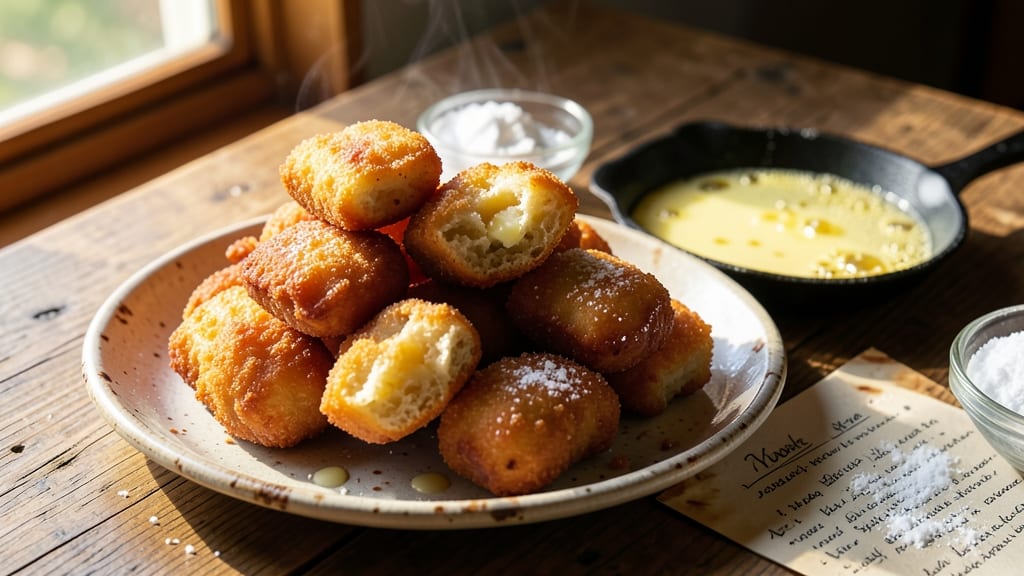
Here’s another broken egg beignets recipe that delivers the crispy shells and perfectly runny yolk hearts that make them irresistible. 🌟 The secret lies in using broken eggs for a tender, airy dough that fries up golden and crispy while keeping the centers gloriously gooey.
I've perfected this version after countless batches—each one a lesson in balancing heat, timing, and technique.
The dough is simple yet transformative: just flour, sugar, eggs, milk, and a pinch of salt, mixed until smooth and rested just long enough to develop flavor.
The frying process is where the magic happens—hot oil and careful batch cooking ensure every beignet emerges with that signature crunch while staying light inside. This isn't just a recipe; it's a celebration of New Orleans tradition, where beignets are more than food—they're a cultural experience.
By the time you're done, you'll have golden, crispy beignets with crackly exteriors and molten yolk centers that ooze when you bite in. The powdered sugar dusting adds that classic touch, but you can also go savory with garlic powder or herb seasoning.
These beignets are perfect for Mardi Gras celebrations, brunch gatherings, or whenever you crave something indulgent yet surprisingly simple to make.
What makes this recipe truly foolproof is the troubleshooting advice—no more soggy centers or uneven frying. Whether you're making them for a crowd or treating yourself, these beignets will be the star of any table. Let's get cooking!
Ingredients for another broken egg beignets
Simple ingredients that transform into golden, crispy beignets with molten centers.
| Ingredient | Amount | Notes |
|---|---|---|
| Large Eggs 🥚 | 6 whole | Broken yolks and whites separately |
| All-Purpose Flour 🌾 | 3 cups | Sifted for light texture |
| Granulated Sugar 🍚 | ½ cup | Fine grain preferred |
| Unsalted Butter 🧈 | ½ cup | Cold, cubed for dough |
| Whole Milk 🥛 | 1 cup | Room temperature |
| Salt 🧂 | ½ tsp | Fine sea salt |
| Vegetable Oil 🫒 | 4 cups | For frying, 350°F |
| Powdered Sugar 🍚 | 1 ½ cups | For dusting |
| Vanilla Extract 🌸 | 1 tsp | Optional for depth |
| Ground Cinnamon 🌿 | ½ tsp | Optional savory option |
The eggs are non-negotiable—broken yolks and whites separately create that signature airy texture. Pasture-raised eggs from Trader Joe's or your local farm store give the best flavor, but any large eggs work. For the flour, King Arthur or Gold Medal brands are my go-tos—they're fine enough to avoid dense beignets. Keep the butter cold when cutting it into the dough; it should look like coarse crumbs mixed with flour. The milk needs to be room temperature, or the dough will turn out gummy. Pro tip: use a stand mixer with the paddle attachment for 2-3 minutes to get a perfectly smooth batter.
No vanilla extract? Skip it or use lemon zest for brightness. Running short on powdered sugar? Confectioners' sugar from the store works fine, but sift it first to avoid lumps. Want to go savory? Swap the powdered sugar for garlic powder or smoked paprika after frying. The vegetable oil should be peanut or canola—avoid flavored oils. For frying, 350°F is key; too hot and they burn before cooking through, too cool and they absorb oil. Use a deep fry thermometer to nail it every time. If you don't have one, test with a wooden chopstick—it should sizzle but not burn instantly.
Freshly fried beignets are best eaten immediately, but they reheat beautifully in a 350°F oven for 5-7 minutes. Store leftover dough in the fridge for 2 days or freeze for 1 month—just let it thaw before frying. The powdered sugar keeps for 6 months in a sealed container. For Mardi Gras crowds, make the dough ahead and freeze it in balls—fry straight from frozen, adding 1-2 minutes to cook time. These keep their crispiness for 1 day if stored in an airtight container, but honestly? They disappear faster than that.
Why You'll Love This Recipe
- Four Eggs, Zero Excuses: I swear by this recipe—just crack eggs into a bowl, stir in flour and milk, and let the dough rest while you grab a cup of coffee. No fancy mixers, no measuring cups that never fit right.
- Crispy-Creamy Magic: That first bite—golden crust giving way to pillowy inside—is what makes this worth repeating. The butter in the dough and the sugar coating work together like a dream team.
- Breakfast or Dessert?: Honestly, I make these for both. Serve them warm with powdered sugar for a brunch treat, or pair with coffee later as a guilt-free indulgence. They’re that good.
- Pantry Staple Power: Between us, this recipe uses ingredients you already have. Eggs, flour, sugar, butter—no specialty items, no last-minute grocery runs. And if you make extras? Freeze them. They reheat like they’re fresh.
Step-by-step instructions for perfect beignets with runny yolk hearts
Here's how to make golden beignets with that signature crispy shell and molten center.
👨🍳 Step 1: Separate Eggs and Whip Whites to Stiff Peaks
Crack the 6 whole large eggs carefully, separating yolks and whites into separate bowls. I use a fine-mesh strainer over a measuring cup to catch any stray bits of shell. Add the 0.5 teaspoon salt and 1 teaspoon vanilla extract to the yolks—this gives the batter depth of flavor.
Whip the egg whites to stiff peaks using a stand mixer with the whisk attachment. You'll know they're ready when the tips curl slightly when you lift the whisk. This step is crucial—over-whipped whites will make your beignets tough instead of light and airy. Keep the bowl perfectly clean for maximum volume.
👨🍳 Step 2: Combine Yolks, Milk and Butter for Smooth Batter
In a separate large bowl, whisk together the 6 egg yolks, 1 cup whole milk, and 0.5 cup cold cubed unsalted butter. I like to use a hand mixer for this step—it incorporates the butter quickly without melting it completely. The mixture should be smooth and slightly thickened but not curdled.
Sift in the 3 cups all-purpose flour and 0.5 cup granulated sugar gradually while mixing on low speed. This prevents lumps and ensures an even texture. The batter should be thick enough to hold its shape when dropped—like a very thick pancake batter. If it's too thin, add a bit more flour, but don't overdo it or your beignets will be dense.
🍳 Step 3: Gently Fold in Whipped Egg Whites
Using a rubber spatula, gently fold the whipped egg whites into the yolk mixture in three additions. Be careful not to deflate the whites—work quickly and fold just until combined. The batter should look like thick, lumpy mashed potatoes with pockets of air.
Here's the thing—this is where the magic happens. The folded structure creates those signature air pockets that make beignets light and fluffy. If you see too many large bubbles, gently press them down with the spatula. Cover the bowl with plastic wrap and refrigerate for at least 30 minutes—this helps the flour hydrate fully and makes the batter easier to work with.
🔥 Step 4: Fry Beignets in Small Batches at 350°F
Heat 4 cups vegetable oil in a deep fryer or heavy pot to 350°F. I use a candy thermometer to monitor the temperature—it's the secret to perfect frying. Use a piping bag fitted with a large round tip to pipe 1-inch balls of batter directly into the hot oil.
Fry 3-4 beignets at a time for 2-3 minutes until golden brown on all sides. They should float to the surface when ready. Don't crowd the fryer or the oil temperature will drop. Use a slotted spoon to transfer them to a paper towel-lined plate. The key is to keep them warm while you finish the batch—just cover them loosely with a clean kitchen towel.
🥘 Step 5: Dust with Powdered Sugar Immediately
While the beignets are still warm, dust them generously with the 1.5 cups powdered sugar. I like to use a fine-mesh sieve for an even coating. The sugar should cling to the crispy exterior and melt slightly from the residual heat, creating that signature sweet glaze.
Serve immediately with extra powdered sugar on the side. These beignets are best enjoyed fresh from the fryer—crispy on the outside, pillowy in the middle, and with that perfect runny yolk center. If you want to get fancy, add a sprinkle of ground cinnamon for a warm spice twist instead of sugar.
Pro Tips For Making Another Broken Egg Beignets
- Whisk Eggs Cold: Crack those eggs into an ice-water bath first—just a bowl of cold water with a few ice cubes. The shock stops the whites from over-beating into a stiff foam, which keeps the batter light and fluffy. I used to skip this, and my beignets turned out dense and sad.
- Measure Butter Precisely: Use a kitchen scale for the butter—350g (12.5 oz) total, not eyeballed. Melt it slowly over low heat, then let it cool to just warm before mixing into the batter. Too hot butter cooks the flour prematurely, and you’ll end up with a gummy mess.
- Fry in Batches of 3: Crowd the fryer, and your beignets steam instead of crisp. Drop in three at a time, spaced like a triangle—this gives them room to puff and brown properly. After burning two batches from overcrowding, I finally got it right.
- Sugar the Oil First: Toss in 1/4 cup granulated sugar with the oil before frying—it caramelizes instantly and coats the beignets with a sticky, golden crust. Yes, it’s extra work, but it’s the difference between "okay" and "worth licking the pan."
Make-ahead tips for this another broken egg beignets
Dough Prep Ahead
Make the beignet dough 24 hours ahead for best results. After mixing and resting, cover tightly with plastic wrap and refrigerate. The cold temperature helps the gluten relax, making the dough easier to pipe and preventing dense beignets.
I like to shape the dough into a log, wrap it tightly, and refrigerate—this keeps it compact and ready to use. Just let it sit at room temperature for 10 minutes before piping. 💫
Fry from Frozen
For ultimate convenience, freeze the shaped dough balls 1 day before frying. Pipe the dough into 1-inch balls (as directed in the recipe) and freeze them on a parchment-lined tray. Once frozen solid, transfer to a ziplock bag and store for up to 1 month.
When ready to fry, drop frozen balls directly into the 350°F oil—they'll take 30-45 seconds longer to cook through. The cold dough helps maintain crispiness even when frying in batches. 🥶
Oil Management
Reuse your frying oil 2-3 times for maximum efficiency. After each batch, strain out food particles using a fine-mesh sieve or cheesecloth, then return the oil to 350°F before frying the next batch.
Keep a small bowl of ice water nearby to quickly cool hot oil between uses—this prevents overheating and maintains consistent temperature. I store leftover oil in an airtight container in the fridge for up to 1 week for future frying projects. 🔥
Make-Ahead Serving
Assemble beignets 1 hour ahead but keep them warm in a 200°F oven on a wire rack. This maintains crispiness without making them soggy. For a Mardi Gras brunch, pipe the dough into shapes the night before, refrigerate, then fry fresh in the morning.
Dust with powdered sugar right before serving—this prevents clumping and keeps the sugar from dissolving prematurely. Serve with a side of warm café au lait for the full New Orleans experience. ☕
Freezer-Friendly Dough
Divide the prepared dough into 4 equal portions and flatten each into a disc. Wrap individually in plastic wrap, then place discs in a ziplock bag with parchment paper between them. Freeze for up to 3 months.
To use, thaw in the fridge overnight, then proceed with piping and frying as directed. The texture remains light and airy when properly thawed—never microwave frozen dough, or it'll become gummy. 🧊
Batch Frying Plan
Plan for 3-4 frying sessions when making beignets for a crowd. Heat 2 cups of oil per batch in a large Dutch oven—this gives you enough space to fry 8-10 beignets at once without crowding.
Keep cooked beignets warm in a 200°F oven on a wire rack while you finish the batch. Label your oil batches if reusing—Batch 1, Batch 2—to track how many times you've reused it. Never exceed 3 uses per oil change. 🍴
Nutrition facts
Frequently asked questions
Why use broken eggs for beignets?
Broken eggs create a more tender, airy texture in the dough compared to whole eggs. The separated yolks and whites allow for better control over the batter's consistency—whipped whites add lightness while yolks provide richness. Plus, using broken eggs reduces waste and often costs less than buying whole eggs for the same purpose.
Can I make these beignets without a piping bag?
Use a spoon or small ice cream scoop to drop 1-inch balls of dough into the oil. For extra crispiness, wet your fingers slightly before shaping the dough. Just be gentle to avoid deflating the air bubbles in the batter. The texture won't be as precise, but they'll still taste delicious.
How do I fix soggy beignets?
Soggy beignets usually mean the oil wasn't hot enough or they were overcrowded in the fryer. For best results, maintain 350°F oil and fry 3-4 at a time. If they turn out soggy, reheat them in a 375°F oven for 5 minutes on a wire rack to restore crispiness. Keep them warm in a 200°F oven between batches to prevent moisture buildup.
Can I make these beignets ahead of time?
Yes! Pipe the dough into balls and refrigerate for up to 24 hours before frying. For longer storage, freeze the shaped dough balls for 1 month—just fry straight from frozen, adding 30-45 seconds to cook time. Assemble and dust with powdered sugar right before serving to keep them fresh.
What's the best way to serve these beignets?
Classic New Orleans style calls for dusting with powdered sugar, but you can also try cinnamon sugar or even savory seasonings like garlic powder. Serve warm with café au lait for a full brunch experience. For Mardi Gras, arrange them on a platter with colorful sprinkles or edible glitter for a festive touch.