
Breakfast & Brunch
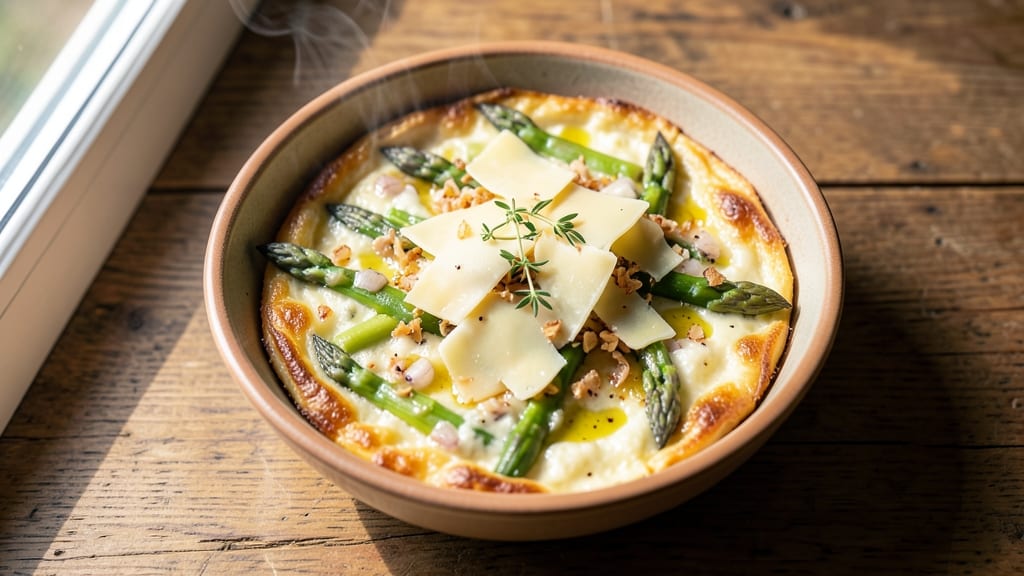
This asparagus and egg frittata recipe transforms simple ingredients into a restaurant-worthy breakfast that’s ready in just 30 minutes. The secret lies in tender asparagus spears—sautéed until bright green and slightly charred—nested within a cloud of fluffy egg custard that turns golden and set under the broiler.
I’ve perfected this technique over years of weekend brunch experiments, and it never fails to impress, even with picky eaters.
The beauty of this frittata is its flexibility—start with fresh asparagus and eggs, then customize with sharp cheddar, crumbled feta, or fresh herbs like thyme or parsley. The stovetop method ensures even cooking, while the broiler step delivers that signature crispy top.
It’s the kind of dish that feels indulgent but comes together with minimal effort, making it ideal for weekdays or lazy weekends.
What you’ll end up with is a golden, custardy frittata with tender asparagus peeking through, each bite offering a perfect balance of earthy greens and rich, creamy eggs. The aroma alone—warm, savory, and slightly herby—will have everyone at the table asking for seconds.
This is the kind of breakfast that turns a simple meal into something special, without requiring fancy techniques.
Serve it warm with a sprinkle of flaky salt and fresh herbs, or pair it with crusty bread to soak up every last drop of that luscious egg custard.
The leftovers reheat beautifully, making it a perfect meal prep option for busy mornings. Let’s get cooking—this frittata is about to become your new go-to recipe.
Ingredients for asparagus and egg frittata
Eight simple ingredients that create a restaurant-worthy breakfast with golden eggs and tender asparagus.
| Ingredient | Amount | Notes |
|---|---|---|
| Large Eggs 🥚 | 8 whole | Room temperature for best fluffiness |
| Fresh Asparagus 🌿 | 1 lb | Medium spears, trimmed ends |
| Shallot 🧅 | 1 whole | Minced for aromatic base |
| Extra-Virgin Olive Oil 🫒 | ¼ cup | High quality, fruity variety |
| Unsalted Butter 🧈 | 2 tbsp | European-style preferred |
| Sharp White Cheddar Cheese 🧀 | ½ cup | Freshly grated, aged variety |
| Fresh Thyme Leaves 🌿 | ¼ cup | Or 1 tbsp dried thyme |
| Flaky Sea Salt 🧂 | ½ tsp | For finishing garnish |
| Freshly Ground Black Pepper 🌶️ | ½ tsp | Freshly cracked preferred |
| Crusty Bread 🍞 | 4 slices | For serving, optional |
The asparagus makes or breaks this dish—look for bright green, firm spears with tight tips. Whole Foods or local farmers markets have the freshest cuts, but any grocery store will do if the stalks are crisp. Trim the woody ends by bending them until they snap naturally, then discard the broken part. The shallot adds depth without overpowering; Trader Joe's sells pre-minced in jars, which saves time. For the eggs, room temperature is key—they'll whip up fluffier and cook more evenly. I always grab organic, free-range eggs when possible, but any large eggs work fine.
No fresh thyme? Dried works at one-third the amount, but the flavor won't be as bright. Swap cheddar for crumbled feta or goat cheese if you prefer tangier notes. The olive oil matters here—avoid the cheap stuff; a good EVOO makes everything taste better. For extra richness, add 1 tbsp heavy cream to the egg mixture, though it's optional. If you're short on time, pre-cooked asparagus from the frozen section works in a pinch, but fresh is ideal. The bread? Any crusty loaf will do—baguettes or sourdough are perfect for soaking up custard.
Store any leftovers in an airtight container for up to 3 days—they reheat beautifully in the microwave or oven. For meal prep, portion into single servings before storing. The asparagus wilts fastest, so if making ahead, sauté it fresh just before baking. Fresh herbs like thyme keep for 5 days wrapped in paper towels, while cheese should be stored in its original packaging. This frittata freezes well for 2 months; thaw overnight in the fridge before reheating.
Why You'll Love This Recipe
- One-Pan Magic: I swear by this recipe when I’m too tired to scrub pots—just chop the asparagus (trim the woody ends, no need to peel), sauté the shallots in olive oil until soft, and pour in the eggs. The butter pools at the bottom, making it ridiculously easy to flip and serve straight from the pan.
- Shallot-Asparagus Crunch: Here’s what sold me—the crisp-tender asparagus spears and caramelized shallots cut through the richness of the eggs. That first bite? The snap of fresh asparagus against the creamy yolk—it’s the kind of contrast that makes you pause mid-chew. (Yes, even on a Tuesday night.)
- Lunchbox Hero: Between us, this frittata is my secret weapon for meal prep. Slice it into wedges, pack them with a sprinkle of flaky salt, and they’ll hold up for days. My kids grab them for school lunches, and honestly? They come home asking for seconds more often than I’d like to admit.
- Budget Breakfast Luxe: Eggs and asparagus in season are about as affordable as it gets, but the butter and olive oil make it feel special. I’ll make two frittatas for the price of one takeout order, and the leftovers? Just as good reheated (or cold, if you’re like me and forget to pack it). No waste, all satisfaction.
Step-by-step instructions for asparagus and egg frittata
Master this technique and you'll create a frittata with a perfectly set top, tender asparagus, and rich, creamy yolk centers.
Prep the Asparagus and Aromatics
Trim the tough ends from the 1 lb fresh asparagus by bending each spear until the stringy part snaps—this is your natural cutting guide. Cut the spears into 1-inch pieces and set aside. In a small bowl, finely mince the 1 whole shallot (about 2 tablespoons minced) and chop the 0.25 cup fresh thyme leaves. The thyme should be finely chopped to distribute evenly throughout the frittata.
This prep work ensures your frittata has vibrant, even flavors. The asparagus should be cut uniformly so it cooks at the same rate as the eggs. I like to taste the raw asparagus at this stage—it should have a fresh, slightly grassy flavor. If it tastes bitter, you may want to blanch it for 2 minutes in boiling water before using, but fresh asparagus usually doesn't need this step.
Sauté the Asparagus and Shallots
Heat an 8-inch oven-safe skillet over medium heat and add 2 tablespoons unsalted butter and 0.25 cup extra-virgin olive oil. Once the butter foams and the oil shimmers (about 1 minute), add the asparagus pieces and shallots. Sauté for 5-6 minutes, stirring occasionally, until the asparagus turns bright green and the shallots soften but don't brown. Season lightly with 0.25 teaspoon freshly ground black pepper—this prevents the asparagus from becoming bitter during cooking.
The asparagus should be tender-crisp at this stage—you want it to hold its shape but yield slightly when pressed with a fork. If you see any liquid pooling in the pan, increase the heat slightly to evaporate it. This step builds the flavor foundation of your frittata, so don't rush it. The asparagus should be cooked through but still vibrant in color.
Whisk the Egg Mixture
In a large bowl, crack the 8 whole large eggs and whisk vigorously for 30 seconds until the yolks and whites are fully combined. Add the 0.5 cup sharp white cheddar cheese, 0.25 cup fresh thyme leaves, remaining 0.25 teaspoon black pepper, and 0.25 teaspoon flaky sea salt. Whisk for another 1 minute until the cheese is fully dissolved and the mixture is smooth and pale yellow. The eggs should be at room temperature for best fluffiness—this prevents them from curdling when they hit the hot pan.
Here's the thing—whisking thoroughly ensures your frittata has a light, airy texture rather than a dense, rubbery one. I like to taste the egg mixture at this point—it should be slightly seasoned but not overpowering. If you're using dried thyme instead of fresh, reduce the amount to 1 teaspoon and crush it between your fingers to release the oils before adding to the eggs.
Assemble and Bake the Frittata
Pour the egg mixture evenly over the sautéed asparagus in the skillet, using a spatula to spread it into an even layer. Transfer the skillet to a preheated 375°F oven and bake for 12-15 minutes, until the edges are golden brown and the center still looks slightly underdone. The top should be set but still slightly jiggly—this indicates the yolk centers are still creamy.
During this time, I place a small baking dish filled with 1 cup hot water on the lower oven rack to create steam. This helps prevent the frittata from drying out and ensures a perfectly even cook. If you don't have an oven-safe skillet, you can finish the frittata under the broiler for the last 2-3 minutes, watching closely to avoid burning.
Finish and Serve
Remove the frittata from the oven and let it rest for 5 minutes before serving. This resting period allows the frittata to set completely and makes it easier to slice. Sprinkle the top with the remaining 0.25 teaspoon flaky sea salt and serve immediately with the 4 slices crusty bread on the side. The frittata should be golden on top with a slightly crispy edge, while the interior remains tender and moist with creamy yolk centers.
For the best experience, cut the frittata into 4 equal wedges and serve while still warm. The contrast between the crispy edges, tender asparagus, and rich egg yolk makes every bite satisfying. If you have leftovers, they reheat beautifully in the oven at 350°F for 10 minutes—just cover with foil to prevent drying.
Pro Tips For Making Asparagus And Egg Frittata
- CHAR THE ASPARAGUS FIRST: I learned this the hard way—raw asparagus in a frittata turns to mush. Blanch the spears in salted boiling water for 2 minutes, then plunge into ice water to stop cooking. Pat them very dry before adding to the pan, or your frittata will steam like a sad soup.
- SWEAT THE SHALLOT LOW: Don’t rush this step. Cook the shallot in butter over low heat until it’s translucent and just starting to caramelize—about 8 minutes. If you crank the heat, it’ll burn before the eggs go in, and you’ll taste the bitterness. (Yes, even if you’re impatient like me.)
- SALT THE EGGS LIKE THE SEA: Skip the salted butter here—use unsalted and salt the eggs before whipping them. About 1 teaspoon per 4 eggs, plus a pinch more if you’re using salty cheese. Over-salting later is harder to fix than under-salting now.
- LET THE FRITTATA REST: The moment you pull it from the heat, tent it with foil and walk away for 5 minutes. I know, I know—you want to cut into it immediately. But letting it set guarantees clean slices, not a crumbling mess. (Your future self will thank you.)
Serving suggestions for this asparagus and egg frittata
Classic Pairings
Serve your frittata with toasted sourdough bread or crusty baguette slices to soak up the rich egg custard.
I love pairing it with a simple side salad—toss mixed greens with lemon vinaigrette (just 2 tbsp olive oil, 1 tbsp lemon juice, and a pinch of salt) for a refreshing contrast. The acidity cuts through the richness of the eggs and cheese beautifully. 🥗
Coffee or Tea
A strong cup of black coffee or earl grey tea complements the savory flavors perfectly. The bitterness in coffee helps cleanse your palate between bites, while the floral notes of earl grey add a sophisticated touch.
For a brunch spread, I often serve it with chilled sparkling water with lemon slices—it’s light yet refreshing. The effervescence helps balance the richness of the frittata.
Breakfast Spread
Turn your frittata into a full breakfast by adding crispy bacon or smoked salmon on the side. The salty, smoky notes of bacon elevate the dish, while smoked salmon adds a delicate, briny contrast.
For a vegetarian option, serve with avocado slices and a sprinkle of everything bagel seasoning. The creamy avocado pairs wonderfully with the cheesy, eggy richness. 🥑
Meal Prep Serving
If you're prepping for the week, store your frittata in airtight containers and reheat portions with microwave-safe plates for 1-2 minutes on medium power. Serve with pre-cut veggie sticks (like cucumbers or bell peppers) and a small container of hummus for a balanced, grab-and-go meal.
The hummus adds a creamy texture that mirrors the frittata’s richness without overpowering it.
Dessert Pairing
End your meal with something light and sweet, like fresh berries or a small lemon tart. The tartness of berries or citrus balances the savory flavors of the frittata, leaving your palate refreshed.
I often serve strawberries or raspberries with a drizzle of honey—the natural sweetness feels like a perfect finish. For a more indulgent option, a scoop of vanilla bean ice cream adds a creamy, cool contrast. 🍓
Nutrition facts
Frequently asked questions
Can I make this frittata without an oven?
If you don't have an oven, finish the frittata on the stovetop. After pouring the egg mixture over the sautéed asparagus, cover the skillet and cook on low heat for 10-12 minutes, stirring gently every 2-3 minutes until the center is set. For a crispy top, transfer to a 400°F broiler for 1-2 minutes—watch closely to avoid burning.
How do I know when the asparagus is done?
The asparagus should be bright green, tender but still slightly crisp (not mushy), and cooked through when pierced with a fork. It takes about 5-6 minutes of sautéing. If it releases liquid, increase the heat to evaporate it—this prevents a soggy frittata.
Can I add other vegetables to this recipe?
Yes! Try diced bell peppers, spinach, or mushrooms—just sauté them with the asparagus until tender. For heartier frittatas, add crumbled bacon or sautéed onions. Keep prep time in mind: softer veggies (like mushrooms) cook faster than asparagus.
Why did my frittata turn out rubbery?
Rubbery frittatas usually happen from overcooking or under-whisking the eggs. Ensure your eggs are room temperature and whisked until fully combined. Remove the frittata from the oven when the center is still slightly jiggly (12-15 minutes at 375°F). Let it rest for 5 minutes before slicing—this helps the texture firm up properly.
How long can I store leftovers?
Store leftovers in an airtight container in the fridge for up to 3 days. Reheat in the oven at 350°F for 10 minutes (covered with foil) or microwave for 1-2 minutes on medium power. For best texture, avoid reheating multiple times. Freeze for up to 2 months—thaw overnight in the fridge.