
Breakfast & Brunch
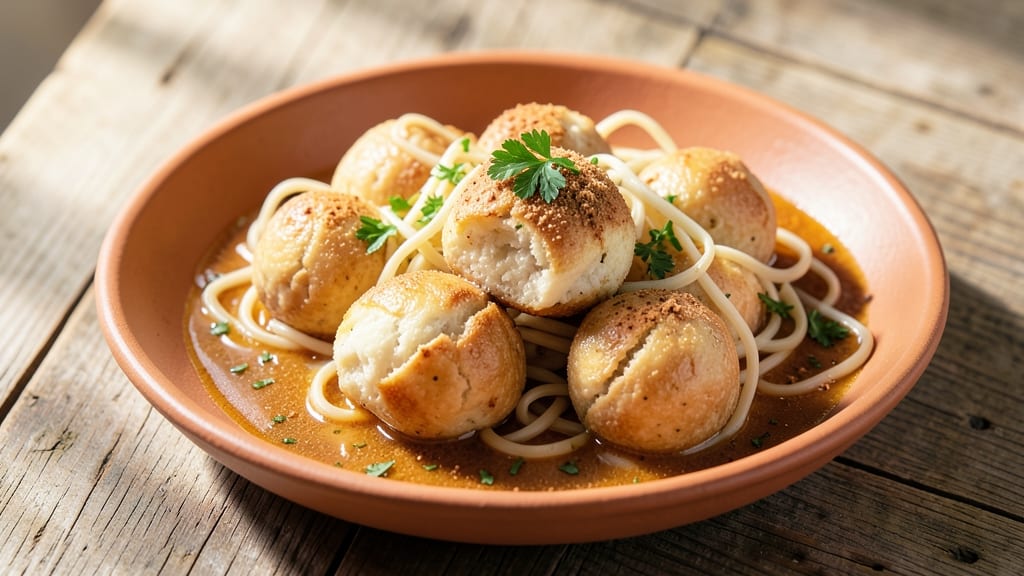
This Slovak egg ball recipe brings a taste of Central Europe to your breakfast table with tender, pan-fried dumplings filled with melted cheese and fresh herbs. 💛 A staple in Slovak cuisine, these egg balls—known as vaječné guľky—are traditionally served for breakfast or brunch, offering a comforting blend of textures and flavors that balance richness with freshness.
The secret to perfect egg balls lies in the dough's simplicity: eggs, flour, yeast, and butter create a light yet sturdy base that holds its shape when boiled and fried. The filling—a mix of melted cheese, parsley, and sometimes poppy seeds—adds a creamy, savory contrast that makes each bite satisfying.
Unlike many dumplings, these require no yeast proofing beyond a short rest, making them surprisingly easy for a traditional recipe.
Once shaped into small balls and boiled, they develop a delicate, almost translucent skin that crisps beautifully when pan-fried. The result is a dish that’s both rustic and refined, with a golden exterior and a tender, cheesy interior.
Serve them warm with a drizzle of melted butter, a sprinkle of fresh herbs, or a side of jam for a touch of sweetness—just as they’re enjoyed in Slovak homes.
This recipe stays true to tradition while adapting for home cooks, offering flexibility to adjust the filling or cooking method. Whether you’re making them for a special occasion or a simple weekend breakfast, these egg balls deliver the heartwarming flavors of Slovak cuisine with minimal effort. Let’s get started!
Ingredients for slovak egg ball
Four eggs, flour, and yeast create the delicate dough for these Slovak egg balls, filled with melted cheese and fresh herbs.
| Ingredient | Amount | Notes |
|---|---|---|
| Large Eggs 🥚 | 4 whole | Room temperature preferred |
| All-Purpose Flour 🌾 | 1 ½ cups | Sifted for light texture |
| Active Dry Yeast 🍞 | ¼ tsp | Freshly opened package |
| Granulated Sugar 🍚 | 1 tbsp | Activates yeast |
| Unsalted Butter 🧈 | 2 tbsp | Softened, not melted |
| Whole Milk 🥛 | ½ cup | Warmed to room temp |
| Shredded Cheese 🧀 | 1 cup | Mild cheddar or Edam |
| Fresh Parsley 🌿 | ¼ cup | Finely chopped stems |
| Poppy Seeds 🌱 | 1 tbsp | Optional for texture |
| Salt 🧂 | ½ tsp | Kosher or sea salt |
| Vegetable Oil 🫒 | 1 cup | For frying, high smoke point |
| Water 💧 | 1 ½ cups | For boiling egg balls |
The yeast and butter are the foundation—active dry yeast works best here, not instant. King Arthur or Bob's Red Mill flours yield the lightest texture. For the cheese, Edam or mild cheddar melts perfectly without overpowering. Fresh parsley is ideal, but dried works at half the amount if needed. The poppy seeds add a subtle crunch, but they're optional if you prefer a smoother texture. Whole milk activates the yeast faster than skim, and warming it slightly helps dissolve the sugar better.
No yeast? Baking powder at 1 tsp can replace it, though texture will differ slightly. Short on butter? Coconut oil works in a pinch, but it adds a distinct flavor. The dough should be soft but not sticky—add a splash more milk if needed. For the filling, Parmesan or Gruyère can substitute the cheddar for a sharper taste. If you're making these ahead, shape the balls and refrigerate them up to 24 hours before boiling.
The dough keeps for 2 days wrapped in plastic in the fridge, but the filling should be made fresh. Once boiled and fried, these egg balls reheat beautifully—just 5 minutes in a 350°F oven with a splash of milk. For freezing, fry them first, then store in a single layer before transferring to a bag for 3 months. Serve warm with a drizzle of melted butter or a sprinkle of fresh herbs for that authentic Slovak touch.
Why You'll Love This Recipe
- No Yeast Fuss: I swear by this trick—just mix the yeast with warm water, sugar, and a pinch of flour, then let it sit while I measure the eggs. Five minutes later, it’s ready, and I haven’t even turned the oven on yet. That butter-rich dough? It’s so forgiving—no need to overwork it like sourdough.
- Buttery Sweet Magic: The secret’s in the butter—slathered between layers of dough and egg, then baked until golden. It’s not just sweet; it’s rich, like a cross between a cinnamon roll and a brioche bun. My kids fight over the last one, and honestly? I don’t blame them.
- Breakfast or Dessert: Serve these warm with jam for breakfast, drizzle melted chocolate over them for a quick dessert, or pack a few in lunches. They reheat beautifully—just pop them in the toaster or microwave. (Yes, even on a Tuesday night when you’re running late.)
- Pantry Staple Power: You’re using flour, eggs, yeast, sugar, and butter—ingredients you already own. No specialty items, no last-minute grocery runs. Plus, they keep for days in the fridge or freeze like a dream. Make a batch on Sunday, and you’ve got snacks, treats, or quick meals covered all week.
Step-by-step instructions for Slovak egg balls
Here's how to craft these fluffy, pan-fried dumplings with crispy edges and tender centers.
👨🍳 Step 1: Activate the Yeast and Prepare the Dough
In a small bowl, combine the 1.5 cups all-purpose flour, 0.25 tsp active dry yeast, 1 tbsp granulated sugar, and 0.5 tsp salt. Whisk until evenly distributed. Add the 0.5 cup whole milk and 2 tbsp softened unsalted butter to the dry ingredients and mix with a wooden spoon until a shaggy dough forms.
Cover the bowl with a clean kitchen towel and let it rest at room temperature for 15 minutes. This allows the yeast to activate and the dough to begin developing gluten. You'll know it's ready when the dough looks slightly puffed and pulls away from the sides of the bowl.
🍳 Step 2: Mix in Eggs and Cheese for Flavor
In a separate bowl, beat the 4 whole large eggs until frothy. Add the egg mixture to the yeast dough and mix thoroughly with a spatula. Fold in the 1 cup shredded cheese, 0.25 cup finely chopped fresh parsley, and 1 tbsp poppy seeds until evenly distributed throughout the dough.
The cheese should be evenly dispersed, and you should see small flecks of parsley and poppy seeds throughout. If the dough feels too sticky, add 1 tablespoon more of the 1.5 cups all-purpose flour at a time until it becomes manageable but still pliable. This dough should be soft but not wet.
🥘 Step 3: Shape and Boil the Egg Balls
Bring the 1.5 cups water to a gentle boil in a medium saucepan. Using lightly oiled hands or a pastry brush, roll the dough into 1-inch diameter balls, spacing them about 1 inch apart on a plate. Gently drop 4 egg balls at a time into the boiling water.
Cook for 3-4 minutes until they float to the surface and are fully cooked through. Use a slotted spoon to remove them and place them on a clean kitchen towel to drain. The egg balls should be firm to the touch and have a smooth, unbroken surface. If any balls break during cooking, simply reshape them before frying.
🔥 Step 4: Pan-Fry Until Golden Brown
Heat the 1 cup vegetable oil in a large skillet over medium heat until it reaches 350°F (use a thermometer for accuracy). Carefully add the cooked egg balls in a single layer, being cautious not to overcrowd the pan. Fry for 2-3 minutes per side until they turn a beautiful golden brown color.
You'll know they're done when the exterior is crispy and the oil sizzles gently. Remove the egg balls with a slotted spoon and drain on paper towels. The oil temperature is crucial—too hot and they'll burn; too cool and they'll absorb too much oil. Maintain the 350°F temperature consistently for even frying.
🍽️ Step 5: Serve Warm with Traditional Sides
Serve the egg balls immediately while they're still warm and crispy. Arrange them on a platter and garnish with additional chopped parsley if desired. These dumplings are traditionally served with a side of sour cream or a simple green salad to balance their richness.
Each bite should offer a delightful contrast of crispy exterior and soft, cheesy interior. The parsley and poppy seeds add a fresh, nutty finish that complements the mild cheese perfectly. Enjoy them right away—they're best served warm and fresh from the pan.
Pro Tips For Making Slovak Egg Ball
- STIR THE YEAST FIRST: I learned this the hard way—skipping the quick proof in warm water with sugar means your yeast might not wake up in time. Mix the yeast, sugar, and a splash of warm water (about 110°F) in your bowl first, then let it sit for 5 minutes until it foams before adding flour. No foam? Start over.
- USE COLD BUTTER: Slovak egg balls (or vaječné guľky) need that buttery richness, but don’t melt it into the dough—cut it into small cubes and toss them in with the flour. The cold butter creates flaky layers when the balls fry, and it won’t turn your dough into a greasy mess. (Yes, even if you’re impatient like me.)
- DON’T OVERMIX THE DOUGH: This isn’t a bread recipe—handle the dough like you’re folding in a delicate omelet. Once the yeast and flour come together, stop stirring after 30 seconds. Overworking it makes the balls dense and chewy instead of light and tender. A few gentle folds are all it takes.
- FRY IN BATCHES: Crowding the pan is how you get soggy, unevenly cooked egg balls. Fry them in small batches—about 4 at a time—so the oil stays hot (350°F) and they develop that golden crust. Use a slotted spoon to avoid splattering, and resist the urge to flip too soon. They’re done when the underside is deep golden, not just pale.
Make-ahead tips for this dish
Pre-Shaping Prep
Shape the egg balls up to 24 hours ahead and refrigerate them in an airtight container. I like to use silicone cupcake liners for easy handling—just spray them lightly with oil before shaping.
The cold dough is firmer, so it holds its shape beautifully during boiling. Label the container with the date to track freshness. 💫
Boiling Batch Prep
Double the recipe and boil all egg balls at once for efficiency. Use a large stockpot with plenty of water—aim for 4 quarts to prevent overcrowding. Keep the water at a gentle simmer (190-200°F) to avoid breaking the delicate shapes.
I like to use a slotted spoon with a long handle to transfer them to a wire rack for faster draining.
Frying in Batches
Fry in batches of 6-8 egg balls to maintain oil temperature. Use a deep-fry thermometer to monitor—350°F is perfect for that golden crust. I recommend Avocado oil for its high smoke point. Keep fried egg balls warm in a 200°F oven while finishing the remaining batches. 🔥
Freezer-Friendly Method
For maximum make-ahead convenience, boil and fry the egg balls completely, then freeze them on a parchment-lined tray. Once frozen solid, transfer to a ziplock bag with parchment between layers.
Reheat from frozen in a 375°F oven for 10-12 minutes—no thawing needed! They crisp up beautifully straight from the freezer.
Filling Variations
Prepare filling components ahead of time and store separately. Mix the shredded cheese and poppy seeds in a small bowl and refrigerate for up to 3 days. The chopped parsley keeps well in the fridge for 5 days if wrapped in a damp paper towel.
Just combine with the dough when ready to shape—no last-minute prep needed! ✨
Serving Prep
Set out serving dishes and garnishes before cooking. I like to arrange sour cream in a small bowl with a sprinkle of fresh dill and smoked paprika for dipping.
Warm the serving platter in the oven for 5 minutes at 300°F to prevent condensation when transferring the hot egg balls. This keeps everything ready for immediate serving.
Nutrition facts
Frequently asked questions
Can I make these Slovak egg balls without yeast?
Yes, you can substitute the yeast with 1 teaspoon baking powder for a quick version. The texture will be slightly denser, but they'll still hold their shape when boiled and fried. For best results, reduce the milk to 0.25 cup to compensate for the baking powder's moisture. The egg balls will be ready to fry immediately after shaping—no waiting for yeast activation!
What's the best cheese for authentic flavor?
Traditionally, Slovaks use Edam cheese for its mild, slightly sweet flavor that pairs perfectly with the herbs. If Edam isn't available, mild cheddar or Gouda work well. For a sharper taste, try Parmesan mixed with the mild cheese. Just be sure to shred it finely so it melts completely into the dough.
Why did my egg balls break when boiling?
This usually happens when the dough is too wet or the water boils too vigorously. First, check your dough consistency—it should be soft but not sticky. If it's too loose, add 1-2 tablespoons more flour. Second, maintain a gentle simmer (190-200°F) rather than a rolling boil. Drop the egg balls in one at a time if needed, and avoid overcrowding the pot.
Can I bake these instead of frying?
After boiling, brush the egg balls with melted butter and bake at 375°F for 12-15 minutes until golden. For extra crispiness, broil for 1-2 minutes at the end. The baked version has a lighter texture but still holds the creamy cheese filling. This method works great for a healthier option or when you're short on oil.
How do I store leftovers?
Keep fried egg balls in an airtight container in the fridge for up to 3 days. Reheat in a 350°F oven for 5-7 minutes with a splash of milk to restore crispiness. For longer storage, freeze them after frying (don't boil first). Arrange on a tray, freeze solid, then transfer to a bag for up to 3 months. Reheat from frozen in the oven for 10-12 minutes.