
Breakfast & Brunch
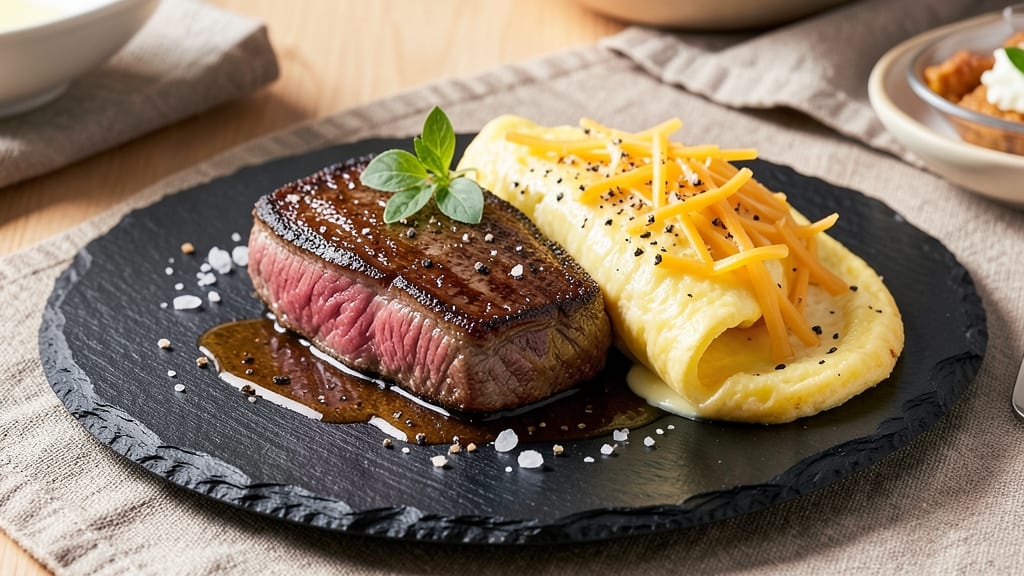
This steak and egg omelette recipe transforms breakfast into a savory powerhouse—juicy steak meets fluffy eggs in one pan. The secret? Cooking the steak first to lock in flavor, then folding it into the omelette while it finishes.
I’ve perfected this technique to deliver a fast, protein-packed meal that feels like a restaurant dish without the fuss.
The magic happens in the timing: a perfectly seared steak (medium-rare, 3-4 minutes per side) rests while the omelette cooks, ensuring every bite is tender and flavorful. Whisked eggs with a touch of cheese create a creamy, golden shell, while the steak adds richness and depth.
This isn’t just breakfast—it’s a hearty meal that keeps you full for hours.
Ready in under 15 minutes, this dish is ideal for busy mornings or lazy weekends. The steak’s caramelized crust contrasts beautifully with the omelette’s silky texture, and optional sides like toast or greens round out the plate.
Whether you’re feeding one or two, this recipe delivers restaurant-quality results at home.
Pro tip: Use a cast-iron skillet for even heat distribution, and don’t overcrowd the pan—this keeps the steak crispy and the omelette light. The combination of smoky steak and creamy eggs is a game-changer for breakfast lovers who crave something more than toast and jam.
Ingredients for steak and egg omelette
Restaurant-quality breakfast starts with these carefully selected ingredients for a protein-packed omelette.
| Ingredient | Amount | Notes |
|---|---|---|
| Ribeye Steak 🥩 | 6 oz | Thin-cut, 1-inch thick for even cooking |
| Large Eggs 🥚 | 4 whole | Fresh, room temperature for fluffiness |
| Shredded Sharp Cheddar Cheese 🧀 | ½ cup | Freshly grated for optimal melt |
| Unsalted Butter 🧈 | 2 tbsp | High-fat content for rich flavor |
| Diamond Crystal Kosher Salt 🧂 | ½ tsp | Fine grain for even seasoning |
| Freshly Ground Black Pepper 🌶️ | ¼ tsp | Cracked peppercorns preferred |
| Garlic Cloves 🧄 | 1 clove | Minced for aromatic depth |
| Extra-Virgin Olive Oil 🫒 | 1 tbsp | For searing steak and omelette |
| Fresh Chives 🌿 | 2 tbsp | Chopped, for garnish |
| Cast-Iron Skillet 🍳 | 1 whole | 10-inch diameter preferred |
The ribeye steak is non-negotiable here—its marbling delivers unmatched richness. Opt for thin-cut pieces (1-inch thick) from the butcher counter at Whole Foods or Costco for consistent quality. Look for cuts with visible fat marbling; this ensures juiciness even after cooking. Pre-sliced steaks from the grocery store work too, but ask for ribeye specifically—sirloin or flank steak won’t deliver the same tenderness. For extra flavor, marinate the steak in olive oil, salt, and pepper for 15 minutes before cooking, though this is optional for speed. The garlic clove should be fresh—no dried substitutes here, as it adds essential aroma to the omelette. If you’re short on time, pre-mince the garlic while the steak rests.
No ribeye available? Flank steak or sirloin can work in a pinch, but slice it thinly against the grain for tenderness. Fresh eggs are critical—room temperature eggs whip up fluffier, so pull them from the fridge 10 minutes before starting. The sharp cheddar should be freshly grated; pre-shredded cheese contains anti-caking agents that prevent proper melting. For a vegetarian alternative, swap the steak for sautéed mushrooms or spinach (about 4 oz) and increase the cheese to 0.75 cup. The cast-iron skillet is essential—its heat retention ensures even cooking. If you don’t have one, a heavy stainless steel pan works, but monitor the heat closely to avoid burning. For extra richness, mix 1 tbsp of the melted butter into the whisked eggs before cooking.
Store leftover steak in an airtight container for up to 3 days in the fridge, though it’s best enjoyed fresh. The omelette reheats poorly, so plan to eat it immediately or assemble it cold with pre-cooked steak for a quick meal later. Fresh chives keep for 5-7 days in the fridge, wrapped in a damp paper towel. The kosher salt and black pepper should be stored in airtight containers to preserve their flavor for up to 1 year. For meal prep, cook the steak ahead and refrigerate it separately—reheat it in the skillet for 2-3 minutes before folding into the omelette. This technique maintains the steak’s moisture and ensures a restaurant-quality finish every time.
Why You'll Love This Recipe
- No-Fuss Protein Power: I swear by this when I’m starving but don’t want to slave over dinner. Slice that leftover ribeye thin—no fancy searing required—and toss it into the eggs while they’re still runny. The cheese melts into the steak juices, turning every bite into a savory hug.
- Crispy Edge Magic: Between us, the secret’s in the butter. Pan gets hot, butter browns just enough to coat the eggs, and that sharp cheddar? It turns golden and salty at the edges while the inside stays silky. Honestly, it’s the kind of crispy that makes you pause mid-bite.
- Breakfast for Brunch: Here’s what sold me—this works at 7 AM or 7 PM. Serve it with toast for a lazy morning, or pile it high on a plate with avocado for a weekend brunch that doesn’t require a reservation. My roommates now call it “the hangover cure.”
- Steak Leftovers Reimagined: I always cook extra ribeye, and this omelette turns scraps into gold. The eggs soak up the steak’s flavor like a sponge, so even day-old meat tastes fresh. Plus, it’s cheaper than ordering takeout when you’re tired of salads. (Yes, even on a Tuesday night.)
Step-by-step instructions for steak and egg omelette
A one-pan breakfast that delivers perfect steak and fluffy eggs without cross-contamination.
Sear the Ribeye to Medium Rare
Heat the cast-iron skillet over medium-high heat until it's screaming hot. Add the 1 tablespoon extra-virgin olive oil and let it shimmer for 30 seconds. Place the 6 oz ribeye steak in the skillet, pressing down gently with a spatula for 10 seconds to ensure even contact.
Sear for 2-3 minutes per side until you achieve deep golden-brown crust with a 125-130°F internal temperature. The steak should release easily from the pan when ready. Remove the steak and set it aside on a warm plate, tented loosely with foil to keep warm. Residual heat will carry it to medium rare while you finish the omelette.
Prepare the Garlic Butter Base
Reduce heat to medium and add 1 tablespoon unsalted butter to the same skillet. When the butter foams, add the 1 minced garlic clove and cook for 30 seconds until fragrant but not browned. This aromatic base will infuse the eggs with depth.
Remove the skillet from heat and whisk together the 4 whole large eggs in a bowl until the yolks and whites are fully combined. Season immediately with 0.5 teaspoon diamond crystal kosher salt and 0.25 teaspoon freshly ground black pepper. The eggs should be room temperature for perfect fluffiness.
Cook the Omelette to Silky Perfection
Return the skillet to medium-low heat and pour in the seasoned eggs. Let them sit undisturbed for 10 seconds until the edges begin to set. Using a silicone spatula, gently push the cooked edges toward the center, tilting the pan to let the uncooked egg flow to the edges.
When the bottom is just set (still slightly moist), sprinkle 0.5 cup shredded sharp cheddar cheese evenly over one half of the omelette. Fold the other half over the cheese, pressing down gently to melt it completely. Cook for another 20-30 seconds until the cheese is fully melted and the omelette is set throughout.
Finish with Steak and Garnish
Slice the ribeye against the grain into 2 even portions and place one portion on each omelette. Spoon any accumulated juices from the steak plate over the top. Garnish immediately with 1 tablespoon chopped fresh chives for a pop of color and freshness.
Serve immediately while the steak is still warm and the omelette is perfectly set. The combination of tender steak, rich eggs, and melted cheddar creates a protein-packed breakfast that's ready in under 15 minutes. The cast-iron skillet retains heat beautifully, ensuring everything finishes at the right temperature simultaneously.
Pro Tips For Making Steak And Egg Omelette
- CRUST THE STEAK FIRST: I learned this the hard way—salt the ribeye at least 40 minutes before cooking. Diamond Crystal kosher salt needs time to penetrate, and the crust forms better when the surface is properly hydrated. Skip this, and you’ll end up with a steak that’s just salty on the outside.
- WHISK EGGS VIGOROUSLY: Don’t just stir them—whisk those eggs until they’re fully combined and frothy. I used to rush this, and my omelettes would turn out dense and rubbery. A proper whisk (or immersion blender) creates tiny air pockets that make the texture light and fluffy when cooked.
- REST THE STEAK BEFORE SLICING: Give that ribeye a solid 5-10 minutes under foil after it hits your target temp. I know, I know—you’re hungry—but slicing too soon means juices pooling on your plate instead of staying in the meat. This is the thing that matters most for a juicy bite.
- USE COLD CHEESE: Pull the shredded cheddar straight from the fridge and let it sit in the bowl while you cook. Warm cheese melts too fast and turns greasy, making your omelette soggy. Cold cheese melts cleanly and adds that perfect sharp, gooey pull—yes, even if you’re impatient like me.
Essential equipment for perfect results
Cast-Iron Skillet
Your 10-inch cast-iron skillet is the star of this dish—its heat retention ensures even cooking for both the steak and omelette. I recommend a Lodge Pre-Seasoned Skillet for its natural non-stick properties after proper seasoning.
If you're new to cast iron, preheat it for 10 minutes on the stove before adding oil to create the perfect sear. The skillet’s weight also helps distribute heat evenly, preventing hot spots that could burn your eggs. 🍳
Meat Thermometer
A digital instant-read thermometer like the ThermoWorks Smoke is non-negotiable for perfect steak doneness. It helps you hit the 125-130°F range for medium-rare without guessing. I keep mine in my kitchen drawer for quick access—it’s worth the investment for consistent results.
For the omelette, it’s not necessary, but it’s great for checking steak temps while it rests.
Silicone Spatula
Use a heat-resistant silicone spatula (I love OXO Good Grips) to gently fold the omelette without tearing. The flexible edge slides under the eggs effortlessly, and it won’t scratch your skillet like metal utensils.
A long-handled version also keeps your hands safe from the hot pan. This tool makes all the difference in achieving that restaurant-worthy fold.
Sharp Chef’s Knife
A high-quality chef’s knife (like the Wüsthof Ikon) is essential for slicing the steak against the grain into ¼-inch strips. A dull knife crushes the fibers, making the steak tough.
Keep your knife sharp with a honing steel before each use. For the chives, a small paring knife works perfectly for those delicate cuts.
Mixing Bowl
A stainless steel mixing bowl (I use Cuisinart) is ideal for whisking the eggs—it’s non-reactive and won’t absorb odors. The smooth surface prevents eggs from sticking, and the deep sides make whisking easier.
For extra fluffiness, whisk the eggs in a chilled bowl for 10 seconds after adding salt and pepper to create tiny air pockets.
Optional: Egg Whisk
While a fork works, a balloon whisk (like KitchenAid) gives you more control and faster results when combining the eggs. The flexible wires incorporate air more efficiently, leading to a lighter, fluffier omelette.
If you’re short on time, a handheld electric mixer on low speed works too—just be careful not to overbeat the eggs.
Nutrition facts
Frequently asked questions
Can I use a different type of steak instead of ribeye?
For this recipe, flank steak or sirloin work well—just slice them thinly against the grain for tenderness. Avoid tougher cuts like flank steak if you prefer a more delicate texture. The key is using a 1-inch thick cut that cooks quickly to medium-rare (125-130°F) without drying out.
How do I make this dish vegetarian?
Swap the steak for sautéed mushrooms or spinach (about 4 oz) cooked with garlic and olive oil. Increase the cheese to 0.75 cup to compensate for the missing protein. For extra flavor, add a sprinkle of smoked paprika or nutritional yeast to the eggs before folding.
Why does my omelette turn out rubbery?
Overcooking is the most common mistake! Keep the heat on medium-low and remove the omelette as soon as the bottom is just set (still slightly moist). Also, ensure your eggs are room temperature—cold eggs cook unevenly. Whisk them vigorously for 30 seconds to incorporate air for a fluffier texture.
Can I make this ahead of time?
Cook the steak ahead and refrigerate it separately—it reheats beautifully in the skillet for 2-3 minutes before assembling. For the omelette, it’s best served fresh, but you can pre-whisk the eggs (add salt/pepper just before cooking) and store them in the fridge for up to 1 day. Assemble and cook immediately when ready.
What’s the best way to reheat leftovers?
Reheat the steak in the same cast-iron skillet over medium heat for 2-3 minutes until warm. For the omelette, wrap it in foil and warm in a 350°F oven for 5 minutes—microwaving makes it rubbery. Pro tip: Keep the steak and omelette separate until serving to maintain texture.