
Breakfast & Brunch
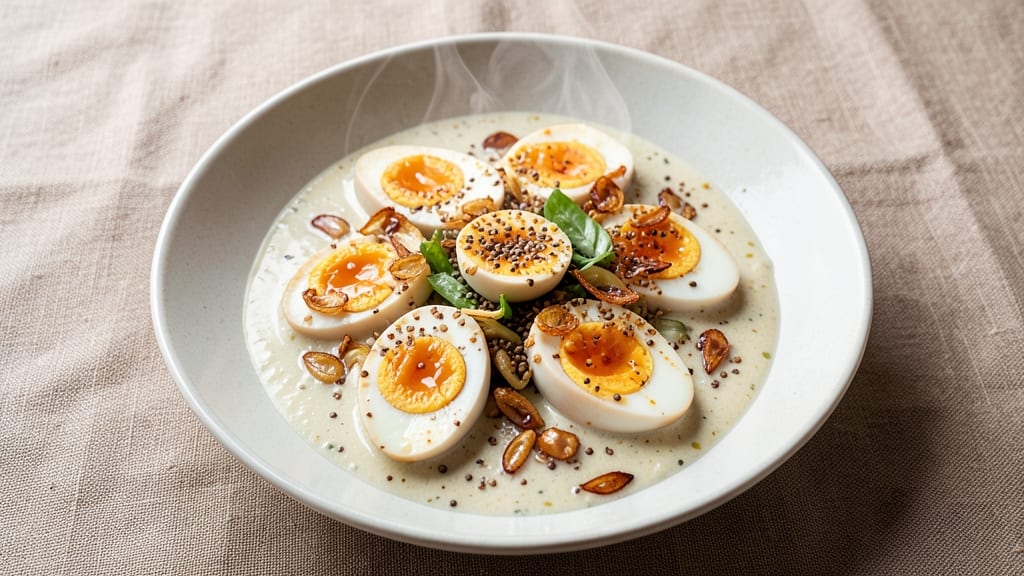
This thick egg curry recipe transforms simple eggs into a luxurious breakfast bowl that tastes like a restaurant specialty. The secret lies in slow-simmered coconut milk and aromatic spices that create a velvety, rich sauce clinging to each tender egg.
I developed this recipe after craving something hearty yet quick—perfect for busy mornings when you still want flavor that lingers.
What sets this curry apart is its thick, creamy texture, achieved through proper spice blooming and reduced coconut milk. You’ll start with whole spices like cinnamon and cardamom, then build layers of flavor with turmeric, cumin, and garam masala.
The eggs cook gently in the simmering sauce, absorbing all those aromatic notes while staying perfectly tender.
By the time you’re done, you’ll have a bowl of golden eggs nestled in a thick, fragrant sauce that’s rich enough to satisfy any breakfast craving. The coconut milk adds natural sweetness that balances the spices, while fresh cilantro at the end brightens every bite.
This dish is vegetarian-friendly, packed with protein, and ready in under 30 minutes.
Serve it over steamed basmati rice or warm naan to soak up every last bit of that luscious sauce. The contrast of soft eggs against crispy bread makes each bite even more satisfying. Here’s how to make it—simple steps for restaurant-quality results at home.
Ingredients for thick egg curry
Six eggs, coconut milk, and whole spices create this restaurant-style breakfast bowl.
| Ingredient | Amount | Notes |
|---|---|---|
| Large Eggs 🥚 | 6 whole | Freshly cracked for best texture |
| Coconut Milk (Full-Fat) 🥥 | 13 ½ oz | Canned, unsweetened preferred |
| Vegetable Oil 🫒 | 2 tbsp | For blooming spices |
| Yellow Onion 🧅 | 1 whole | Medium, finely chopped |
| Fresh Ginger 🌿 | 2 tbsp | Grated, fresh preferred |
| Garlic Cloves 🧄 | 4 cloves | Minced, fresh preferred |
| Ground Cumin 🌿 | 1 tsp | Toasted for deeper flavor |
| Ground Turmeric 🌶️ | ½ tsp | Bright yellow color |
| Ground Coriander 🌿 | ½ tsp | Adds citrusy depth |
| Garam Masala 🌶️ | 1 tsp | Store-bought blend works |
| Cinnamon Sticks 🌿 | 1 whole | For aroma, removed later |
| Cardamom Pods 🌿 | 4 whole | Lightly crushed |
| Tomato Paste 🍅 | 2 tbsp | Smooth, not chunky |
| Fresh Cilantro 🌿 | ¼ cup | Chopped, for garnish |
| Salt 🧂 | 1 tsp | Kosher or sea salt |
The coconut milk is non-negotiable here—full-fat canned gives you that rich, velvety texture. Thai Kitchen brand is my go-to at the grocery store, but any unsweetened canned version works. Fresh ginger and garlic are worth hunting down at the Asian market if you can, but the regular supermarket stuff is fine too. Just make sure the ginger isn't woody or fibrous. For the spices, Penzeys or Spicewalla have great whole spices, but the regular grocery store stuff works if it's not ancient—check the 'best by' date. The garam masala can be the pre-mixed blend from the international aisle—no need to make your own unless you're feeling fancy.
No fresh ginger? Powdered ginger at half the amount works in a pinch, but it lacks that bright zing. Running out of cardamom pods? Ground cardamom at one-third the amount gets you close. The tomato paste can be those little squeeze tubes from Trader Joe's—way less waste than a full can. Want more heat? Add a pinch of cayenne. The eggs should be at room temperature for even cooking—take them out 20 minutes before you start. And trust me on the full-fat coconut milk—light versions won't give you that same luxurious texture.
This sauce thickens as it sits, so make it a little thinner than you think you need. Keeps 3-4 days in the fridge—tastes even better the next day once all the flavors meld. Freezes beautifully for up to 3 months if you want to make a big batch. I always double the recipe and freeze half—breakfast for lazy mornings made easy. Store the cooked eggs separately if you're prepping ahead, then reheat them gently in the sauce at the end.
Why You'll Love This Recipe
- One-Pot Magic: I swear by this recipe because it’s literally one pan, one spatula, and zero dishes. The eggs poach right in the coconut milk—no frying, no flipping, just simmer until golden. Honestly, I’ve made it after work when I’m too tired to wash another bowl.
- Rich Without Effort: That full-fat coconut milk? It turns this into a velvety, almost decadent curry with almost no work. The ginger and onions caramelize into a fragrant base, and the eggs absorb all that flavor—crisp edges, jammy yolks, chef’s kiss. It’s the kind of dish that makes you think you slaved for hours.
- Leftovers That Shine: This curry actually improves the next day. The eggs get even more tender, and the coconut milk thickens into a luscious sauce. I pack it for lunches—just reheat with a splash of water, and it’s restaurant-quality. (Yes, even on a Tuesday night.)
- Budget Breakfast Upgrade: Eggs and coconut milk are cheap staples, but this tastes like a splurge. I use this to stretch my grocery budget—feed four people for the cost of one fancy brunch. Plus, the onions and ginger last for multiple meals, so it’s basically free after the first batch.
Step-by-step instructions for thick egg curry
Here's how to make a velvety, spice-infused egg curry that's ready in under 45 minutes.
Bloom the Spices in Oil
Heat the 2 tablespoons vegetable oil in a large, heavy-bottomed skillet over medium heat. Add the 1 whole cinnamon stick and 4 whole cardamom pods first—they need the most time to release their delicate aromas. Let them sizzle gently for 30 seconds until you catch that warm, woody scent.
Next, add the 1 teaspoon ground cumin, ½ teaspoon ground turmeric, ½ teaspoon ground coriander, and 1 teaspoon garam masala. Stir constantly for 1 minute until the spices darken slightly and fill your kitchen with their earthy fragrance. This blooming step unlocks their full flavor—don't rush it. If the spices start to smoke, reduce the heat just a touch.
Sauté the Aromatics
Add the 1 whole yellow onion, chopped into small, even pieces. Cook for 5-6 minutes until the onions soften and turn translucent at the edges. You want them to caramelize just slightly at the bottom of the pan—this adds deep sweetness to the curry.
Stir in the 2 tablespoons fresh ginger and 4 cloves garlic cloves (minced). Cook for another 2 minutes until the garlic turns golden and fragrant. Here's the thing—don't overcook the garlic or it'll turn bitter. The moment you smell that sweet, pungent aroma, it's ready. Add the 2 tablespoons tomato paste and stir for 30 seconds to coat everything evenly.
Build the Coconut Base
Pour in the 13.5 ounces coconut milk and bring to a gentle simmer over medium-low heat. The mixture will bubble softly—this is when the spices really start to meld. Let it cook for 5 minutes until the sauce thickens slightly and the coconut aroma becomes prominent.
Add the 1 teaspoon salt and taste. You'll want a balance of spice and saltiness—adjust if needed. This is your flavor foundation. The sauce should now be smooth, with a rich golden color. If it's too thin, reduce it by 2-3 minutes longer on medium heat.
Cook the Eggs to Perfection
Crack the 6 whole large eggs directly into the simmering curry. Gently stir with a wooden spoon to distribute them evenly. Let the curry cook undisturbed for 5-6 minutes—the eggs will slowly poach in the thick coconut sauce, absorbing all those amazing spices.
You'll know they're done when the whites are set and the yolks remain soft but firm. The curry should have a thick, velvety consistency—almost like a rich egg custard. If it's too thick, stir in 2-3 tablespoons water to loosen it. The eggs should float gently in the sauce, not sink.
Finish and Garnish
Remove the cinnamon stick and cardamom pods (they've done their job). Stir in the ¼ cup fresh cilantro and let the curry cook for another 1 minute to heat through. The cilantro adds a bright, fresh finish that cuts through the richness.
Taste one last time and adjust seasoning if needed. Serve immediately in warm bowls—this curry is best enjoyed fresh while the eggs are still tender and the spices are vibrant. Garnish with extra cilantro if you like, and pair with steamed basmati rice or warm naan bread.
Pro Tips For Making Thick Egg Curry
- Sear Eggs First: DESCRIPTION: Crack eggs into a separate bowl before adding them to the pan—this keeps them intact instead of splattering everywhere. Once the onions and ginger are soft, pour in the eggs and let them sit for 10 seconds before gently stirring. The initial sear creates a subtle richness that blends better into the coconut milk later.
- Prep Ginger Like a Pro: DESCRIPTION: Peel ginger with a spoon’s edge (no peeler needed) to avoid wasting the pungent flesh. Then, slice it thinly—about 1/8-inch thick—so it cooks down fast without turning bitter. I used to chop it roughly, and it always left a raw, sharp edge in every bite.
- Simmer, Don’t Boil: DESCRIPTION: After adding coconut milk, reduce heat to low and let it bubble gently—a tiny, slow simmer. Boiling will split the eggs and make the curry watery. Stir occasionally, and if it gets too thick, add 1-2 tablespoons of water. Patience here makes the difference between a creamy curry and a scrambled mess.
- Use Cold Eggs: DESCRIPTION: Pull eggs straight from the fridge and let them sit in the bowl for 5 minutes before cooking. Cold eggs hold their shape better, so they stay plump and creamy instead of breaking apart into a runny sauce. I learned this after three batches of egg confetti in my curry.
Storing and reheating your thick egg curry
Fridge Storage Tips
Let your curry cool completely before storing—hot food can raise fridge temps and spoil faster. Transfer to an airtight glass container (I love Pyrex for this) and refrigerate for up to 3 days.
The sauce thickens further overnight, so stir before reheating. The eggs stay perfectly tender if stored separately in the sauce or alone—just add them back when reheating. 🥥
Freezer Prep
For longer storage, freeze the curry in portioned containers (quart-size works best). Leave ½-inch headspace—coconut milk expands when frozen. Label with the date and freeze for up to 3 months. Thaw overnight in the fridge before reheating. I always freeze half the batch—breakfast on busy mornings solved! ❄️
Reheating Methods
Stovetop is best: Heat over medium-low for 5-7 minutes, stirring occasionally. Add 1-2 tablespoons water if the sauce thickens too much. The eggs reheat gently without drying out. For microwave reheating, cover loosely and heat for 1 minute, then stir and continue in 30-second bursts until 165°F. 🔥
Reviving Texture
If the sauce separates after reheating, whisk in 1 tablespoon coconut milk to restore creaminess. For extra richness, stir in ½ teaspoon butter or a splash of heavy cream.
The eggs might firm up slightly—just cover and let sit for 2 minutes to soften again. Garnish with fresh cilantro to brighten flavors. ✨
Egg Handling
Cook eggs fresh when possible, but if reheating separately, poach them in simmering water for 3-4 minutes, then add to reheated sauce. For extra decadence, top with crispy fried shallots or toasted cashews after reheating. The contrast of textures makes every bite exciting. 💫
Nutrition facts
Frequently asked questions
Can I make this egg curry without coconut milk?
You can substitute with ½ cup heavy cream + ½ cup water for a similar rich texture, but the flavor won't be the same. For a dairy-free alternative, use 1 cup cashew cream (soaked cashews blended with water) or ½ cup Greek yogurt + ½ cup water. The coconut adds natural sweetness that balances the spices beautifully—it's worth finding a canned version if possible.
Why did my curry turn out too thin?
This usually happens if you didn't simmer the coconut milk long enough or used light coconut milk. For a thicker consistency, reduce the sauce on medium heat for an extra 5-10 minutes after adding the eggs, stirring occasionally. You can also mix 1 tablespoon cornstarch with 2 tablespoons water, stir it in, then cook for 2 more minutes until thickened. The ideal texture should coat the back of a spoon.
Can I use frozen eggs in this recipe?
Fresh eggs work best for this recipe since they hold their shape better in the sauce. If you must use frozen eggs, thaw them completely in the fridge overnight. Crack them into a bowl first, then gently stir them into the simmering curry. Frozen eggs may release more liquid, so you might need to adjust the cooking time slightly to avoid a watery sauce.
What's the best way to make this curry spicier?
Add ½ teaspoon cayenne pepper when blooming the spices, or stir in 1 teaspoon red chili flakes with the tomato paste. For heat lovers, crack 1-2 fresh green chilies (seeds removed) into the sauce while cooking. Always taste as you go—you can adjust more easily than removing excess spice. Balance with a squeeze of lemon at the end if needed.
How do I adjust this for a vegetarian meal prep?
Cook the eggs fresh when serving to maintain texture, but you can prep the sauce ahead. Store the curry sauce separately in the fridge for 3 days or freezer for 3 months. When ready to serve, reheat the sauce and poach eggs in simmering water for 3-4 minutes, then gently fold them into the warm sauce. Serve with pre-cooked rice or naan to keep everything fresh.