
Main Courses
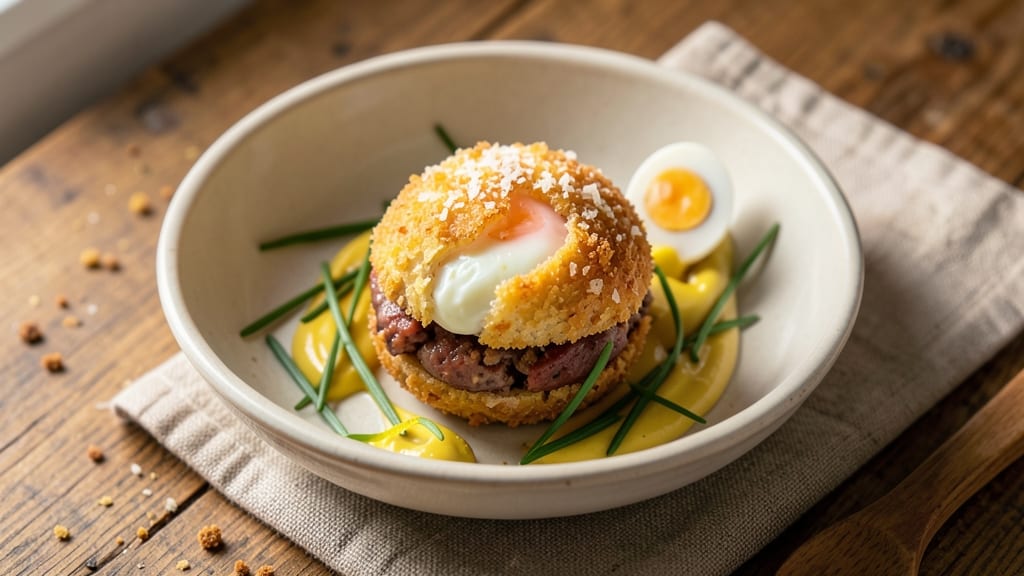
This traditional Scotch egg recipe with sausage delivers the perfect balance of crispy, golden crust and juicy, flavorful centers—just like the ones you'd find in a classic Scottish pub.
The secret lies in using high-quality pork sausage wrapped snugly in a poached egg, then encased in a crunchy panko crust that stays crispy even after baking.
I've tested this recipe countless times, and the key is patience—letting the egg poach just right and ensuring the sausage is fully cooked before breading.
The beauty of this dish is its versatility—you can bake or fry for that perfect texture, and the crispy panko crust holds up beautifully whether you're serving it as a hearty appetizer or a satisfying main course.
The sausage adds depth, while the egg keeps it rich and satisfying. What makes this recipe truly special is how it captures that authentic Scotch egg experience without requiring deep-frying skills or complicated techniques.
By the time you're done, you'll have a plate of golden, crispy Scotch eggs with tender sausage and a perfectly set yolk inside. The crust should be shatteringly crisp, while the sausage and egg remain juicy and warm.
Serve with a side of tangy mustard or pickles to cut through the richness—this is comfort food at its finest, with just the right balance of texture and flavor.
Whether you're making these for a game day spread, a pub-style dinner, or just a cozy weeknight meal, this recipe delivers restaurant-quality results every time. The best part? It's easier than you think, and the satisfaction of biting into a perfectly made Scotch egg is unmatched. Let's get started!
Ingredients for traditional scotch egg recipe with sausage
Six ingredients transform into golden, crispy Scotch eggs with juicy sausage centers—just like the pub classics.
| Ingredient | Amount | Notes |
|---|---|---|
| High-Quality Pork Sausage 🥓 | 1 ½ lb | Fresh, fully cooked, chilled |
| Large Eggs 🥚 | 6 whole | Fresh, room temperature |
| All-Purpose Flour 🌾 | 1 ½ cups | For dredging crust |
| Japanese Panko Breadcrumbs 🍞 | 2 cups | Extra fine for crispiness |
| Grated Parmesan Cheese 🧀 | ½ cup | Freshly grated, fine |
| Dijon Mustard 🍯 | 1 tbsp | For egg wash |
| Large Egg Whites 🥚 | 3 whole | Separated for wash |
| Unsalted Butter 🧈 | 2 tbsp | Melted for egg poaching |
| Vegetable Oil 🫒 | ½ cup | For frying crust |
| Kosher Salt 🧂 | 1 ½ tsp | Coarse grain preferred |
| Ground Black Pepper 🌶️ | 1 tsp | Freshly ground |
| Fresh Parsley 🌿 | ¼ cup | Chopped, for garnish |
| Yellow Mustard 🍯 | ¼ cup | For serving |
| Pickle Slices 🥒 | ½ cup | For serving |
The sausage is everything here. Butcher shops often carry the best quality, but Applegate or Jimmy Dean work in a pinch. Look for fully cooked links—no need to pre-cook. The eggs? Freshness matters—older eggs make poaching harder. I always grab a dozen from Trader Joe's when they're on sale, but any store's fresh batch will do. For the crust, Japanese panko is non-negotiable—it stays crispy while regular breadcrumbs get soggy. If you can't find it, crush regular panko in a food processor for extra fine texture.
No panko? Crushed cornflakes or Ritz crackers work in a bind, though they won't be as crispy. Out of Dijon mustard? Yellow mustard plus a pinch of garlic powder mimics the tang. The butter for poaching can be swapped for vegetable shortening if you're avoiding dairy, but trust me on the butter—it adds richness. For the egg wash, beaten egg whites create a smoother crust than whole eggs. And if you're feeling fancy, add a splash of milk to the wash for extra shine. The parsley garnish is optional but adds that pub-style finish.
These keep for 2 days in the fridge, but honestly? They're best eaten fresh. Reheat in a 350°F oven for 10 minutes to restore crispiness. For meal prep, assemble but don't bake—store wrapped in parchment in the fridge, then bake straight from cold. The crust will still be perfect. Freeze unbaked Scotch eggs for up to 2 months—just add 5 extra minutes to baking time when reheating. Serve with hot sauce or extra mustard for that authentic pub vibe.
Why You'll Love This Recipe
- No Fuss Assembly: I swear by this method—just roll the sausage in egg, dredge through flour, then press it into panko-Parmesan. No shaping stress, no messy dough. The panko stays crispy because it’s not overcrowded, and honestly? That’s half the battle won before you even fry.
- Sausage-Meets-Egg Magic: That moment when the egg yolk oozes into the sausage? Pure satisfaction. The Parmesan in the crust adds a salty punch, while the sausage keeps it rich and hearty. It’s like a hug for your taste buds—warm, savory, and just a little indulgent.
- Picnic or Party Star: Between us, these are my go-to for tailgates, potlucks, or even a lazy Sunday brunch. They travel well (no soggy centers here), and the panko crust holds up to finger-food chaos. Plus, they’re big enough to feed a crowd but small enough to make in batches.
- Leftovers? More Like Leftovers: I make a double batch on Sundays and they last me all week. Reheat in the air fryer for crispy perfection, or toss cold ones in salads for a protein punch. And if you’re worried about cost? Sausage and eggs stretch farther than you’d think—this recipe’s my budget-friendly secret weapon.
Step-by-step instructions for traditional Scotch eggs with sausage
Here's how to make these legendary bites with a perfect golden crust and tender sausage center.
Prepare the Sausage and Egg Mixture
Start by removing the sausage casings from the 1.5 lb high-quality pork sausage and crumbling the meat into a large bowl. The meat should be fully cooked but still slightly cool to handle. In a separate bowl, whisk together the 6 whole large eggs until the yolks and whites are fully combined and slightly frothy.
Gently fold the crumbled sausage into the egg mixture, being careful not to overmix. You want the sausage to be evenly distributed but still retain some texture. The mixture should be thick but pourable. If it's too thick, add a splash of water to loosen it slightly. This step ensures your Scotch eggs have that signature juicy center while maintaining the traditional texture.
Assemble and Poach the Eggs
Heat a large saucepan of water over medium heat and bring it to a gentle simmer. In a small bowl, whisk together the 3 whole large egg whites until frothy, then add the 2 tbsp melted unsalted butter and mix well. This butter-infused wash will give your eggs that silky, golden finish.
Carefully drop spoonfuls of the sausage-egg mixture into the simmering water, using about 1 tablespoon per egg. The mixture should hold its shape but still be loose enough to cook evenly. Poach for 4-5 minutes until the eggs are just set but still slightly wobbly in the center. Use a slotted spoon to transfer them to a wire rack to drain excess water. This poaching step is crucial for creating that classic Scotch egg texture—firm on the outside, creamy inside.
Create the Crispy Panko Crust
In a shallow bowl, combine the 1.5 cups all-purpose flour, 2 cups Japanese panko breadcrumbs, 0.5 cup grated Parmesan cheese, 1.5 tsp kosher salt, and 1 tsp ground black pepper. Give it a good stir to distribute everything evenly. In another shallow bowl, mix the 1 tbsp Dijon mustard with 1 tablespoon water to create a thin wash.
Dip each poached egg into the Dijon mustard wash, letting any excess drip off, then roll it thoroughly in the flour-panko mixture. Press gently to ensure the coating adheres completely—this is what gives those Scotch eggs their legendary crispy exterior. Place the coated eggs on a parchment-lined baking sheet and let them rest for 10 minutes at room temperature. This resting period helps the coating set slightly, making it easier to handle when frying.
Fry to Golden Perfection
Heat 0.5 cup vegetable oil in a large skillet over medium heat until it reaches 350°F—it should be shimmering but not smoking. Carefully add the coated eggs in a single layer, being careful not to overcrowd the pan. Fry for 3-4 minutes per side until they turn a deep golden brown color with crispy, crackling crusts.
Transfer the fried eggs to a paper towel-lined plate to drain excess oil. The internal temperature should reach 160°F when checked with an instant-read thermometer. Let them rest for 2 minutes before serving. This frying step is where all your hard work pays off—those crispy, golden crusts should shatter slightly when you bite into them, revealing the creamy egg and juicy sausage center beneath.
Serve with Classic Accompaniments
Garnish each Scotch egg with the 0.25 cup chopped fresh parsley for a pop of color and freshness. Serve immediately with 0.25 cup yellow mustard and 0.5 cup pickle slices on the side. The tangy mustard and crunchy pickles cut through the richness of the eggs beautifully, balancing the flavors in every bite.
These Scotch eggs are best enjoyed fresh while the crust is still crispy and the sausage is warm. The combination of textures—crunchy crust, creamy egg, and tender sausage—makes each bite an experience. You've just created a classic dish with a modern twist that's sure to impress!
Pro Tips For Making Traditional Scotch Egg Recipe With Sausage
- Prep the Sausage Right: Pat the pork sausage dry with paper towels before wrapping it—this isn’t just about texture, it’s about the crust. Wet surfaces make the panko cling unevenly, and you’ll end up with a soggy mess instead of that crispy, golden shell everyone loves. I learned this the hard way after my first batch looked like a science experiment gone wrong.
- Use Two Eggs, Not One: Wrap the sausage in two large eggs, not one—this keeps the filling snug and prevents the panko from sliding off during frying. The first egg acts as a glue, the second seals it. Skip this, and you’ll spend half your time fishing for lost sausage bits in the pan.
- Rest the Battered Eggs: Let the floured and panko-coated eggs sit on a wire rack for 5 minutes before frying. This lets the crumbs set slightly, so they don’t turn to mush when they hit the oil. I know, I know—you’re eager to fry—but trust me, this is the thing that makes the difference between "meh" and "wow."
- Fry in Batches of Two: Cook only two eggs at a time in the oil, no matter how tempting it is to crowd the pan. Overloading drops the temperature, and you’ll end up with greasy, unevenly cooked eggs. Use a thermometer if you’re skeptical—keep the oil at 350°F (175°C) for that perfect crust. Yes, it’ll take longer, but your future self will thank you.
Flavor customization for this dish
Spicy Kick Variations
For a bold twist, add ½ teaspoon cayenne pepper or 1 teaspoon smoked paprika to the panko mixture—this gives the crust a subtle smoky heat that pairs perfectly with the sausage.
If you love heat, try 1 tablespoon chipotle powder mixed into the Dijon mustard wash for a smoky, spicy kick that lingers. 🌶️
Herb-Infused Crusts
Swap out the plain Parmesan for ½ cup grated pecorino cheese and add 2 tablespoons chopped fresh rosemary or thyme to the panko mixture. The earthy herbs complement the sausage beautifully, adding a sophisticated touch without overpowering the flavors.
Fresh herbs like dill or chives work too if you prefer a brighter taste.
Cheesy Upgrades
For extra richness, replace half the Parmesan with ½ cup grated sharp cheddar or Pecorino Romano—both add depth and a slight tang. Another favorite? Mix in ¼ cup crushed cornflakes with the panko for a lighter, airier crust that still stays crispy.
The cheddar melts slightly during frying, creating pockets of gooey goodness inside.
Global Twists
Give your Scotch eggs a global flair by adding 1 teaspoon ground coriander and ½ teaspoon cumin to the panko for a Middle Eastern-inspired crust.
For an Asian fusion, stir in 1 tablespoon toasted sesame seeds and a pinch of five-spice powder—the nutty, aromatic notes contrast wonderfully with the sausage. 🌏
Sweet & Savory Balance
For a sweet-savory surprise, mix 1 tablespoon brown sugar into the Dijon mustard wash and sprinkle ½ teaspoon cinnamon into the panko. The subtle sweetness caramelizes during frying, creating a crispy, slightly sweet crust that’s addictive. Serve with a side of spicy apple sauce for the perfect balance.
Vegetarian Adaptations
Skip the sausage and replace it with 1 cup cooked lentils or crumbled tempeh, seasoned with 1 teaspoon smoked paprika and ½ teaspoon garlic powder. The texture holds up well in the crust, and the flavor stays rich and satisfying.
For a cheesy twist, add ½ cup crumbled feta to the egg mixture before poaching.
Nutrition facts
Frequently asked questions
Can I use pre-cooked sausage from the deli counter?
Yes! Just make sure it's fully cooked and chilled. Pre-sliced deli sausage works perfectly—simply crumble it into small pieces before mixing with the eggs. Avoid raw sausage meat as it won't cook through properly during the poaching process.
What's the best way to keep the crust extra crispy?
Use Japanese panko (it's lighter than regular breadcrumbs) and pat the coated eggs gently on parchment paper before frying. For even more crunch, bake at 400°F for 15 minutes after frying to revive any lost crispiness. The key is never to overcrowd the pan during frying!
Can I make these ahead of time?
Assemble the Scotch eggs up to 24 hours ahead and refrigerate unbaked. When ready to cook, bake at 375°F for 20-25 minutes (no need to fry). For freezing, bake first, then store in an airtight container for up to 1 month—reheat in a 350°F oven for 10 minutes to restore crispiness.
Why did my eggs turn out rubbery instead of creamy?
Overcooking during poaching is the most common cause. Keep the water at a gentle simmer and poach for exactly 4-5 minutes—the center should still jiggle slightly. Also ensure your eggs are fresh (older eggs poach more slowly) and don't overmix the sausage-egg batter.
What's the best way to serve these for a crowd?
Make them as an appetizer with toothpicks for easy grabbing. For a main course, serve with a simple green salad and spicy mayo (mix mayo with sriracha and lime juice). The mustard and pickle sides work great too—just double the recipe and keep them warm in a 200°F oven while serving.