
Breakfast & Brunch
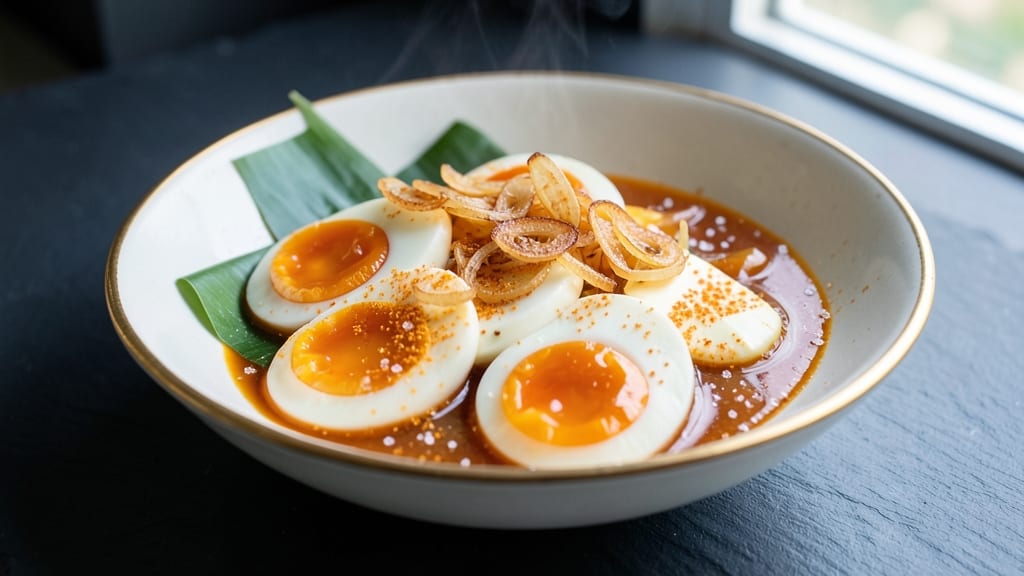
This Vietnamese egg butter recipe transforms simple ingredients into a fragrant, golden custard with layers of turmeric warmth and shallot sweetness. 🌟 The secret lies in slow-cooked butter infused with aromatic shallots and turmeric, creating a rich base that elevates the tender egg custard to restaurant-quality perfection.
What makes this dish special is its delicate balance of textures and flavors—creamy custard set with a velvety butter layer, all topped with a hint of turmeric's earthy warmth.
Unlike traditional custards, this version incorporates Vietnamese-inspired ingredients like pandan leaves for a subtle floral note, while the shallot butter adds depth without overpowering the eggs' natural richness.
The process is straightforward yet precise: eggs are gently cooked in a flavorful butter mixture, then set to achieve that signature silky texture.
The result is a dish that's elegant enough for brunch gatherings but simple enough for a weeknight treat, with every bite delivering a harmonious blend of savory, sweet, and aromatic notes.
Perfect for serving with fresh fruit or a sprinkle of toasted coconut, this recipe delivers a taste of Vietnam's comforting flavors. The custard holds its shape beautifully, making it ideal for plating or gifting in small jars. Let's create this fragrant masterpiece together.
Ingredients for vietnamese egg butter
Twelve ingredients transform into a silken custard with aromatic depth and golden richness.
| Ingredient | Amount | Notes |
|---|---|---|
| Large Eggs 🥚 | 6 whole | Room temperature for even cooking |
| Unsalted Butter 🧈 | 1 cup | European-style preferred for flavor |
| Shallots 🧅 | ½ cup | Finely minced, not chopped |
| Ground Turmeric 🌿 | 1 tsp | Freshly ground for vibrant color |
| Pandan Leaves 🌿 | 2 whole | Fresh or dried, tied in bundle |
| Granulated Sugar 🍯 | ¼ cup | Light brown preferred for depth |
| Heavy Cream 🥛 | ½ cup | Full-fat for rich texture |
| Vanilla Extract 🌸 | ½ tsp | Pure Madagascar preferred |
| Salt 🧂 | ¼ tsp | Diamond Crystal preferred |
| Ground White Pepper 🌶️ | ⅛ tsp | Freshly cracked for subtle heat |
| Toasted Coconut Flakes 🥥 | 2 tbsp | For garnish, lightly toasted |
| Lemon Zest 🍋 | 1 tsp | Freshly grated for brightness |
The butter forms the flavor foundation—European-style with higher fat content yields superior texture. Plugrá or Kerrygold are ideal choices, available at specialty grocers or online. Shallots should be vibrant purple-red with firm skins; avoid any with sprouting or soft spots. Turmeric loses potency quickly, so purchase freshly ground from bulk bins at Whole Foods or Trader Joe's. Pandan leaves, the dish's signature element, can be found frozen in the Asian aisle of most supermarkets—Mae Ploy brand is widely available and reliable. For the sugar, light brown adds subtle caramel notes that complement the turmeric's earthiness.
No European butter? Cultured butter like Land O'Lakes works in a pinch, though texture won't be identical. Substitute pandan with vanilla bean paste (1/2 tsp) for floral depth, though the flavor profile shifts noticeably. Fresh turmeric root can replace ground turmeric at a 1:2 ratio (e.g., 1/4 tsp grated root = 1/2 tsp ground). For a lighter custard, reduce heavy cream to 1/4 cup and add 1/4 cup whole milk. The coconut flakes should be toasted in a dry pan over medium heat until golden—about 3 minutes—to enhance their natural sweetness without burning. Lemon zest adds brightness; if using bottled, ensure it's 100% pure zest with no added oils.
Store the custard in 4-ounce ramekins covered with plastic wrap pressed directly on the surface to prevent skin formation. Keeps 3-4 days refrigerated or 3 months frozen—thaw overnight in the fridge for best texture. The butter mixture can be pre-infused up to 2 days ahead, making this an excellent make-ahead brunch option. For plating, chill custards completely before unmolding—30 minutes in the fridge ensures clean release. Garnish with toasted coconut and lemon zest just before serving to preserve freshness.
Why You'll Love This Recipe
- No Chopping Needed: I swear by this one—just crack eggs, melt butter, and let the shallots caramelize slowly. No dicing, no mincing, no mess. That turmeric gives it this golden glow while keeping things simple.
- Golden, Creamy Magic: The pandan leaves add this subtle floral note that’s chef’s kiss, and the butter? It turns the eggs into little pockets of richness. Not too heavy, not too light—just right.
- Leftover Hero: Make a big batch on Sunday and use it all week—scrambled, fried, or even in sandwiches. The butter keeps it moist for days, and honestly? It’s way better the next day.
- Budget Breakfast Win: Eggs, butter, and shallots are pantry staples. The turmeric and pandan might be specialty, but a little goes far. This is the kind of recipe that stretches your grocery budget without sacrificing flavor.
Step-by-step instructions for Vietnamese egg butter
Transform simple ingredients into a fragrant, golden Vietnamese egg butter with vibrant turmeric and aromatic shallots.
🍳 Step 1: Infuse the Butter with Shallots and Pandan
In a medium saucepan, melt the 1 cup unsalted butter over medium-low heat. Add the 0.5 cup finely minced shallots and the 2 whole pandan leaves tied in a bundle. Stir gently and cook for 8-10 minutes until the shallots soften and turn translucent, releasing their sweet aroma.
Here's the thing—pandan leaves add a subtle floral note that's essential to this recipe. If using dried leaves, reduce cooking time to 5 minutes to avoid bitterness. Watch closely as the butter begins to foam; this indicates the aromatics are infusing properly. Once the shallots are tender and the butter smells richly aromatic, remove the pan from heat and let it cool slightly.
👨🍳 Step 2: Whisk Eggs and Seasoning for Silky Texture
In a separate bowl, whisk together the 6 whole large eggs (room temperature) until just combined. Add the 0.25 cup granulated sugar, 0.5 tsp vanilla extract, 0.25 tsp salt, and 0.125 tsp ground white pepper. Whisk vigorously for 2-3 minutes until the mixture thickens slightly and becomes pale yellow—this ensures a smooth, custard-like texture when cooked.
I like to add the 1 tsp lemon zest at this stage for brightness. The acidity balances the richness of the butter and complements the turmeric we'll add next. The mixture should coat the back of a spoon when you lift it—this consistency is crucial for achieving that signature Vietnamese egg butter sheen.
🔥 Step 3: Temper the Egg Mixture with Infused Butter
Return the infused butter to low heat and slowly pour in the egg mixture while whisking constantly. The key here is patience—add the eggs gradually over 3-4 minutes to prevent scrambling. The mixture will thicken as it heats, but keep whisking until it reaches 160°F on an instant-read thermometer and forms a glossy, ribbon-like consistency.
This tempering process is what creates that silky, velvety texture. If the mixture thickens too quickly, immediately remove it from heat and whisk vigorously to break up any curdling. The butter should coat the back of a spoon but still flow smoothly—this is the perfect consistency for spreading or using in desserts.
🥘 Step 4: Finish with Turmeric and Heavy Cream
Reduce heat to lowest setting and whisk in the 1 tsp ground turmeric and 0.5 cup heavy cream. The turmeric will give the butter its signature golden color while adding earthy warmth. Cook for an additional 2 minutes, stirring constantly, until the mixture is fully combined and reaches 165°F. Remove from heat immediately to prevent overcooking.
Here's where it gets fun—the butter should now have a vibrant golden hue and a rich, aromatic fragrance. If it looks too thick, whisk in 1-2 teaspoons of hot water to achieve a smooth, spreadable consistency. The final texture should be like a luxurious, fragrant compound butter—thick enough to hold its shape but still spreadable.
⏰ Step 5: Cool, Garnish, and Store Properly
Transfer the egg butter to a heatproof bowl and let it cool to room temperature, stirring occasionally to prevent a skin from forming. Once cooled, it will thicken further into a firm, spreadable consistency. Sprinkle with 2 tbsp toasted coconut flakes for texture and garnish with an additional pinch of lemon zest for brightness.
For best results, store in an airtight container in the refrigerator for up to 5 days. To use, simply scoop out portions and soften at room temperature for 10-15 minutes before spreading. This butter keeps beautifully and makes an excellent topping for toast, pancakes, or pastries—its complex flavor profile elevates any dish it touches.
Pro Tips For Making Vietnamese Egg Butter
- Melt Butter Slowly: Start with low heat—this isn’t a sear, it’s a marriage. Too much rush and you’ll scramble the eggs before the butter even melts properly, turning your silky custard into something grainy. I learned this the hard way when I tried to speed it up, and the texture suffered.
- Toast Shallots Dry: Cook the shallots until they’re golden and crisp at the edges—no moisture left, not even a hint. If you stop too soon, they’ll turn mushy when mixed into the butter, making the whole dish taste dull. (Yes, even if you’re impatient like me.)
- Whisk Eggs Cold: Chill the eggs first—room temp makes them too eager to cook. Whisk them straight from the fridge for a smoother, more stable custard. I was skeptical until I tried it, and now I never skip this step.
- Squeeze Pandan Hard: Use the entire pandan leaf—strip it, roll it tightly, and squeeze it like you’re wringing out a dishrag. The juice is what carries that floral aroma, and skipping this means your butter will taste bland. (Your future self will thank you.)
Regional styles of this dish
Northern Vietnamese Style
In the northern regions like Hanoi and Ha Giang, this egg butter often incorporates star anise and cinnamon sticks for warmth, creating a spiced variation perfect for cold mornings.
I like to add ½ tsp ground star anise and 1 cinnamon stick during the butter infusion stage, simmering them for 5 minutes alongside the shallots. This version pairs beautifully with steamed rice noodles or as a filling for bánh cuốn (Vietnamese steamed rolls).
The spices add depth without overpowering the delicate egg custard.
Central Vietnamese Twist
Central Vietnam, particularly Hue, often uses lemongrass and kaffir lime leaves in place of pandan. For this version, bruise 2 stalks lemongrass and add them with the shallots during the butter infusion. After cooling, finely mince the lemongrass and fold it into the egg mixture before tempering.
The citrusy aroma complements the turmeric beautifully, creating a brighter, more refreshing profile. Garnish with toasted sesame seeds instead of coconut for a local touch.
Southern Vietnamese Adaptation
In the southern regions like Ho Chi Minh City, this dish often includes coconut milk for extra richness. After tempering the eggs, whisk in ¼ cup coconut milk along with the heavy cream. The result is a creamier texture with subtle tropical notes.
I also recommend adding ½ tsp shrimp paste (mắm ruốc) to the butter infusion for an umami depth that's characteristic of southern Vietnamese cuisine. This version works exceptionally well as a filling for bánh xèo (crispy Vietnamese pancakes).
Modern Fusion Approach
For a contemporary twist, try adding black sesame paste (1 tsp) during the final whisking stage to create a nutty contrast. I've also experimented with a matcha-infused version by whisking ½ tsp ceremonial-grade matcha into the egg mixture before tempering.
This fusion style works beautifully as a spread for sourdough toast or as a filling for chocolate croissants. The earthy matcha pairs surprisingly well with the turmeric's golden hue, creating a visually stunning presentation.
Regional Garnish Variations
Northern versions often finish with crushed peanuts and fresh mint leaves, adding crunch and herbal brightness. Central Vietnam might use toasted lotus seeds for a delicate floral note, while southern adaptations frequently include crispy shallot strings for texture.
For a fusion approach, I like to combine toasted coconut flakes with crushed pistachios and a sprinkle of edible gold leaf for an elegant presentation that works for both traditional and modern settings.
Seasonal Adjustments
In summer months, reduce the sugar to ¼ cup and add 1 tbsp lime juice to keep the custard light and refreshing. For winter, increase the butter to 1½ cups and add ½ tsp cardamom during the infusion for warming spices.
I've also created a pandan-coconut version for spring by using ½ cup coconut milk in place of heavy cream and adding 1 tsp pandan extract to the egg mixture. Each seasonal variation maintains the dish's signature texture while adapting to the weather's demands.
Nutrition facts
Frequently asked questions
Can I make this Vietnamese egg butter without pandan leaves?
Yes! If you can't find pandan, substitute with ½ tsp vanilla bean paste or ½ tsp pandan extract (available in Asian markets). For a different flavor profile, try ½ tsp cardamom or 1 tsp lemongrass paste—both add aromatic depth. The texture remains the same, but the floral notes will shift to citrusy or spiced undertones.
How do I fix scrambled eggs if they curdle during tempering?
Immediately remove the pan from heat and whisk vigorously for 1-2 minutes to break up any lumps. If the mixture is still grainy, strain it through a fine-mesh sieve into a clean bowl. For extra silkiness, whisk in 1-2 teaspoons of hot water to restore the custard-like consistency. The key is patience—slowly reheat on lowest heat while whisking constantly.
What’s the best way to serve this egg butter?
This versatile spread works beautifully on warm baguettes, steamed rice noodles, or pancakes. For a traditional Vietnamese touch, serve it chilled in small jars with fresh mango slices or dragon fruit. It also makes an elegant filling for chocolate croissants or bánh cuốn (steamed rolls). The golden color and aromatic flavors make it a stunning centerpiece for brunch.
Can I make this egg butter ahead of time?
The butter mixture can be infused 2 days ahead and stored in the fridge. The fully prepared egg butter keeps for 5 days refrigerated or 3 months frozen. Thaw overnight in the fridge for best texture. For serving, let it soften at room temperature for 10-15 minutes before spreading—this restores its creamy consistency perfectly.
Why does my egg butter turn out too thick or grainy?
Overcooking or whisking too vigorously can cause graininess. Keep the heat on lowest setting and whisk gently until the mixture reaches 165°F. For thickness, whisk in 1-2 teaspoons of hot water to adjust consistency. If using older eggs (over 2 weeks), they may thicken faster—opt for fresher eggs for a smoother result. Always temper the eggs slowly to prevent curdling.