
Breakfast & Brunch
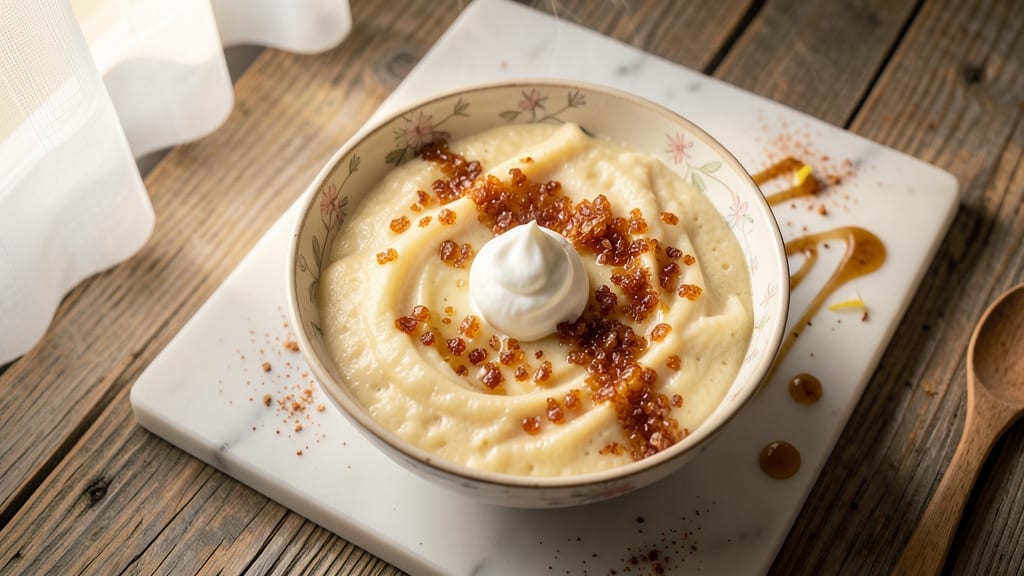
This whole egg pudding recipe transforms simple ingredients into a luxurious breakfast masterpiece—silky yolk clouds cradled in crispy tortilla cups. The secret lies in perfectly balanced custard that sets just right, creating a texture that's both delicate and satisfying.
I developed this after years of experimenting with custard-based desserts, finally achieving the ideal consistency that's neither too firm nor too runny.
The beauty of this recipe is its versatility—you can customize it with vanilla, chocolate, or even fruit purées while maintaining that signature silky texture. The tortilla cups add an unexpected crunch that contrasts beautifully with the creamy filling, making each bite an experience.
What makes it truly special is how effortlessly it comes together with just a few key ingredients and minimal equipment.
By the time you're done, you'll have a dish that looks impressive but requires no advanced techniques—just precise timing and gentle heat. The result is a breakfast or dessert that's equally at home on a weekend brunch table or as an elegant after-dinner treat.
The custard's rich, velvety texture pairs perfectly with the crispy tortilla shells, creating a balance of textures that's simply irresistible.
Perfect for special occasions or when you want to impress without spending hours in the kitchen, this recipe delivers restaurant-quality results with minimal effort. The custard can be made ahead and chilled, allowing you to assemble the final presentation just before serving.
Here's how to create this luxurious whole egg pudding that will have everyone asking for seconds.
Ingredients for whole egg pudding
Eight simple ingredients create this luxurious whole egg dessert with crispy tortilla cups.
| Ingredient | Amount | Notes |
|---|---|---|
| Large Eggs 🥚 | 8 whole | Freshly cracked, room temperature |
| Granulated Sugar 🍚 | ½ cup | White or light brown preferred |
| Heavy Cream 🥛 | 1 cup | Full-fat for best texture |
| Whole Milk 🥛 | ½ cup | Warmed slightly for smooth custard |
| Unsalted Butter 🧈 | 2 tbsp | Cold, cut into small pieces |
| Vanilla Extract 🌿 | 1 tsp | Pure vanilla preferred |
| Cornstarch 🌾 | 2 tbsp | For silky texture |
| Salt 🧂 | ¼ tsp | Fine sea salt |
| Flour Tortillas 🌯 | 4 whole | Medium size, 8-inch |
| Vegetable Oil 🫒 | ¼ cup | For crisping tortillas |
| Lemon Juice 🍋 | 1 tbsp | Freshly squeezed |
| Ground Cinnamon 🌶️ | ½ tsp | Optional for warmth |
The eggs are the star—use fresh, room-temperature ones for the smoothest custard. Kirkland Signature or Pete & Gerry's eggs work perfectly, but any high-quality brand will do. The tortillas need to be medium-sized (8-inch) for proper crisping—Mission or La Tortilla Factory are my go-tos. If you can't find flour tortillas, corn tortillas work in a pinch, though they crisp differently. The butter should be cold when added to prevent the custard from breaking. Warm the milk and cream together gently (just until steaming) to help dissolve the sugar and cornstarch evenly.
No heavy cream? Full-fat coconut milk works but adds a slight coconut flavor—use the same amount. Running short on eggs? Add 1 extra tbsp cornstarch to compensate for the reduced binding. The vanilla extract can be swapped for vanilla bean paste (double the amount) or even 1 tsp vanilla sugar if you're in a bind. For a chocolate version, replace the vanilla with 2 tbsp cocoa powder and add 1 oz melted dark chocolate to the custard. The lemon juice brightens the whole dish—don't skip it, even if you're not a huge lemon fan. If you want extra richness, add 1 tbsp mascarpone cheese to the finished custard.
The custard can be made up to 2 days ahead and stored in the fridge—just reheat gently before assembling. The tortilla cups should be prepped fresh (they lose crispness if made ahead), but you can bake them in batches and keep them warm in a 200°F oven while you finish the custard. For serving, I like to dust with powdered sugar and add a berry compote on the side. The pudding keeps in the fridge for 3 days if stored properly in airtight containers. Freezing isn't recommended—it changes the texture.
Why You'll Love This Recipe
- Five-Ingredient Magic: I swear by this recipe because it’s the kind of dish where you measure, mix, and bake—no fancy techniques. The eggs and cream do all the heavy lifting while you sip your coffee and pretend you’re not cooking.
- Velvet-Smooth Payoff: That first bite? Pure comfort—creamy, lightly sweetened, with just enough richness from the butter and cream. It’s the kind of texture that makes you slow down and savor it, no matter how busy your day was.
- Breakfast or Dessert: Honestly, I make this for both—drizzled with honey in the morning or topped with berries for a late-night treat. The same simple base works for brunch, a snack, or even a quick dessert when you’re craving something indulgent.
- Leftovers That Don’t Suck: Unlike custards that separate or puddings that get watery, this holds up for days. I’ll stash it in the fridge and reheat slices in the microwave—still creamy, still delicious, no weird textures. (Yes, even on a Tuesday night.)
Step-by-step instructions for silky yolk clouds in crispy tortilla cups
Here's how to transform simple ingredients into a decadent dessert with perfect textures every time.
Whisk the Egg Mixture to Silky Perfection
In a large mixing bowl, combine the 8 whole Large Eggs, 0.5 cup Granulated Sugar, 2 tbsp Cornstarch, and 0.25 tsp Salt. Whisk vigorously for 2-3 minutes until the mixture turns pale yellow and nearly doubles in volume. This step incorporates air, which creates that signature cloud-like texture.
In a separate small bowl, gently warm the 0.5 cup Whole Milk and 1 cup Heavy Cream together until steaming (about 30 seconds in the microwave or over a double boiler). The warmth helps emulsify the custard later. Slowly pour this warm dairy mixture into the egg mixture while whisking constantly to prevent curdling. Add the 1 tsp Vanilla Extract and 1 tbsp Lemon Juice, then fold in the 2 tbsp Unsalted Butter cut into small pieces. The butter should melt completely into the mixture.
Prepare the Crispy Tortilla Cups
Preheat your oven to 375°F. Cut each of the 4 whole Flour Tortillas into quarters, creating 16 equal pieces. Brush each piece lightly with vegetable oil using a pastry brush—just enough to coat the surface without soaking through. Arrange the tortilla pieces in a single layer on a parchment-lined baking sheet, leaving ½-inch gaps between them.
Bake for 8-10 minutes until the edges are golden brown and crispy, while the centers remain slightly pliable. Remove from the oven and immediately press each piece into a 3-inch round mold (or use a small ramekin) to form cups. The heat will help them hold their shape as they cool. Sprinkle the bottom of each cup with 0.5 tsp Ground Cinnamon if using, then let cool completely before filling.
Bake the Pudding to Set
Divide the egg mixture evenly among the 4 tortilla cups, filling each ¾ full. Place the cups on a baking sheet and bake at 350°F for 30-35 minutes. The pudding is done when the center is just set but still slightly wobbly—it will continue thickening as it cools. You'll know it's ready when a toothpick inserted comes out clean with a few moist crumbs clinging to it.
Remove from the oven and let cool to room temperature. This resting period allows the custard to fully set and develop its signature silky texture. For best results, refrigerate for at least 2 hours before serving. The contrast between the warm, crispy tortilla cups and the cool, creamy pudding is what makes this dessert truly special.
Serve with Confidence
Run a small knife around the edges of each pudding to loosen it from the tortilla cups. Gently invert each cup onto a serving plate, allowing the crispy tortilla to form a perfect shell around the silky egg custard. The tortilla should hold its shape beautifully, creating an elegant presentation.
Serve immediately while the tortilla cups are still crispy. The pudding should have a rich, custard-like texture with a slight tang from the lemon juice, perfectly balanced by the vanilla and subtle sweetness. Each bite delivers that magical contrast of temperatures and textures—creamy, cool custard surrounded by warm, crispy tortilla.
Pro Tips For Making Whole Egg Pudding
- Whisk Eggs Cold: Grab that bowl of eggs straight from the fridge—no room-temperature nonsense. Cold eggs whip up fluffier, and you’ll avoid that sad, flat pudding texture that happens when you rush this step. Trust me, your future self will notice the difference.
- Temper the Cream: Warm the heavy cream and milk together over a pot of barely simmering water—just until it reaches body temperature, not hot. Dumping cold dairy into warm eggs shocks the proteins and ruins the silky finish. Think of it as a gentle handshake, not a shove.
- Don’t Overmix the Sugar: Once you fold in the sugar, stop stirring after 10-12 strokes—just until it dissolves. Whipping it into oblivion introduces air bubbles that turn your pudding into a deflated soufflé. Less is more; your spoon will thank you.
- Butter Matters: Use cold, unsalted butter cut into small cubes—no melting it first. It should melt slowly into the custard as it bakes, creating pockets of richness without turning the whole thing greasy. Skip the pre-melted shortcut, or you’ll regret the oil slick on top.
Common mistakes when making this recipe
Overwhisking the Eggs
Whisking the eggs too aggressively or for too long can create unwanted air bubbles that make your custard grainy rather than silky. Stop when the mixture is pale yellow and nearly doubled in volume—about 2-3 minutes of vigorous whisking.
Overwhisking breaks down the proteins too much, leading to a less stable custard. I’ve ruined several batches by pushing past this point, so trust your instincts when the mixture reaches that perfect ribbon stage. 🥚
Skipping the Warm Dairy
Adding cold milk and cream directly to the egg mixture can cause curdling, resulting in a lumpy custard. Always warm the dairy to steaming (about 30 seconds in the microwave) before slowly incorporating it into the eggs.
This gentle temperature difference helps emulsify the mixture smoothly. I learned this the hard way—once, I forgot and ended up with a sad, clumpy mess. 🧈
Overfilling the Tortilla Cups
Filling the tortilla cups more than ¾ full risks spillage during baking, which can make a mess and ruin your presentation. The custard needs room to expand slightly as it sets. If you overfill, the edges may spill over and stick to the baking sheet, creating a sticky disaster.
Trust me, I’ve had to scrape custard off my oven racks more times than I’d like to admit. 🌯
Baking at Too High Heat
Using temperatures above 350°F can cause the custard to set too quickly on the outside while remaining undercooked inside, leading to a dry or rubbery texture. The ideal temperature is 350°F, which allows the custard to cook evenly.
I once baked mine at 375°F by mistake and ended up with a sad, overcooked pudding that tasted more like scrambled eggs than dessert. 🔥
Not Cooling Properly
Rushing to serve the pudding immediately after baking can result in a runny, under-set texture. Always let it cool to room temperature, then refrigerate for at least 2 hours to fully set. This step is crucial for achieving that perfect silky consistency.
I’ve had guests ask why their pudding was "too soft," only to realize they served it straight from the oven. Patience is key here! ⏰
Using Low-Quality Tortillas
Cheap or overly thick tortillas won’t crisp properly, ruining the texture contrast that makes this dessert special. Opt for medium-sized flour tortillas (like Mission or La Tortilla Factory) and brush them lightly with oil for even crispiness.
I’ve tried using corn tortillas as a shortcut, and while they work, they lack the delicate texture of flour tortillas. Don’t skimp on this step—it’s what makes the dish shine. 🌶️
Nutrition facts
Frequently asked questions
Can I make this whole egg pudding without a tortilla press?
You can shape the tortilla cups using 3-inch round molds or even small ramekins. Press each baked tortilla piece firmly into the mold while still warm—it will hold its shape as it cools. For extra crispiness, place the shaped cups on a wire rack to cool rather than on a plate.
How do I fix a broken custard if it curdles?
If your custard starts to curdle, immediately remove it from heat and whisk vigorously while adding 1 tbsp cold milk at a time. The gentle warmth of the milk helps re-emulsify the mixture. If it's already set, strain through a fine-mesh sieve to remove lumps before baking. For future batches, always warm your dairy to steaming first!
Can I substitute the vanilla extract with something else?
Yes! Swap the vanilla for 1 tsp vanilla bean paste (double the amount) or 1 tbsp vanilla sugar. For chocolate lovers, replace the vanilla with 2 tbsp cocoa powder and add 1 oz melted dark chocolate to the custard base. The lemon juice can also be reduced to ½ tbsp if you prefer less tang.
Why does my custard taste too sweet?
Adjust the sugar to taste—start with ¼ cup instead of ½ cup if you prefer less sweetness. The vanilla and lemon juice add natural balance, but you can also add ½ tsp almond extract for depth. For a more sophisticated flavor, try infusing the warm cream with 1 cinnamon stick while heating.
How long can I store the assembled pudding?
The assembled pudding stays fresh in the fridge for 3 days if stored in airtight containers. For longer storage, keep the custard and tortilla cups separate—store the custard in a sealed container for 2 days and bake the tortillas fresh when ready to serve. Freezing isn't recommended as it alters the texture.