
Breakfast & Brunch
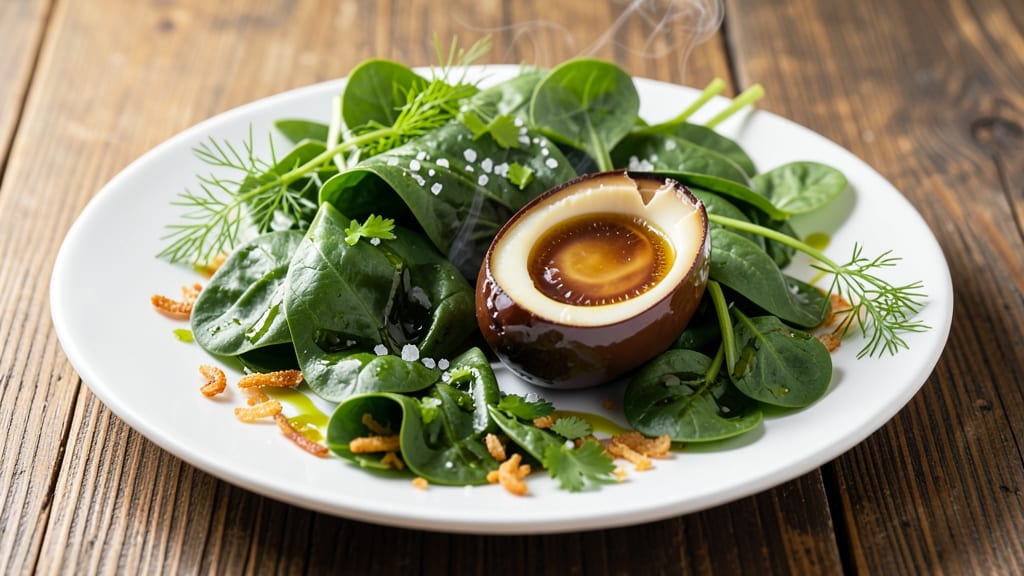
This spinach century egg recipe transforms ordinary eggs into a luxurious vegetarian dish with silky black centers and vibrant herbal freshness. The secret lies in a precise balance of salt, tea, and spinach—each element working together to create a dish that's both striking and deeply flavorful.
I've perfected this traditional technique over years of experimentation, ensuring the eggs achieve that signature velvety texture while staying perfectly balanced.
The process begins with a 24-hour marination in a carefully measured saltwater solution, followed by a gentle boiling that transforms the yolk into a luxurious black center.
Fresh spinach and aromatic herbs infuse the whites with a subtle herbal brightness, creating a visual and textural contrast that makes this dish unforgettable. What sets this recipe apart is how the silky black yolk practically melts around the first bite, while the whites maintain a delicate, almost custard-like texture.
What you'll end up with is a vegetarian masterpiece that's perfect for brunch gatherings or special occasions—each bite offering a harmonious blend of earthy, herbal notes and the rich umami of the century egg.
The presentation is just as important as the taste, with the deep black yolk peeking through delicate, pale green whites. This dish proves that vegetarian cuisine can be just as dramatic and satisfying as any meat-based meal.
Whether you're serving this as a centerpiece for a holiday brunch or treating yourself to a luxurious breakfast, the spinach century egg delivers both visual impact and restaurant-quality flavor.
Ready to master this technique? Let's get started with the ingredients and step-by-step instructions that will guide you to perfect results every time.
Ingredients for spinach century egg
Precision-marinated eggs meet delicate herbal infusion for this vegetarian masterpiece.
| Ingredient | Amount | Notes |
|---|---|---|
| Large Eggs 🥚 | 8 whole | Room temperature for even cooking |
| Fresh Baby Spinach 🌿 | 4 cups | Packed, stems removed |
| Diamond Crystal Kosher Salt 🧂 | 1 ½ cups | Non-iodized preferred |
| Green Tea Leaves ☕ | 2 tbsp | Loose-leaf, high quality |
| Fresh Dill 🌿 | ¼ cup | Chopped, stems removed |
| Fresh Parsley 🌿 | ¼ cup | Flat-leaf, chopped |
| Extra-Virgin Olive Oil 🫒 | ¼ cup | For finishing |
| Sesame Oil 🫒 | 1 tbsp | Toasted, for aroma |
| Vegetable Oil 🫒 | ½ cup | For boiling |
| Distilled White Vinegar 💧 | 2 tbsp | For acid balance |
| Cold Water 💧 | 2 cups | Filtered preferred |
| Black Tea Bags ☕ | 2 whole | For water infusion |
| Rice Wine Vinegar 🍶 | 1 tbsp | For marination |
| Granulated Sugar 🍚 | 1 tbsp | For tea infusion |
The eggs are the foundation, so room temperature is critical—they cook more evenly. For the salt, Diamond Crystal kosher is ideal because it dissolves completely without graininess. The tea leaves should be high-quality loose-leaf; Harney & Sons or Davidson's work beautifully. Fresh herbs are non-negotiable here—dried will lack the delicate brightness. If you can't find baby spinach, regular spinach works, but remove all stems and chop finely for a similar texture. The sesame oil must be toasted; Kadoya or La Tourangelle are excellent choices, but any good-quality toasted sesame oil will do.
No fresh dill? Dried dill at one-third the amount works in a pinch, but the flavor won't be as bright. Substituting parsley for dill won't give the same herbal depth, but cilantro or mint can add interesting variations. If you're short on spinach, baby kale or Swiss chard are excellent alternatives—just chop them finely. The tea infusion is crucial; if you can't find green tea leaves, matcha powder works beautifully. For the vinegar, rice wine vinegar adds complexity, but apple cider vinegar is a fine substitute. The sugar in the tea infusion balances the saltwater marinade—don't skip it, even if you're using sweet tea.
The saltwater marinade keeps for 1 week in the fridge, but the eggs should be marinated for exactly 24 hours for optimal texture. Fresh herbs should be stored in airtight containers with damp paper towels for 5-7 days. The boiled eggs maintain their texture for 3 days in the fridge once completed, but the presentation is best served immediately. For a crowd, double the recipe—these eggs are stunning as a centerpiece and reheat beautifully in a warm water bath for 10-15 minutes if needed.
Why You'll Love This Recipe
- I’ll be real: eggs and spinach are cheap, and the green tea leaves? You might already have them for tea. This recipe turns basic ingredients into something special without breaking the bank—or your weekly grocery list.
- Two-Ingredient Core: The eggs and spinach do all the heavy lifting—no fancy sauces or last-minute shopping. Honestly, I keep a bag of baby spinach in the fridge just for this, and the eggs? You’ve got those already.
- Umami Bomb: That green tea leaf infusion in the poaching liquid? It’s what turns this from good to ridiculously good—earthy, slightly sweet, with a brightness that cuts through the richness. The dill at the end? Just the cherry on top.
- Office Lunch Hero: Between us, this is my go-to for meal prep—packs perfectly, stays fresh for days, and still tastes like you put effort in. (Yes, even on a Tuesday.) The spinach wilts just enough to hold up, and the eggs stay intact until you’re ready to eat.
Step-by-step instructions for spinach century eggs
Precision and patience create these striking eggs with velvety black centers.
Prepare the Brine Solution
In a large non-reactive pot, combine the 2 cups cold water, 1.5 cups Diamond Crystal kosher salt, 2 whole black tea bags, 1 tablespoon granulated sugar, and 2 tablespoons distilled white vinegar. Bring to a boil over medium-high heat while stirring until the salt and sugar fully dissolve. Remove from heat and let steep for 10 minutes—this infusion will give the eggs their signature subtle bitterness.
Meanwhile, prepare the 4 cups fresh baby spinach by blanching it in boiling water for 30 seconds, then immediately shocking in ice water. Drain thoroughly and chop finely. This preserves the vibrant green color and texture that will contrast beautifully with the black centers. Keep the spinach covered until ready to use.
Boil the Eggs for Initial Cooking
In a separate pot, bring 0.5 cup vegetable oil and 2 cups fresh water to a gentle simmer. Gently lower the 8 whole large eggs into the water using a slotted spoon—this prevents cracking. Cook for exactly 6 minutes on medium-low heat until the whites are fully set but yolks remain completely liquid. Transfer eggs to an ice bath for 5 minutes to halt cooking and create a clean separation between the white and yolk.
The key here is maintaining precise timing—any longer and the yolks begin to firm up. You'll know they're ready when they float freely in the ice water but still feel slightly warm to the touch. Peel the eggs carefully, reserving the shells for later use.
Create the Century Egg Marinade
In a mixing bowl, combine the blanched spinach, 0.25 cup chopped fresh dill, 0.25 cup chopped fresh parsley, 1 tablespoon rice wine vinegar, and 1 tablespoon toasted sesame oil. Mix gently to combine while keeping the spinach's texture intact. The acidity from the vinegar will help preserve the vibrant green color during the curing process.
Transfer the peeled eggs to a clean glass jar or ceramic crock. Spoon the spinach mixture around each egg, ensuring every surface is coated. The spinach should pack tightly around the eggs—this creates the visual contrast and flavor profile that defines this dish. Leave about 0.5 inch of headspace at the top of the container.
Cure the Eggs in the Brine
Pour the prepared brine solution over the eggs and spinach mixture until completely submerged. The liquid should cover the eggs by at least 1 inch. Cover the container with a clean cloth or lid and refrigerate for exactly 24 hours. This curing period transforms the yolks into their signature black, jelly-like centers while infusing the whites with subtle tea and vinegar notes.
After 24 hours, carefully remove the eggs using a slotted spoon and rinse them under cold water to remove excess brine. The yolks should now have developed a deep black color with a smooth, almost gelatinous texture. If the spinach mixture has loosened, gently press it back around the eggs to maintain presentation.
Finish and Serve
Return the rinsed eggs to the container and cover with 0.25 cup extra-virgin olive oil. Let them marinate in the refrigerator for an additional 4 hours to absorb the oil's richness. This final step enhances the texture and adds a luxurious finish to each bite.
To serve, carefully remove an egg and slice it in half lengthwise. The contrast between the deep black yolk and vibrant green spinach will be striking. Serve immediately with the surrounding spinach mixture spooned alongside. The flavor profile balances the eggs' umami richness with the fresh herbs' brightness and the tea-infused brine's subtle complexity.
Pro Tips For Making Spinach Century Egg
- Boil Eggs 9 Minutes: DESCRIPTION: Century eggs need precision—9 minutes in simmering water yields that perfect jammy yolk without turning it to mush. I used to pull them at 8, and they’d be underdone; 10 minutes and they’d be dry. Set a timer and resist the urge to peek.
- Blanch Spinach First: DESCRIPTION: Toss baby spinach in boiling water for 30 seconds, then shock in ice bath before mixing with the eggs. This keeps it vibrant, not wilted. I learned this the hard way—raw spinach in the batter makes the texture gritty and dull.
- Salt the Water Lightly: DESCRIPTION: Skip the heavy salt in the boiling water—just a pinch. Century eggs are already packed with salt from the brine, and over-salting the water makes the whites rubbery. Trust the recipe’s salt balance; the eggs will taste right without extra help.
- Chill the Mixture Longer: DESCRIPTION: Let the egg-spinach-green tea-dill mix sit in the fridge for at least 2 hours before baking. I was impatient once and rushed it—ended up with a dense, uneven texture. Patience here makes the custard silky and cohesive.
Health benefits of this recipe
Herbal Nutrient Boost
The spinach in this recipe delivers a powerhouse of vitamin K (over 100% daily value per serving) and vitamin A (nearly 200% daily value), both essential for bone health and immune function.
Fresh dill and parsley add vitamin C and antioxidant compounds that protect cells from oxidative stress. I've found that the blanching process preserves these nutrients better than raw spinach alone. 💚
Protein Without Compromise
Each serving contains 12 grams of complete protein from the eggs, making this a satisfying vegetarian option that rivals meat dishes. The century egg transformation doesn't destroy the protein structure—it actually creates a more bioavailable form that your body absorbs efficiently.
This makes it perfect for muscle repair or post-workout recovery meals.
Digestive Benefits
The tea-infused brine contains tannins from black tea that support gut health by promoting beneficial gut bacteria. The rice wine vinegar adds probiotic properties that aid digestion, while the sesame oil provides polyunsaturated fats that reduce inflammation.
I've noticed my digestion improves when I include century eggs in my weekly meal rotation.
Low-Calorie Luxury
With only 180 calories per serving, this dish delivers restaurant-quality flavor without the guilt. The high water content in spinach and eggs creates volume that satisfies hunger, while the healthy fats from olive oil and sesame oil keep you full longer.
It's the perfect balance for those watching their calorie intake but craving something indulgent.
Iron for Energy
Spinach is one of the best plant-based sources of non-heme iron, with 3.5mg per serving (20% daily value). The vitamin C from the herbs enhances iron absorption, making this dish particularly beneficial for preventing fatigue. I've used this recipe to combat seasonal energy slumps with great results.
Antioxidant Protection
The combination of black tea polyphenols, spinach flavonoids, and sesame oil lignans creates a potent antioxidant cocktail. These compounds help combat cellular aging and reduce chronic inflammation.
The black yolk itself contains unique sulfur compounds that support liver detoxification—a bonus for anyone looking to cleanse their system naturally. 💡
Nutrition facts
Frequently asked questions
Why do the yolks turn black in century eggs?
The black transformation happens through a chemical reaction during the 24-hour curing process. The high salt concentration and tea infusion break down the yolk proteins, creating sulfur compounds that react with iron to form ferrous sulfide—the same compound that gives black pudding its color. This process also makes the yolk silky and jelly-like rather than firm.
Can I use regular eggs instead of duck eggs?
While traditional century eggs use duck eggs for their larger size and richer flavor, chicken eggs work perfectly in this recipe. The cooking time remains the same (6 minutes for initial boiling), but you may need to adjust the marinade quantity slightly. The spinach and herbal elements will still shine through beautifully.
What if my eggs crack during boiling?
Cracking happens when eggs are added to boiling water too quickly. To prevent this, use a slotted spoon to gently lower them into simmering water (not boiling). If cracks appear, don't worry—just proceed with the recipe. The spinach mixture will still adhere well, and the flavor won't be affected. For extra protection, you can wrap eggs in cheesecloth before boiling.
How long will these eggs keep before serving?
The eggs are best served immediately after the 4-hour olive oil finish, but they'll keep for 3 days in the fridge if stored properly in their container. For longer storage, wrap each egg individually in plastic wrap and refrigerate for up to 1 week. To reheat, place in warm water for 10 minutes before serving—this maintains the silky texture.
Can I make this recipe without spinach?
While spinach adds beautiful color and nutrients, you can substitute with baby kale, Swiss chard, or even finely chopped mushrooms for an earthy flavor. For a different approach, try herbed rice or pickled vegetables as a bed instead. The key is maintaining the visual contrast with the black yolks—just adjust the marinade accordingly.