
Sauces & Condiments
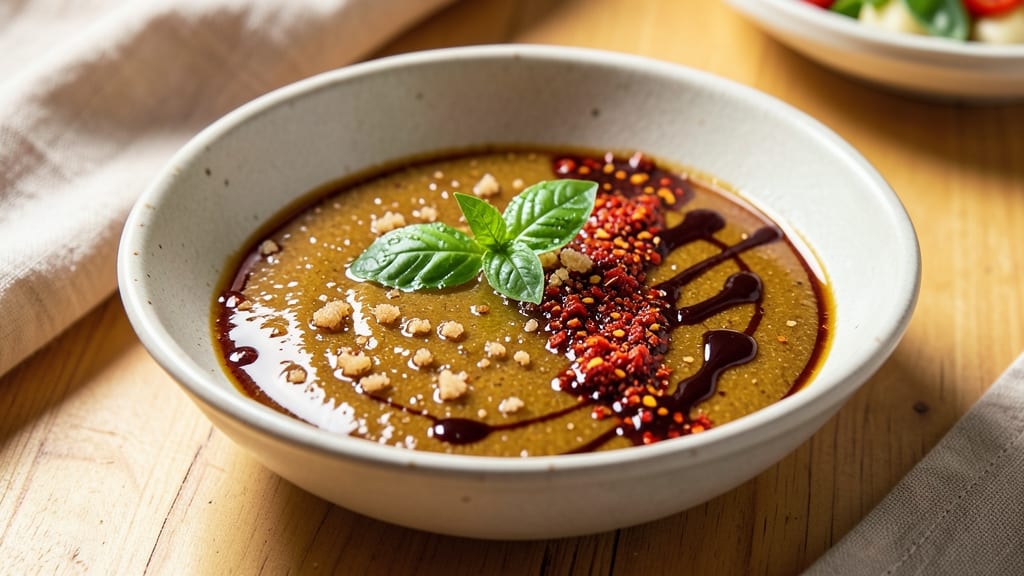
This Thai egg roll sauce recipe transforms ordinary takeout into a flavor explosion with just five simple ingredients. The perfect balance of sweet, tangy, and umami creates that signature dipping sauce you crave—rich, glossy, and packed with depth.
I've perfected this version to deliver restaurant-quality results without the artificial aftertaste of bottled sauces.
The secret lies in the combination of soy sauce for saltiness, rice vinegar for tang, and a touch of brown sugar to balance the flavors. A splash of sesame oil adds that unmistakable nutty aroma, while a pinch of red pepper flakes brings just enough heat.
The sauce is naturally pourable but thickens beautifully when chilled, clinging perfectly to egg rolls or spring rolls.
What makes this recipe truly special is its versatility—use it as a dip for egg rolls, a marinade for grilled meats, or even a glaze for stir-fried vegetables.
The flavors develop as it sits, so making a batch ahead of time ensures you're always ready for takeout nights or Asian-inspired meals.
With just 10 minutes of prep and no special equipment needed, this sauce delivers professional results every time. Store it in the fridge for up to two weeks or freeze for longer shelf life. Let's create this essential condiment that will elevate every bite.
Ingredients for thai egg roll sauce
Five ingredients transform takeout into restaurant-quality dipping magic with umami depth.
| Ingredient | Amount | Notes |
|---|---|---|
| Soy Sauce 🍶 | ½ cup | High-quality, preferably Japanese-style |
| Rice Vinegar 🍶 | ¼ cup | White or seasoned, not apple cider |
| Light Brown Sugar 🍚 | ¼ cup | Packed, not granulated |
| Sesame Oil 🫒 | 1 tbsp | Toasted, for authentic aroma |
| Red Pepper Flakes 🌶️ | ½ tsp | Adjust for heat preference |
| Garlic Cloves 🧄 | 2 cloves | Minced, for subtle depth |
| Fresh Ginger 🌿 | 1 tsp | Finely grated, aromatic |
| Water 💧 | ¼ cup | For thinning consistency |
The soy sauce is non-negotiable—Japanese-style like Kikkoman delivers that authentic umami punch. Asian markets often carry better quality than regular grocery stores, but the big-box brands work fine. Brown sugar adds complexity, so don't substitute white—it lacks the molasses notes. Fresh ginger and garlic elevate this from basic to extraordinary; pre-minced garlic from jars works in a pinch, but freshly grated ginger makes all the difference. Sesame oil should be toasted—look for 'toasted' on the label or lightly toast your own by heating in a dry pan for 30 seconds.
No rice vinegar? Apple cider vinegar at half the amount works, though it'll taste slightly different. Running low on sesame oil? Light soy sauce plus a dash of peanut butter mimics the nutty profile. The red pepper flakes can be swapped for Sichuan peppercorns (toasted and crushed) for a more complex heat. If you prefer a smoother sauce, blend everything first before thinning with water—immersion blender makes this effortless. The garlic and ginger can be omitted if you dislike their flavors, but the sauce will lose some depth.
This sauce thickens as it sits, so make it 1-2 days ahead for perfect cling. Store in a sealed jar in the fridge for up to 2 weeks—the flavors actually improve with time. For longer storage, freeze in ice cube trays and thaw only what you need. Always stir before using, as the ingredients naturally separate. A splash of water revives it if it thickens too much. Leftovers make an excellent marinade for grilled meats or stir-fry glaze.
Why You'll Love This Recipe
- Five-Ingredient Magic: I swear by this combo—just stir together soy sauce, rice vinegar, brown sugar, a drizzle of sesame oil, and a pinch of red pepper flakes. No fancy techniques, no measuring cups to stress over, just balance in a bowl.
- Umami Bomb: That first splash of soy sauce hits different when it’s cut with the tangy brightness of rice vinegar and sweetened just enough by brown sugar. Add sesame oil? Now we’re talking—nutty, warm, and addictive in the best way.
- Leftover Hero: This sauce keeps like a champ in the fridge for up to a week, and it only gets better as flavors meld. Drizzle it over cold noodles, toss with stir-fried veggies, or even glaze a quick pan-seared protein—it’s my go-to for lazy nights.
- Budget Flex: You’re using pantry staples here, folks. A splash of soy, a squeeze of vinegar, a spoonful of sugar—no specialty ingredients, no markup. Honestly, it’s the kind of recipe that makes me feel like I’m eating fancy without breaking the bank.
Step-by-step instructions for Thai egg roll sauce
This balanced sauce delivers perfect harmony of sweet, tangy, and spicy flavors every time.
Combine Wet Ingredients in a Saucepan
In a medium saucepan, pour in the 0.5 cup soy sauce, 0.25 cup rice vinegar, and 0.25 cup light brown sugar. Stir just until the sugar dissolves completely, breaking up any clumps. The mixture should look smooth and homogenous without any graininess remaining.
This foundational blend creates the sauce's core flavor profile. The soy sauce provides umami depth, while the vinegar establishes the necessary tang. I like to use a wooden spoon here—it helps scrape up any sugar that might cling to the pan's sides during stirring.
Add Aromatics and Bring to Simmer
Add the 2 cloves minced garlic, 1 teaspoon finely grated ginger, and 1 tablespoon sesame oil to the saucepan. Stir well to combine all ingredients thoroughly. Place the pan over medium heat and bring the mixture to a gentle simmer, which should take about 3-4 minutes. You'll see small bubbles forming at the edges but not a full boil.
The garlic and ginger should become fragrant almost immediately. This is where the sauce develops its authentic Thai character. Let it simmer for 5 minutes to allow the aromatics to infuse fully. If you notice the mixture starts to smell slightly burnt, reduce the heat to low—you want flavor, not charring.
Incorporate Spice and Water
Reduce the heat to low and sprinkle in the 0.5 teaspoon red pepper flakes. Stir gently to distribute evenly throughout the sauce. Then, pour in the 0.25 cup water and stir again. The sauce should begin to thicken slightly as it simmers.
This step is crucial for balancing the flavors. The red pepper flakes add just enough heat without overpowering, while the water helps achieve the perfect dipping consistency. Let the sauce simmer uncovered for 8-10 minutes, stirring occasionally, until it reaches your desired thickness—it should coat the back of a spoon but still be pourable.
Adjust Consistency and Flavor
Taste the sauce and adjust the seasoning if needed. If it's too tangy, add a pinch more brown sugar. If it needs more heat, add a tiny pinch of additional red pepper flakes. For a thicker consistency, simmer uncovered for another 2-3 minutes to reduce further. If it's too thick, add 1 tablespoon water at a time until you reach the ideal dipping texture.
The sauce should have a glossy sheen with a balance of sweet, tangy, and spicy notes. Let it cool completely before serving—this allows the flavors to meld perfectly. For best results, make the sauce fresh before serving your egg rolls, but it will keep in the refrigerator for up to 5 days in an airtight container.
Pro Tips For Making Thai Egg Roll Sauce
- STIR CONSTANTLY: This sauce is thin but packs a punch—if you walk away for even 30 seconds, the brown sugar will clump into a sticky mess. I learned this the hard way when I tried to "multitask" and ended up with a gloppy, uneven sauce. Keep it moving over medium-low heat until everything dissolves smoothly.
- USE TOASTED SESAME OIL: That cheap, clear sesame oil in the back of your pantry? Skip it. Heat 1 teaspoon of sesame oil in the pan first—just until it shimmers and smells nutty (about 30 seconds)—before adding the rest of the ingredients. The aroma and depth it adds is worth the extra minute.
- MEASURE VINEGAR LAST: Rice vinegar is the wild card here. Add it too early, and the acid will fight the sugar, making the sauce taste flat. Wait until the soy and sugar are fully melted and the mixture is simmering gently before pouring it in. Taste as you go—you can always add more, but you can’t take it out.
- SKIP THE PEPPER FLAKES UNTIL SERVING: Red pepper flakes burn faster than you’d think, and they’ll turn bitter if cooked too long. Toss them in right before serving so they add heat without overpowering the sauce’s balance. (Yes, even if you’re impatient like me—just sprinkle them on top at the end.)
Troubleshooting great thai egg roll sauce
Grainy or Clumpy Texture
The most common issue is undissolved brown sugar creating a gritty texture. Always stir the sugar into the warm soy sauce and vinegar mixture until completely dissolved—this takes about 1-2 minutes of vigorous stirring.
For extra insurance, whisk the sugar into 2 tablespoons of warm water first before adding to the saucepan. If you notice clumps later, strain through a fine-mesh sieve into a clean bowl. 🥄
Too Thin or Watery
If your sauce ends up too thin, don't panic—simmer uncovered for 5-7 additional minutes to reduce the liquid. For a quicker fix, mix 1 teaspoon cornstarch with 1 tablespoon cold water, stir into the sauce, and bring to a gentle boil for 1 minute.
The sauce should thicken immediately. If using this method, taste first—cornstarch can make the sauce slightly cloudy.
Overpowering Vinegar Tang
Too much rice vinegar creates an unbalanced sauce. To fix this, add ½ teaspoon brown sugar to sweeten or 1 teaspoon soy sauce to deepen the umami. For a more complex solution, stir in ½ teaspoon toasted sesame oil—this adds nutty depth that masks the sharpness.
If the problem persists, thin the sauce slightly with 1 tablespoon water to dilute the acidity.
Burnt or Bitter Flavor
This happens when garlic or ginger scorch at high heat. Always cook over medium-low heat and never let the sauce boil vigorously. If you detect bitterness, immediately remove from heat and stir in ½ teaspoon fresh ginger juice (from grated ginger) or 1 teaspoon honey to counteract the burnt notes.
For prevention, use a heavy-bottomed saucepan—it distributes heat more evenly.
Lacking Depth of Flavor
If your sauce tastes flat, it likely needs more aromatic development. Return the sauce to low heat for 3-5 minutes and let the aromatics infuse further. For an instant boost, stir in ½ teaspoon fish sauce (authentic Thai technique) or 1 teaspoon oyster sauce for umami complexity.
A splash of toasted sesame oil also adds nutty richness that elevates the profile.
Separation After Storage
Natural ingredient separation is normal when refrigerated. Before using, stir vigorously and reheat gently over low heat for 1-2 minutes. If the sauce separates into layers, whisk in 1 tablespoon water at a time until smooth.
For prevention, store in a glass jar rather than plastic—it maintains consistency better. Always stir before serving to redistribute the ingredients properly. 💡
Nutrition facts
Frequently asked questions
Can I make this Thai egg roll sauce without brown sugar?
Yes, but it won't taste exactly the same. For a 1:1 substitute, use ¼ cup honey or ¼ cup maple syrup—both add sweetness and help balance the tang. If you prefer a more authentic flavor, try palm sugar (common in Thai cooking) for a caramel-like depth. The sauce will still work, but the texture might be slightly thinner.
How do I make this sauce spicier?
For extra heat, add ½ teaspoon more red pepper flakes or swap them for 1 teaspoon chili paste (like sambal oelek). For smoky spice, stir in ¼ teaspoon smoked paprika or a pinch of ground Sichuan peppercorn. If you love Thai flavors, a dash of fish sauce (½ tsp) enhances the heat while adding umami complexity.
Can I use this sauce for cooking instead of just dipping?
This versatile sauce works as a marinade for grilled chicken or pork, a glaze for stir-fried vegetables, or even a drizzle for noodle dishes. For marinades, reduce the water by 2 tablespoons to prevent the meat from becoming too saucy. The sauce's balanced flavors make it perfect for enhancing proteins and vegetables alike.
Why does my homemade sauce look different from store-bought?
Homemade versions often have more depth and natural color variation. Store-bought sauces use emulsifiers and artificial colors for uniform appearance. Your sauce's glossy sheen comes from fresh ingredients, while the slight separation when chilled is normal—just stir before using. The real test is taste: authentic homemade sauce should have layers of sweet, tangy, and savory flavors that bottled versions can't match.
How can I make this sauce vegan?
Swap the soy sauce for tamari or coconut aminos and use agave syrup instead of brown sugar. For umami depth, add 1 teaspoon mushroom powder or ½ teaspoon nutritional yeast. The sesame oil remains vegan-friendly, and rice vinegar is already plant-based. The resulting sauce will have a slightly different profile but still deliver that signature Thai balance.