
Breakfast & Brunch
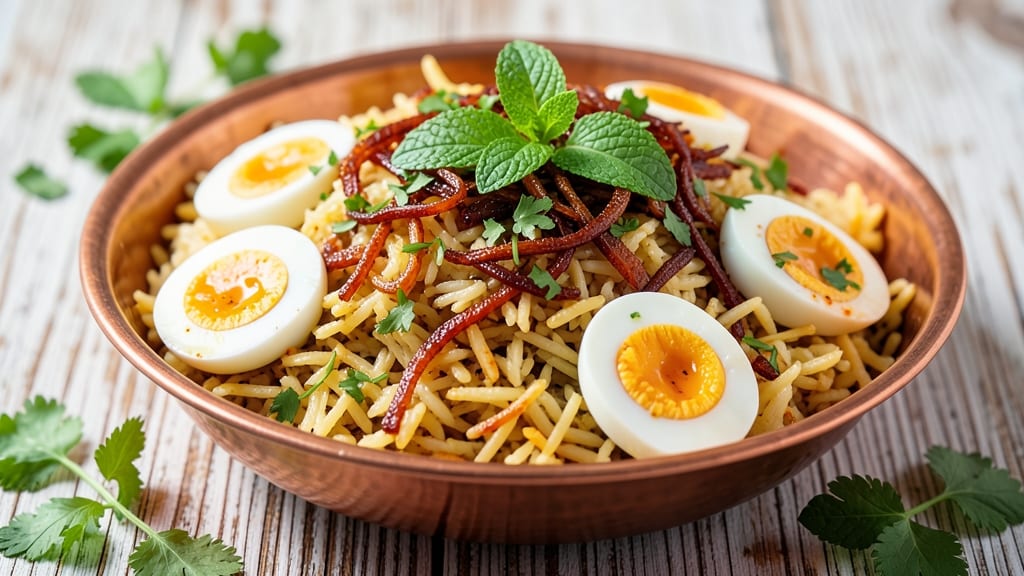
This ulavacharu egg biryani recipe transforms simple basmati rice and eggs into a fragrant, layered masterpiece that captures the essence of South Indian breakfast. The secret lies in the traditional layering technique—alternating rice, spiced eggs, and aromatic herbs—creating a dish that's both comforting and visually stunning.
I've perfected this version to balance authenticity with modern convenience, whether you're using fresh basmati or pre-cooked rice.
The heart of this recipe is the spice blend: warm cumin, cardamom, and cloves infuse every layer, while saffron threads dissolve into the rice for that signature golden hue. Eggs can be hard-boiled for a classic texture or fried for extra richness—both methods work beautifully.
The key is patience; letting the flavors meld during pressure cooking (or pot cooking) ensures each bite is packed with depth.
What makes this biryani special is the harmony of textures: tender rice, firm eggs, and crisp fried onions on top, all tied together with fresh mint and a squeeze of lemon. The aroma alone—spiced rice mingling with toasted herbs—will have your kitchen smelling like a South Indian restaurant.
Perfect for weekend brunches or a hearty weekday meal, this dish proves you don’t need a feast to enjoy restaurant-quality flavors.
Ready in about 30 minutes (or less with pre-cooked rice), this recipe delivers restaurant-quality results without the fuss. Whether you're a beginner or an experienced cook, the layering method is foolproof—just follow the steps, and let the spices do the work. Let's get started!
Ingredients for ulavacharu egg biryani
Simple ingredients that pack a fragrant punch—basmati rice, spiced eggs, and aromatic herbs.
| Ingredient | Amount | Notes |
|---|---|---|
| Long-Grain Basmati Rice 🍚 | 1 ½ cups | Uncooked, rinsed thoroughly |
| Large Eggs 🥚 | 6 whole | Hard-boiled or fried preferred |
| Fresh Mint Leaves 🌿 | ½ cup | Chopped, stems removed |
| Fresh Cilantro Leaves 🌿 | ¼ cup | Chopped, for garnish |
| Yellow Onions 🧅 | 1 whole | Thinly sliced for layering |
| Red Onions 🧅 | ½ cup | Thinly sliced, fried crisp |
| Ghee 🧈 | ¼ cup | For sautéing spices |
| Ground Cumin Seeds 🌶️ | 1 tbsp | Toasted for depth |
| Green Cardamom Pods 🌿 | 4 whole | Lightly crushed |
| Black Cardamom Pods 🌿 | 2 whole | Lightly crushed |
| Cloves 🌶️ | 4 whole | Whole, for tempering |
| Saffron Threads 🧡 | ⅛ tsp | Soaked in 1 tbsp warm milk |
| Lemon Juice 🍋 | 1 tbsp | Freshly squeezed |
| Salt 🧂 | 1 ½ tsp | Adjust to taste |
| Vegetable Oil 🫒 | ¼ cup | For frying onions |
The rice is the foundation, so look for long-grain basmati with a vibrant aroma—Tilda or India Gate are my go-tos. Eggs can be hard-boiled for classic texture or fried for extra richness. Fresh mint and cilantro are non-negotiable here; Indian grocery stores often have the best selection. For the saffron, buy threads, not powder—it dissolves beautifully into the rice. The cardamom pods? Lightly crush them—don’t grind, just crack open to release the aroma. If you can’t find black cardamom, swap for extra green cardamom, but it won’t be the same.
No fresh mint? Dried mint at half the amount works in a pinch, but it’s not the same. Running low on ghee? Butter or coconut oil will do, though ghee adds that authentic flavor. The onions are key—red onions for topping, yellow for layering. If you’re short on time, pre-cook the rice and assemble the biryani in minutes. The saffron threads? Soak them in warm milk first—it helps dissolve them evenly. For extra depth, toast the cumin seeds in the ghee until they sizzle—that aroma is everything.
This keeps beautifully for 3 days in the fridge, though it’s best fresh. The flavors meld even better overnight, so make extra—it reheats perfectly. Store in an airtight container with a damp paper towel to keep the rice moist. For leftovers, reheat gently with a splash of water to restore the steam. The fried onions on top? Crisp them fresh before serving—no microwave leftovers here. The lemon juice at the end? Squeeze it right before eating to keep the herbs vibrant.
Why You'll Love This Recipe
- No-Fuss Layering: I swear by this method—just alternate rice and fried eggs, then fold in the raw onions and herbs at the end. No fancy techniques, just a pot and a spoon. The eggs stay perfectly runny, and the onions caramelize into sweet little pockets of flavor without extra work.
- Herb-Packed Punch: That fresh mint and cilantro? They’re not just garnish—they’re the stars. I tear them in after cooking, so they stay bright and brighten every bite. Honestly, the aroma alone makes me want to eat it straight from the pot.
- Lunchbox Hero: Between us, this is my go-to for meal prep. The rice holds up for days, and the eggs add protein that actually makes it satisfying. Pack it in containers, and it’s a lunch that feels fancy but costs pennies—no sad desk lunches here.
- Budget Breakfast for Dinner: I make this when I’m low on groceries but still want something special. Eggs and rice are cheap staples, and the onions add depth without breaking the bank. Leftovers reheat like a dream, too—just a splash of water and a quick steam.
Step-by-step instructions for ulavacharu egg biryani
This layered biryani delivers restaurant-quality aroma and texture with minimal fuss.
Prepare the Spiced Rice Base
Rinse the 1.5 cups long-grain basmati rice thoroughly until the water runs clear, then soak for 30 minutes. Drain well and set aside. In a heavy-bottomed pot, heat 0.25 cup ghee over medium-low heat until it shimmers but doesn't smoke. Add the 1 tbsp ground cumin seeds, 4 whole green cardamom pods, 2 whole black cardamom pods, and 4 whole cloves. Toast for 1 minute until fragrant—you'll smell an earthy, citrusy aroma that signals they're ready.
Add the drained rice and stir gently to coat each grain with the spiced ghee. Pour in 2.5 cups water (the rice will absorb about 1.5 cups) and bring to a boil. Once boiling, reduce heat to low, cover tightly with a lid, and cook for 12 minutes. The rice should be 80% cooked—slightly underdone to prevent mushiness when layered. Remove from heat and let sit covered for 5 minutes.
Cook the Spiced Eggs and Onions
In a separate pan, heat 0.25 cup vegetable oil over medium heat. Add the 0.5 cup thinly sliced red onions and fry until deep golden brown and crisp—about 8-10 minutes. Remove with a slotted spoon and drain on paper towels. In the same oil, add 1 whole thinly sliced yellow onion and sauté for 3 minutes until soft but not browned. Set aside.
In a nonstick skillet, fry the 6 whole large eggs sunny-side-up until the whites are set but yolks remain runny. Alternatively, hard-boil and peel for a firmer texture. Arrange the fried eggs and yellow onions in a single layer on a plate, then drizzle with 1 tbsp lemon juice and sprinkle with 0.5 tsp salt. This acidity brightens the flavors and prevents the eggs from overcooking during assembly.
Layer and Temper the Biryani
In a heavy-bottomed pot large enough to hold all layers, spread half of the 80% cooked rice evenly. Arrange 3 fried eggs and half of the yellow onions on top. Sprinkle ¼ cup chopped fresh mint leaves and ¼ cup chopped fresh cilantro leaves over the eggs. Repeat with the remaining rice, eggs, onions, and herbs. The layers should be even—this ensures every bite has rice, egg, and herb.
In a small bowl, dissolve the 0.125 tsp saffron threads in 1 tbsp warm milk and let steep for 5 minutes until the liquid turns a vibrant golden color. Pour this saffron milk evenly over the biryani layers. Cover the pot with a tight lid, then seal the edges with aluminum foil to trap steam. Cook on low heat for 10 minutes to let the layers meld.
Finish with Crispy Onions and Garnish
Remove the lid and sprinkle the 0.5 cup fried red onions evenly over the biryani. Return to low heat for 2 minutes to slightly crisp the onions. Gently fluff the rice with a fork to separate the grains, then garnish with the remaining ¼ cup chopped mint and ¼ cup chopped cilantro. The final dish should have a fragrant, layered aroma with crispy onions on top and tender, spiced rice beneath.
Serve immediately with raita or a side of pickled onions to cut through the richness. The eggs will be warm but still slightly runny in the center, and each bite should deliver a perfect balance of spice, herb, and saffron-infused rice. Leftovers keep well for 2 days in the refrigerator, though the texture softens slightly over time.
Pro Tips For Making Ulavacharu Egg Biryani
- Parboil Rice Separately: Skip the "one-pot" myth—ulavacharu needs perfectly cooked rice. Parboil the basmati in salted water until just tender (about 60% done), then drain and spread it out to stop cooking. This keeps grains distinct and prevents mushiness when layering with eggs later.
- Boil Eggs in Vinegar: Crack eggs into cold water with a splash of white vinegar (1 tbsp per 4 eggs). The vinegar keeps yolks intact and makes peeling effortless—no more struggling with runny yolks that ruin your biryani’s presentation. Cold start also prevents cracking.
- Layer Eggs After Frying: Fry whole eggs in ghee until whites set but yolks stay runny, then let them cool slightly before layering. Warm eggs release flavor better than cold ones, and the residual heat keeps yolks creamy when the biryani steams. (Yes, even if you’re impatient like me.)
- Char Onions Low and Slow: Slice onions thick (½-inch) and cook them in ghee on low heat until deep golden, stirring only once. High heat burns them; low heat caramelizes sugars without bitterness. These onions are the backbone of flavor—don’t rush this step.
Serving suggestions for this ulavacharu egg biryani
Classic Accompaniments
Serve this biryani with mint-coriander raita—blend ½ cup yogurt, ¼ cup chopped mint, ¼ cup chopped cilantro, 1 tbsp lemon juice, and ½ tsp cumin powder.
The cool yogurt balances the spiced rice perfectly. I always keep a small bowl of raita on the table for dipping—it’s a game-changer. 🌿
For extra crunch, offer pickled red onions—slice 1 red onion thinly, soak in ½ cup vinegar, 1 tsp sugar, and ½ tsp salt for 30 minutes. The tangy contrast brightens every bite. Store-bought pickles work too if you’re short on time.
Beverage Pairings
Start with masala chai—its warm spices complement the biryani’s cardamom and cumin notes. I steep 1 tsp green tea, 4 cardamom pods, 1 cinnamon stick, and ½ tsp ginger in 2 cups hot water for 5 minutes. The caffeine kick helps balance the richness. ☕
For a refreshing twist, serve nimbu pani (Indian lemonade)—mix 1 cup water, ½ cup lemon juice, 2 tbsp sugar, and ice. The acidity cuts through the ghee and eggs beautifully. Add a pinch of salt to enhance the flavors.
Presentation Tips
Use a wide, shallow platter to showcase the biryani’s layers. Fluff the rice gently with a fork before serving to separate the grains. Sprinkle the fried red onions and fresh herbs in an even layer on top—this adds color and texture contrast. 🍽️
For a rustic touch, serve in banana leaves if available. Warm the leaves slightly to soften them, then arrange the biryani in the center. The natural aroma of the leaves enhances the dish’s earthy spices.
If you’re serving a crowd, divide portions into individual bowls with a small pile of raita on the side.
Make-Ahead Serving
This biryani tastes even better the next day! Store leftovers in an airtight container with a damp paper towel to keep the rice moist. Reheat gently on the stovetop with 2 tbsp water to restore steam. The flavors meld overnight, making it ideal for meal prep. 💫
For a lazy weekend brunch, assemble the biryani in advance and refrigerate. Cook it straight from the fridge on low heat for 15 minutes, adding 1 tbsp water halfway through. The extra time ensures even heating without drying out the rice.
Nutrition facts
Frequently asked questions
Can I make this egg biryani without saffron?
Yes, you can substitute saffron with ½ teaspoon turmeric powder mixed into the rice for color. For flavor, add 1 teaspoon rose water or ½ teaspoon orange blossom water to the saffron milk. The dish will still be delicious, though the golden hue will differ. Turmeric gives a yellow tint, while rose water adds floral notes that complement the spices beautifully.
How do I prevent the biryani from becoming mushy?
The key is cooking the rice to 80% doneness before layering. Overcooking releases excess starch, which turns the rice mushy during the final cooking step. Use a heavy-bottomed pot and seal tightly with foil to trap steam evenly. If using pre-cooked rice, spread it on a tray to cool completely before assembling to stop cooking.
Can I use boiled eggs instead of fried?
Hard-boiled eggs work perfectly—just peel and halve them before layering. For extra flavor, sprinkle the boiled eggs with ½ teaspoon turmeric and ¼ teaspoon black pepper before adding to the biryani. The texture will be firmer, but the spiced coating ensures they absorb the surrounding aromas beautifully.
What's the best way to reheat leftovers?
Reheat gently on the stovetop with 2 tablespoons water over low heat for 5 minutes, covered. The steam restores moisture without overcooking the rice. For microwave reheating, use 30-second intervals on medium power, stirring between each, to avoid drying out. Always add a splash of water or milk to maintain texture.
Can I make this biryani in an Instant Pot?
Yes! Cook the rice in the Instant Pot for 3 minutes on high pressure, then quick-release. For layering, use the pot's inner vessel to assemble the biryani, then seal with a lid and cook on low heat for 10 minutes after pressure release. The Instant Pot's even heat distribution helps maintain texture better than stovetop methods. Just ensure the lid is tightly sealed to trap steam.