
Breakfast & Brunch
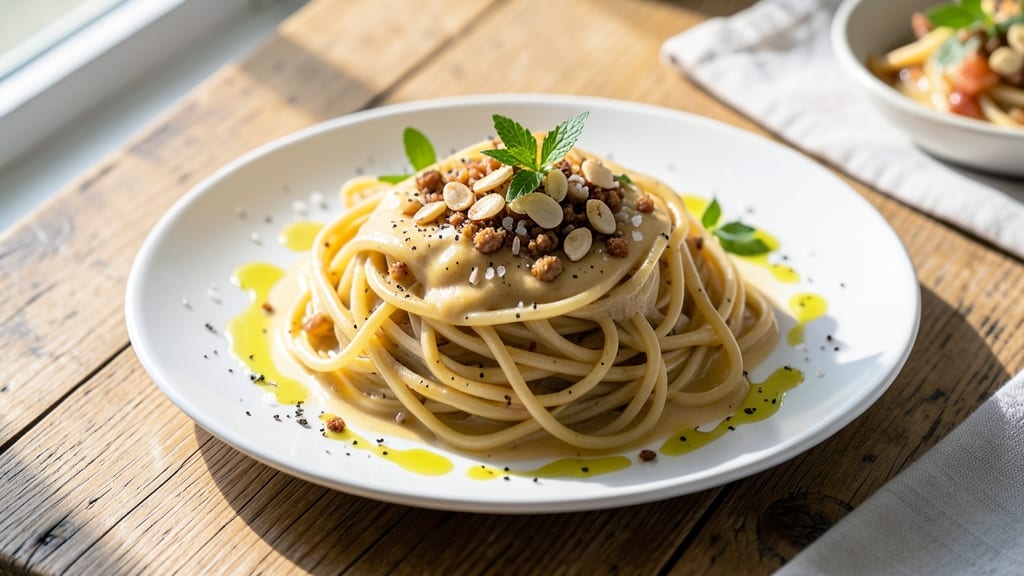
Homemade wheat egg noodles transform any meal into a restaurant-worthy experience with their silky texture and tender bite. This recipe delivers perfectly balanced dough—just enough egg for richness without heaviness—using simple ingredients that yield noodles with an ideal al dente finish.
The secret lies in precise flour-to-egg ratios and gentle rolling techniques that prevent tearing, ensuring smooth, even strands every time.
What sets these noodles apart is their versatility—they absorb flavors beautifully while maintaining structure, whether tossed in garlic butter, stir-fried with vegetables, or served in steaming broth. The dough comes together in under 15 minutes, with a 30-minute rest period that relaxes the gluten for effortless rolling.
No special equipment is needed beyond a rolling pin, though a pasta machine speeds up the process for consistent thickness.
Once boiled, these noodles hold their shape perfectly while remaining tender, making them ideal for both quick weeknight dinners and elaborate dishes. The recipe includes optional variations like wider egg noodles for heartier meals or thinner strands for delicate soups.
Proper storage keeps them fresh for up to 3 days in the refrigerator or frozen for months, ready to transform into any dish.
Pair them with classic garlic butter for an instant upgrade, stir-fry with fresh vegetables for a vibrant meal, or use as the base for pho or ramen. The possibilities are endless, all starting with this foundational recipe that elevates simple ingredients to gourmet quality.
Ingredients for wheat egg noodles
Nine essential ingredients crafting restaurant-quality wheat egg noodles with perfect al dente texture.
| Ingredient | Amount | Notes |
|---|---|---|
| All-Purpose Flour 🌾 | 2 ½ cups | High-protein for elasticity (12-14% protein) |
| Large Eggs 🥚 | 4 whole | Room temperature for even mixing |
| Fine Sea Salt 🧂 | ½ tsp | Diamond Crystal preferred for accuracy |
| Unsalted Butter 🧈 | ¼ cup | Cold, cubed for garlic butter |
| Garlic Cloves 🧄 | 6 cloves | Minced for garlic butter |
| Extra-Virgin Olive Oil 🫒 | 1 tbsp | For dough and garlic butter |
| Water 💧 | ½ cup | Room temperature for hydration |
| Fresh Parsley 🌿 | ¼ cup | Chopped, for optional garnish |
| Black Pepper 🌶️ | ¼ tsp | Freshly ground for finish |
The all-purpose flour is non-negotiable—King Arthur or Bob's Red Mill brands yield the best gluten development for silky strands. Avoid bread flour (too high protein) or cake flour (too low). For the eggs, freshness matters most—store-bought large eggs work fine, but room temperature ensures even incorporation. The sea salt should be fine grain (Diamond Crystal measures perfectly), while unsalted butter adds richness without altering seasoning. Garlic should be fresh, with no green shoots—Whole Foods or local markets often carry the best. Extra-virgin olive oil should be fruity and peppery, not rancid. Test by smelling the bottle: if it lacks aroma, replace it.
No all-purpose flour? King Arthur bread flour works in a pinch (reduce by 1 tbsp), but texture will be slightly chewier. Egg substitutes like flax eggs (3 tbsp ground flax + 9 tbsp water per egg) thin the dough—adjust water as needed. Butter shortages? Use olive oil (same amount) for garlic butter, though flavor differs. Garlic powder (1 tsp) replaces fresh, but lacks depth. Parsley can be subbed with chives or cilantro for garnish. For water, tap is fine, but filtered removes chlorine that can weaken gluten. Salt omissions? Add to boiling water instead.
Store dough wrapped in plastic between parchment for up to 24 hours in the fridge. Fresh noodles keep 3 days refrigerated in an airtight container, or 3 months frozen on a floured tray before bagging. Garlic butter stays fresh 5 days refrigerated, or 3 months frozen in ice cube trays. Parsley wilts fast—store stems in water like flowers. Reheating: Toss with 1 tsp olive oil over medium heat for 2 minutes to revive texture. Portion dough into 8 oz balls for consistent rolling.
Why You'll Love This Recipe
- No-Knead Magic: I swear by this dough—just flour, eggs, and salt. No stand mixer, no fussing, just a quick stretch and roll. The eggs bind it so well, the noodles hold together like they’ve been handmade, even when I’m in a hurry.
- Buttery Garlic Bliss: That first bite of al dente noodles tossed in melted butter and garlic? It’s the kind of flavor that makes you pause mid-chew. The butter coats every strand while the garlic adds a punch—no fancy seasoning needed, just pure, rich satisfaction.
- Weeknight Workhorse: I make a big batch on Sundays and freeze half. Whether it’s a quick stir-fry, a hearty soup, or a simple garlic butter bowl, these noodles adapt without complaint. They’re my go-to for lazy nights when I still want something that feels special.
- Pantry Staple Power: Flour, eggs, salt—these are things I always have. No specialty ingredients, no last-minute grocery runs. And since they freeze beautifully, I’m never stuck with wasted leftovers. Budget-friendly? Absolutely. Reliable? Even more so.
Step-by-step instructions for wheat egg noodles
Mastering these silky, golden noodles requires precision in mixing and rolling—here's how to achieve perfect texture every time.
Create the Dough with Perfect Hydration
On a clean work surface, mound the 2.5 cups all-purpose flour and create a well in the center. Add the 4 whole large eggs (room temperature) and the 0.5 teaspoon fine sea salt, then use a fork to gradually incorporate the eggs into the flour from the edges, working your way toward the center.
Once combined, switch to your hands and knead the dough for 8-10 minutes until smooth and elastic. The dough should feel slightly tacky but not sticky—if it's too dry, add 1 tablespoon water at a time until it reaches the right consistency. Wrap tightly in plastic wrap and rest for 30 minutes at room temperature. This resting period relaxes the gluten, making rolling easier and ensuring silky noodles.
Roll the Dough to Even Thickness
Unwrap the rested dough and cut it into 4 equal pieces. Working with one piece at a time, use a rolling pin to flatten it into a rough rectangle. Place the dough between two sheets of parchment paper to prevent sticking, then roll it out to 1/16-inch thickness using even pressure. If the dough resists or tears, let it rest another 5 minutes before continuing.
Roll the dough slightly larger than your desired noodle width—it will shrink slightly when cut. Repeat with the remaining dough pieces, stacking the rolled sheets between parchment paper as you go. This method prevents drying and ensures consistent thickness for perfectly cooked noodles.
Cut and Shape the Noodles
Using a sharp knife or pasta machine set to the thinnest setting, cut the rolled dough into 1/4-inch wide ribbons. If using a knife, press firmly but steadily—uneven pressure creates thicker or thinner sections. Immediately transfer the cut noodles to a floured surface to prevent sticking. Gently shake off excess flour and arrange them in a single layer.
For extra-silky texture, dust the noodles lightly with additional flour and fold them into a neat stack. Cover with a damp towel to prevent drying while you prepare the garlic butter. The key here is working quickly—dried dough becomes tough and difficult to cook evenly.
Cook to Al Dente Perfection
Bring a large pot of water to a rolling boil and add 1 tablespoon extra-virgin olive oil to prevent sticking. Add the noodles in batches (don't overcrowd) and cook for 2-3 minutes until they float to the surface. This indicates they're al dente—firm to the bite but fully cooked through.
Drain immediately and toss with the prepared garlic butter (melted 0.25 cup unsalted butter with minced 6 cloves garlic and 0.25 teaspoon black pepper). For serving, plate the noodles while hot and garnish with chopped 0.25 cup fresh parsley. The residual heat from the noodles will finish melting the butter, creating a luxurious sauce that clings to every strand.
Pro Tips For Making Wheat Egg Noodles
- Use Room-Temp Eggs: Cold eggs make the dough fight you—literally. Take them out of the fridge 30 minutes before mixing so they blend smoothly with the flour. I learned this the hard way when my first batch turned out gummy because the eggs never warmed up enough to properly emulsify.
- Weigh Your Flour: Scooping flour from the bag packs in air, which means your noodles will be lighter than they should be. Use a kitchen scale for precision—aim for 500g flour per 4 large eggs. My grandmother swore by this, and she was right: the texture stays consistent every time.
- Rest the Dough (Yes, Really): Skip the resting step, and your noodles will tear when rolling. Wrap the dough in plastic and let it sit for at least 30 minutes—this relaxes the gluten so it stretches without fighting you. I know, I know, but trust the process.
- Brown the Butter First: Unsalted butter tastes bland if it’s just melted—brown it first for 3-4 minutes until golden and nutty. Then toss the cooked noodles in it with minced garlic for a flavor punch that’ll make your dish taste restaurant-worthy. Sounds weird, but it works.
Regional styles of this recipe
Italian Pasta Tradition
In Italy, these egg noodles trace back to Roman pasta alla chitarra, where dough was pressed through a wooden frame. The 1:1 flour-to-egg ratio we use mirrors classic tagliatelle dough, though Italian versions often include semolina for texture.
I love how the 30-minute rest mimics traditional pasta riposata—it’s non-negotiable for tender results. 🌟
Chinese Stir-Fry Staple
Chinese lo mein noodles often use a 1:1.25 flour-to-egg ratio for chewier strands, but our slightly lower egg content keeps them delicate. The 1/4-inch width works perfectly for quick stir-fries with shredded chicken or shrimp.
I once made these for a friend’s Chinese New Year feast—they held up beautifully to the wok’s heat. 🔥
German Spätzle Twist
German Spätzle uses a drier, shaggy dough, but our rolled version adapts beautifully. The 1/16-inch thickness mimics Eiernudeln (egg noodles) from Swabia, often served with brown butter and apples. Swap the garlic butter for caramelized onions and a pinch of nutmeg for an authentic touch. ✨
Japanese Udon Adaptation
Japanese udon noodles are wheat-based but thicker—our 1/4-inch width bridges the gap. For a fusion twist, add 1 tbsp soy sauce to the boiling water and finish with sesame oil and green onions. The 30-minute rest mimics kneading techniques used in Japanese noodle-making. 💫
American Comfort Food
Classic cheese noodles or macaroni and cheese get a gourmet upgrade with these. The high egg content makes them richer than store-bought, perfect for baked dishes with Gruyère or Parmesan. I’ve used them in chicken pot pie fillings—they hold their shape beautifully. 💛
Nutrition facts
Frequently asked questions
Can I make these wheat egg noodles without a pasta machine?
Use a sharp knife or even a clean wine bottle to roll and cut the dough. After resting the dough for 30 minutes, roll it out to 1/16-inch thickness on a floured surface, then cut into 1/4-inch ribbons with steady pressure. For extra precision, fold the dough over itself and cut through all layers at once.
How do I adjust the recipe for thicker or thinner noodles?
For thicker noodles (like fettuccine), roll the dough to 1/8-inch thickness and cut into 1/2-inch wide strips. For thinner noodles (like angel hair), roll to 1/32-inch thickness and cut into 1/8-inch ribbons. Always adjust boiling time—thicker noodles need 3-4 minutes, while thinner ones cook in 1-2 minutes.
Why did my dough tear when rolling?
Tearing usually happens when the dough isn't rested long enough or is too dry. First, ensure you rested the dough for the full 30 minutes—this relaxes the gluten. If it's still tearing, add 1 teaspoon water at a time until it becomes slightly tacky but not sticky. Work quickly and keep the dough covered with a damp towel to prevent drying.
Can I use whole wheat flour instead of all-purpose?
Yes, but expect a nuttier flavor and slightly denser texture. Replace 2.5 cups all-purpose flour with 2 cups whole wheat flour and 0.5 cup all-purpose flour to maintain elasticity. Add 1 extra tablespoon water since whole wheat absorbs more moisture. The dough may tear more easily, so handle gently and rest longer if needed.
How do I store leftover cooked noodles?
Rinse cooked noodles under cold water to stop cooking, then store them in an airtight container with a splash of olive oil to prevent sticking. They'll keep in the fridge for 3 days or freeze for 3 months. To reheat, cook in boiling water for 30-60 seconds or warm in a dry pan with a little butter until hot. Never reheat with extra water—it makes them mushy!