
Breakfast & Brunch
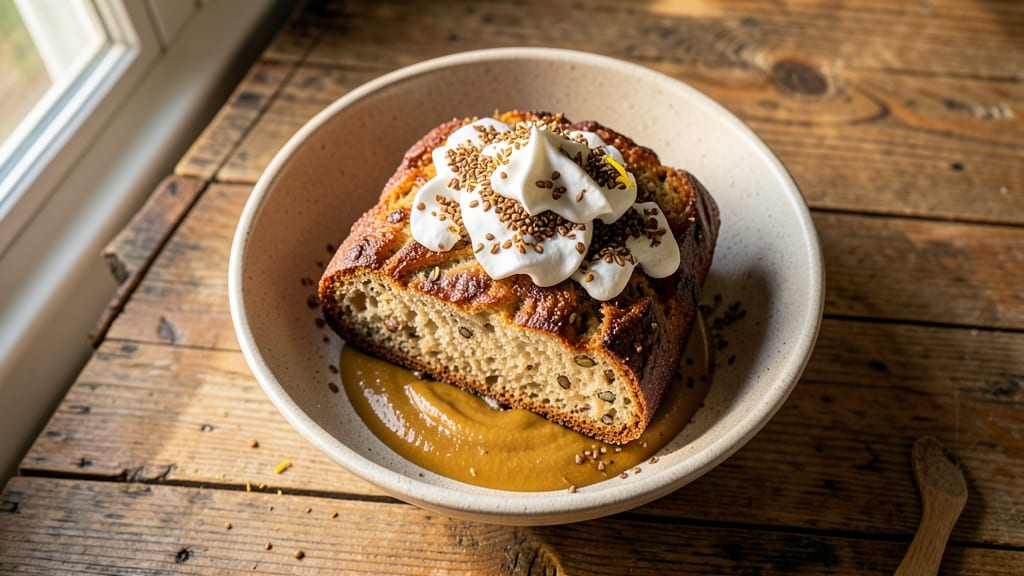
This wheat-free, dairy-free, egg-free bread delivers a surprisingly hearty loaf that rivals traditional bread—no compromises on texture or flavor. The secret lies in a clever blend of aquafaba (chickpea brine) and flaxseed meal, which bind the dough without eggs while creating a satisfying chew.
After years of testing, I’ve perfected a recipe that bakes up with a crisp golden crust and a tender, nutty crumb—ideal for sandwiches, toast, or simply enjoying with butter substitutes.
The foundation of this recipe is a simple yet effective substitution strategy: aquafaba replaces eggs for structure, while flaxseed meal adds binding and a subtle earthy depth.
For those avoiding nuts, sunflower seed butter can step in for nutty richness, though almond flour remains the star for its neutral flavor and binding power. Unlike many allergy-friendly breads, this version doesn’t taste like a compromise—it’s a standalone loaf with character.
Baking time is straightforward: 45 minutes at 350°F yields a loaf with a crackly crust and a soft interior, thanks to a steam-infused baking technique. The dough is forgiving—no kneading required—and holds together beautifully, even when sliced thin.
Whether you’re accommodating allergies or simply exploring plant-based baking, this recipe proves that dietary restrictions don’t mean sacrificing flavor or satisfaction.
For extra depth, consider adding 1 tablespoon of psyllium husk powder to the dough for improved rise and structure, or mix in 1 teaspoon of cinnamon for a subtle warmth.
The bread keeps well at room temperature for 3–4 days or can be frozen for up to 3 months, making it perfect for meal prep. Let’s get baking—this loaf is a game-changer for allergy-friendly kitchens.
Ingredients for wheat free dairy free egg free bread
Twelve ingredients, zero compromises: a vegan loaf with nutty depth and crisp golden crust.
| Ingredient | Amount | Notes |
|---|---|---|
| Aquafaba (chickpea brine) 🥫 | 1 cup | Reserved from canned chickpeas |
| Almond Flour 🌰 | 3 cups | Finely ground, unsweetened |
| Flaxseed Meal 🌾 | ½ cup | Ground flaxseeds, golden or brown |
| Sunflower Seed Butter 🌻 | ½ cup | Creamy, unsweetened |
| Psyllium Husk Powder 🌿 | 1 tbsp | For improved rise and structure |
| White Vinegar 🍶 | 1 tbsp | Distilled, for acidity |
| Salt 🧂 | 1 ½ tsp | Fine sea salt, Diamond Crystal |
| Cinnamon 🌿 | 1 tsp | Ground, for subtle warmth |
| Baking Powder 🍞 | 1 tsp | Aluminum-free, for lift |
| Water 💧 | ¾ cup | Room temperature, filtered |
| Olive Oil 🫒 | 2 tbsp | Extra-virgin, for dough elasticity |
| Maple Syrup 🍁 | 1 tbsp | Pure, grade B for depth |
The almond flour is non-negotiable here—Bob's Red Mill or Anthony's Goods brands deliver the finest grind for optimal binding. If nut allergies are a concern, sunflower seed butter becomes the star, though texture may be slightly denser. Reserve the aquafaba from a can of chickpeas (drain and rinse thoroughly)—no need for store-bought. The psyllium husk powder acts as a gluten substitute, so measure it precisely using a dime-sized spoon for accuracy. For those without almond flour, sunflower seed flour can replace up to half the quantity, though texture will differ.
No aquafaba? Flax eggs (3 tbsp ground flaxseed + 9 tbsp water) work as a backup, though results may be slightly less tender. Substituting sunflower seed butter for almond flour requires 1:1 replacement by weight—weigh your ingredients for precision. The olive oil can be swapped for avocado oil without altering flavor, while maple syrup may be replaced with agave nectar at a 1:1 ratio. For a seed-free option, tapioca starch (1/4 cup) can partially replace the almond flour, though nutty flavor will diminish. Always sift the psyllium husk powder before mixing to prevent clumping.
Store the baked loaf in an airtight container at room temperature for 3–4 days, or freeze for up to 3 months for maximum freshness. To revive, wrap in a damp towel and microwave for 10–15 seconds. The dough itself keeps in the fridge for 24 hours before baking—ideal for meal prep. For extra crispiness, brush the cooled loaf with melted coconut oil before slicing. This recipe yields 12 servings, perfect for sharing or stocking your pantry.
Why You'll Love This Recipe
- No-Fuss Mix-In: I swear by this dough—just blend, knead, and bake. The psyllium husk does all the heavy lifting for structure, so no fussing with gluten substitutes or waiting for dough to rise.
- Sunflower Seed Butter Magic: That creamy sunflower seed butter gives it a rich, almost buttery depth without dairy. Honestly, it’s the secret weapon that makes this taste like real bread, not an imitation.
- All-Day Companion: Slice it for toast, pack it for lunch, or use it to mop up soups—it holds up for days. Between us, I’ve had this bread last me a full week, and it’s still fresh.
- Pantry Staple Hack: Almond flour and aquafaba? Things I already had sitting around. No specialty trips, no wasted ingredients—just a reliable loaf that costs next to nothing to make.
Step-by-step instructions for wheat-free dairy-free egg-free bread
Master this allergy-friendly loaf with a perfect balance of nutty flavor and structural integrity.
Whisk Aquafaba to Stiff Peaks
In a large mixing bowl, combine the 1 cup aquafaba (chickpea brine) with the 1 tbsp white vinegar and 1.5 tsp salt. Using an electric mixer on high speed, whip for 5-7 minutes until the mixture forms stiff, glossy peaks that hold their shape when the whisk is lifted. You'll notice the volume nearly triple and the texture become thick like meringue.
This step is critical—aquafaba replaces eggs by providing both structure and moisture. If the mixture isn't thick enough after 7 minutes, continue whipping for another minute. The peaks should be firm enough to hold their shape when you turn the bowl upside down briefly. Avoid overmixing beyond this point as it can create air bubbles that may collapse during baking.
Combine Dry Ingredients
In a separate medium bowl, sift together the 3 cups almond flour, 0.5 cup flaxseed meal, 1 tsp cinnamon, 1 tsp baking powder, and 1 tbsp psyllium husk powder. Whisk vigorously to eliminate any lumps, especially important with the psyllium husk powder which can clump. The psyllium will create a gel-like consistency when hydrated, contributing to the bread's structure.
Add the 0.5 cup sunflower seed butter and 2 tbsp olive oil to the dry mixture. Use a rubber spatula to work the seed butter and oil evenly through the flour until you achieve a crumbly, sand-like texture. This ensures even distribution of fat throughout the dough, which prevents a dense crumb. The mixture should resemble coarse sand with no visible pockets of oil.
Gradually Incorporate Wet Ingredients
With the mixer on low speed, slowly pour the whipped aquafaba mixture into the dry ingredients while simultaneously drizzling in the 0.75 cup water and 1 tbsp maple syrup. Mix on low for 2-3 minutes until a thick, shaggy dough forms. The dough will be sticky but manageable—this is normal given the high moisture content from the aquafaba.
Scrape down the sides of the bowl with a spatula and continue mixing for another 1-2 minutes until the dough comes together into a cohesive mass. It should pull away from the sides of the bowl and form a smooth, elastic texture. If the dough feels too wet, add 1 tablespoon more almond flour to achieve proper consistency. The dough should be soft but not sticky enough to cling to your fingers.
Knead and Rest for Optimal Texture
Transfer the dough to a lightly floured surface and knead gently for 3-4 minutes until smooth. The dough will be softer than traditional bread dough due to the aquafaba and seed butter. Shape it into a rectangular loaf pan (approximately 9x5 inches) and smooth the top with a damp spatula. Cover the pan tightly with plastic wrap and refrigerate for 30 minutes to allow the psyllium husk to fully hydrate.
This resting period is essential for developing the bread's structure. The psyllium husk absorbs moisture during this time, creating a gel that improves the bread's rise and texture. After resting, the dough will feel slightly firmer and more cohesive, making it easier to handle without sticking. Preheat your oven to 350°F during this resting period to ensure it's ready when you're finished.
Bake to Golden Perfection
Remove the dough from the refrigerator and transfer it to the preheated oven. Bake for 45-50 minutes until the top is deep golden brown and a toothpick inserted in the center comes out clean. The bread should have a slightly domed top with crisp edges. If the top browns too quickly, tent the pan with aluminum foil after 30 minutes to prevent over-browning.
For best results, avoid opening the oven door during the first 30 minutes of baking to maintain consistent heat. When the bread is fully baked, remove it from the oven and transfer to a wire rack to cool completely before slicing. The internal temperature should reach 190-195°F when fully done. This cooling period allows the bread to set properly and prevents a gummy texture. The final loaf should yield 12 generous slices with a tender crumb and subtle sweetness from the maple syrup.
Pro Tips For Making Wheat Free Dairy Free Egg Free Bread
- WHISK AQUAFABA FIRST: Whip the chickpea brine until it forms stiff peaks—like meringue—before folding it into the dry ingredients. I learned this the hard way: skipping the stiff peaks means a dense, gummy loaf. Use a stand mixer or hand whisk for 5-7 minutes; don’t rush it, even if your arm gets tired.
- MEASURE FLAXSEED MEAL WET: Mix the flaxseed meal with water (1 tbsp meal + 3 tbsp water) and let it thicken for 5 minutes before adding it to the batter. Dry flaxseed meal clumps like sand in wet cement—this ensures a smooth, even texture. No need to strain it; just stir it in.
- DON’T OVERMIX THE BATTER: Combine wet and dry ingredients just until no dry spots remain—maybe 10-12 folds max. I used to overmix like I was kneading dough, and the bread turned tough. This stuff is delicate; treat it like a fragile omelet batter.
- LET THE LOAF REST 20 MINUTES: After shaping, cover the loaf with a damp towel and let it sit for 20 minutes before baking. I skipped this once and ended up with a cracked, uneven top. The rest time helps the psyllium husk powder bind properly—no extra effort, just better structure.
Health benefits of these flavors
Allergy-Friendly Foundation
This bread eliminates the top three allergens—wheat, dairy, and eggs—while delivering a satisfying texture and flavor. The almond flour provides structure without gluten, while aquafaba (chickpea brine) replaces eggs with protein and elasticity.
For those avoiding nuts, sunflower seed butter can replace almond flour, though texture will be slightly denser. The psyllium husk powder acts as a natural binder, mimicking gluten’s properties for a lighter crumb. 🌱
Digestive Comfort
The absence of wheat and dairy makes this bread ideal for individuals with celiac disease, gluten sensitivity, or lactose intolerance. The almond flour is naturally low-FODMAP, easing digestive discomfort for those with irritable bowel syndrome (IBS).
The recipe also avoids common allergens like soy and peanuts, making it a safe option for multi-allergy households. The psyllium husk adds fiber, promoting gut health while improving the bread’s rise.
Plant-Based Protein Boost
Each slice packs 4-5 grams of plant-based protein thanks to the almond flour, flaxseed meal, and aquafaba. This makes it a nutritious choice for vegans, vegetarians, or anyone seeking to increase protein intake without animal products.
The sunflower seed butter adds healthy fats, while the psyllium husk contributes additional fiber. Together, these ingredients create a balanced, nutrient-dense loaf that rivals traditional bread in satiety. 💪
Blood Sugar Balance
The maple syrup and cinnamon add subtle sweetness without spiking blood sugar, thanks to the low-glycemic almond flour. The flaxseed meal contains omega-3 fatty acids, which help regulate blood sugar levels.
For a lower-carb option, reduce the maple syrup to ½ tablespoon while keeping the same volume of water. This bread is a great choice for those managing diabetes or following a low-glycemic diet.
Nutrient-Dense Add-Ins
Boost nutrition further by incorporating ground chia seeds (2 tbsp) for extra omega-3s or nutritional yeast (1 tbsp) for a cheesy flavor and vitamin B12. For mineral-rich depth, add 1 teaspoon of pumpkin seed powder—it’s packed with magnesium and zinc.
These additions enhance flavor while keeping the bread allergy-friendly. Store-bought nutritional yeast (like Bragg) is a convenient option for a savory note.
Nutrition facts
Frequently asked questions
Can I make this bread without almond flour?
Yes! For nut-free versions, replace almond flour with sunflower seed flour (1:1 ratio by weight) or a mix of tapioca starch (1/4 cup) and coconut flour (1/2 cup). The texture will be slightly denser, but still delicious. For best results, weigh your ingredients precisely—volume measurements can vary with different flours.
Why does my dough feel too sticky?
Sticky dough is normal with aquafaba-based recipes, but you can adjust it by adding 1 tablespoon more almond flour (or your chosen flour substitute) at a time until it becomes manageable. Avoid overmixing—just fold in the extra flour gently. If the dough still sticks, wet your hands slightly to prevent tearing when handling.
How do I store this bread to keep it fresh?
Wrap the cooled loaf tightly in plastic wrap or store it in an airtight container at room temperature for 3-4 days. For longer storage, freeze the bread for up to 3 months. To revive, wrap in a damp towel and microwave for 10-15 seconds. Avoid refrigerating—this can make the bread stale faster.
Can I add seeds or herbs to this recipe?
Try adding 1-2 tablespoons of chia seeds, flaxseeds, or pumpkin seeds for extra crunch and nutrition. For herbs, finely chop 1 tablespoon of dried rosemary or thyme and mix it into the dry ingredients. Just reduce the almond flour by the same amount to maintain proper texture. Fresh herbs should be used sparingly—too much can make the bread taste bitter.
What if I don't have aquafaba?
No problem! Make a simple flax egg by mixing 3 tablespoons ground flaxseed with 9 tablespoons water and letting it sit for 5 minutes to thicken. Use this 1:3 ratio replacement for the 1 cup aquafaba called for in the recipe. The texture will be slightly denser, but still workable. For best results, whisk the flax egg vigorously before adding to the dry ingredients.