
Soups & Stews
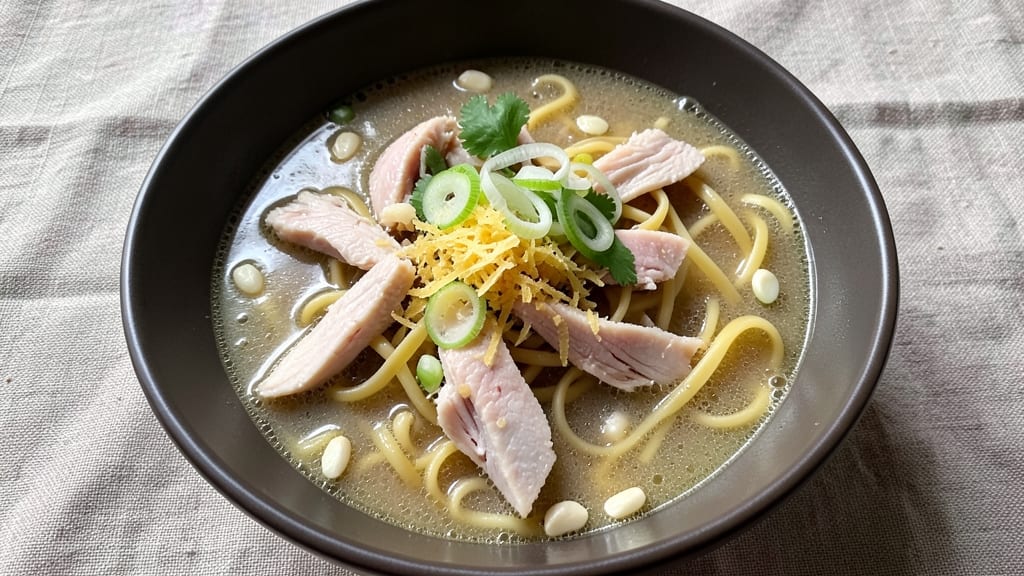
This wide egg noodle chicken soup delivers the ultimate comfort in a single pot—rich, aromatic broth, tender poached chicken, and perfectly al dente noodles that disappear with every slurp. 💛 The secret lies in building flavor through slow-simmered aromatics and a balanced broth that's neither too light nor too heavy, making it versatile for any meal.
What sets this recipe apart is its foolproof technique: poaching the chicken in the broth ensures maximum flavor infusion, while wide egg noodles hold up beautifully without turning mushy.
The broth base combines classic chicken stock with fresh ginger, garlic, and scallions for depth, then gets finished with a touch of soy sauce for umami richness.
By the time you're done, you'll have a steaming bowl of restaurant-quality soup—clear enough to see the noodles swirling, yet packed with savory depth. The noodles absorb the broth perfectly, creating that ideal first bite where each component shines.
Garnish with fresh green onions and a sprinkle of black pepper for a final touch of freshness. This soup adapts beautifully to preferences—add mushrooms or tofu for extra texture, or keep it traditional with just the essentials. The best part?
It's ready in under 45 minutes with minimal prep, making it ideal for busy weeknights or cozy weekend meals.
Ingredients for wide egg noodle chicken soup
Rich broth, tender chicken, and al dente noodles—this soup delivers restaurant-quality comfort in one pot.
| Ingredient | Amount | Notes |
|---|---|---|
| Chicken Breast 🍗 | 1 ½ lb | Boneless, skinless, cut into 1-inch pieces |
| Wide Egg Noodles 🍜 | 8 oz | Dried, al dente texture preferred |
| Chicken Stock 💧 | 6 cups | Homemade or high-quality store-bought |
| Fresh Ginger 🌿 | 2 tbsp | Finely grated, aromatic variety |
| Garlic Cloves 🧄 | 4 cloves | Minced, fresh preferred |
| Scallions 🧅 | 4 whole | Thinly sliced, white and green parts |
| Soy Sauce 🍶 | 1 tbsp | Light or dark, for umami depth |
| Sesame Oil 🫒 | 1 tsp | Toasted, for aromatic finish |
| Green Onions 🧅 | 4 whole | Thinly sliced, for garnish |
| Black Pepper 🌶️ | ½ tsp | Freshly ground, for subtle heat |
| Salt 🧂 | 1 tsp | Kosher or sea salt, adjust to taste |
| Vegetable Oil 🫒 | 1 tbsp | For searing chicken |
| Cornstarch 🌾 | 1 tbsp | Optional, for broth thickening |
| Water 💧 | ½ cup | For cornstarch slurry |
The chicken breast is the foundation—look for plump, evenly sized pieces at the butcher counter or pre-cut sections at Whole Foods or Trader Joe's. If using a whole breast, cut it into 1-inch cubes for even cooking. Fresh ginger and garlic are non-negotiable here; Penzeys or the produce section at Costco usually have the best quality. The scallions add brightness, so grab a bunch with vibrant green tops—they should snap when bent, not feel limp. For the noodles, Martin's or Barilla wide egg noodles hold up perfectly during simmering, but any dried, al dente variety works.
No fresh ginger? Substitute with 1 tbsp ground ginger, but it won’t have the same depth. Out of soy sauce? A splash of fish sauce or Worcestershire (if vegetarian, use coconut aminos) adds umami, but soy is ideal. The sesame oil is optional but worth the extra minute—it adds a nutty aroma that elevates the dish. For the broth, homemade stock is best, but Pacific Foods or Swanson organic chicken stock is a solid backup. If thickening the broth, the cornstarch slurry is foolproof—just whisk it into cold water before adding to the pot to avoid clumping.
Store leftovers in airtight containers for up to 4 days in the fridge, or freeze for 3 months. The broth actually tastes better the next day as flavors meld. For meal prep, portion into individual containers—just reheat with a splash of water to restore creaminess. Garnish with extra green onions and a crack of black pepper right before serving to keep the dish vibrant. This soup reheats beautifully, making it perfect for lunches or dinners all week.
Why You'll Love This Recipe
- No-Chop Nightmare: I swear, this soup only needs two things chopped—ginger and garlic. That’s it. The chicken breast stays whole until the last minute, and the noodles? Just dump ‘em in. Honestly, I’ve made this on days when I forgot to meal prep and forgot to eat lunch.
- Umami Bomb: That ginger and garlic combo simmered in stock? Chef’s kiss. The ginger adds this warm, spicy depth while the garlic mellows into sweetness—no need for fancy herbs or soy sauce. The chicken stays juicy, and the wide noodles soak up every last bit like a flavor sponge.
- Leftover Goldmine: This soup begs to be made in bulk. The noodles hold up for days, the chicken shreds effortlessly, and the broth only gets better as it sits. I’ll be real: I’ve reheated this for lunch three times and still crave it. (Yes, even on a Tuesday night.)
- Budget Hero: Chicken breast is affordable, stock is cheap, and wide egg noodles? A dollar bag lasts forever. Between us, this is the recipe I turn to when my wallet’s lighter than my mood. Plus, it stretches to feed two or four—no wasted leftovers here.
Step-by-step instructions for wide egg noodle chicken soup
Here's how to craft a velvety, aromatic soup that delivers restaurant-quality comfort in your own kitchen.
🔥 Step 1: Sear the Chicken for Maximum Flavor
Heat the 1 tablespoon vegetable oil in a large pot over medium-high heat until shimmering. Add the 1.5 lb chicken breast cut into 1-inch pieces, working in batches if needed to avoid crowding. Sear for 3-4 minutes per side until the chicken develops a golden brown crust and releases easily from the pan.
This searing step is crucial—it creates a flavorful crust called the maillard reaction, which infuses the broth with deep, savory notes. Don't skip it, and resist the urge to move the chicken too soon. You'll know it's ready when you see those beautiful brown spots forming.
🍳 Step 2: Build the Aromatic Base
Remove the seared chicken from the pot and set aside. In the same pot, add the 2 tablespoons fresh ginger and 4 cloves garlic cloves (minced), stirring for 30 seconds until fragrant. Add the 4 whole scallions (thinly sliced) and cook for 1 minute until softened.
Here's where the soup's signature aroma begins to develop. The ginger and garlic should smell vibrant and slightly sweet—this is your cue that they're ready for the next stage. If you notice any bits sticking to the bottom, add a splash of chicken stock to deglaze and scrape them up for maximum flavor.
🥘 Step 3: Simmer the Broth with Umami Depth
Pour in the 6 cups chicken stock, then add the 1 tablespoon soy sauce, 1 teaspoon salt, and 0.5 teaspoon black pepper. Return the chicken to the pot and bring to a gentle boil. Once boiling, reduce heat to medium-low and simmer for 15 minutes, partially covered, until the chicken is fork-tender and easily shreds.
The soy sauce and salt should now be fully dissolved, creating a well-seasoned broth. You'll notice the chicken pieces becoming more opaque and breaking apart easily. This simmering time is essential for developing the soup's rich, comforting character—don't rush it, but don't let it boil vigorously as that can make the broth cloudy.
🍲 Step 4: Thicken and Finish the Soup
Remove the chicken from the pot and shred it using two forks, discarding any bones. In a small bowl, whisk together the 1 tablespoon cornstarch and 0.5 cup water until smooth. Slowly pour this slurry into the simmering broth, stirring constantly for 2-3 minutes until the soup thickens slightly to a velvety consistency. Return the shredded chicken to the pot.
This thickening step transforms the soup from a simple broth to a luxurious, clingy texture. You're aiming for a consistency where the soup coats the back of a spoon but still allows the noodles to move freely. Taste and adjust seasoning if needed—this is where you can add more soy sauce for umami or salt for balance.
⏰ Step 5: Cook and Garnish for Perfect Texture
Add the 8 oz wide egg noodles to the pot and cook for 4-5 minutes, stirring occasionally, until they're al dente (slightly firm to the bite). Stir in the 1 teaspoon sesame oil and 4 whole green onions (thinly sliced). Remove from heat and let sit for 2 minutes to allow flavors to meld.
The sesame oil adds a subtle nutty aroma that elevates the soup's complexity. The green onions should be distributed evenly throughout. Serve immediately with additional green onions sprinkled on top—this final garnish adds both visual appeal and a fresh contrast to the rich broth.
Pro Tips For Making Wide Egg Noodle Chicken Soup
- SEAR CHICKEN IN BATCHES: Chicken breast releases more flavor when browned, but dumping it all in at once just steams it. Split the breasts into two portions and cook them 3-4 minutes per side over medium-high heat—don’t rush, or you’ll end up with gray, rubbery meat. The crust locks in juices, so resist the urge to move it around constantly.
- GRATE GINGER FINE: I used to chop ginger into matchsticks, and it just sat there like a chewy afterthought. For this soup, grate it so fine you can barely see the pieces—it dissolves into the stock and infuses every bite. A microplane works best, and trust me, your soup will taste like it simmered for hours, even if you’re short on time.
- DON’T BOIL THE NOODLES: Wide egg noodles turn mushy if you cook them straight in the broth. Boil them separately for 2 minutes less than the package says, then shock them in ice water to stop cooking. Toss them into the soup right before serving—they’ll finish cooking in the hot broth and stay al dente.
- SALT THE STOCK LATE: If you salt the stock early, the chicken will absorb too much sodium and end up bland. Wait until the chicken is cooked and the noodles are added, then taste and adjust. A splash of soy sauce or a pinch of white pepper at this stage adds depth without overpowering. (Yes, even if you’re impatient like me.)
Wine and beer pairings for this wide egg noodle chicken soup
Light White Wine
A crisp Sauvignon Blanc from New Zealand or a dry Pinot Grigio from Italy pairs beautifully with this soup. The bright acidity and citrus notes cut through the richness of the broth, cleansing your palate between slurps.
I love a Cloudy Bay Sauvignon Blanc—its zesty lime and grapefruit flavors complement the ginger and garlic in the soup perfectly. 🍷
Crisp Lager
For beer lovers, a refreshing Pilsner or Helles Lager works wonders. The light maltiness and subtle hop bite balance the soup's savory depth without overpowering it. Try a Stella Artois or Weihenstephaner Original—both have that clean, crisp finish that makes every spoonful of soup taste even better. 🍺
Sake for Umami Boost
If you're feeling adventurous, a chilled dry sake like Hakkaisan Junmai adds a unique dimension. The nutty, slightly sweet notes harmonize with the soy sauce and sesame oil, creating a sophisticated flavor profile. Serve it in small sips alongside the soup for a delightful contrast. 🍶
Herbal Tea Pairing
For a non-alcoholic option, a jasmine green tea or hibiscus tea enhances the soup's aromatic qualities. The floral notes of jasmine tea complement the ginger and scallions, while hibiscus adds a tart contrast that brightens the dish. Brew a cup while the soup simmers for a cohesive experience. ☕
Spiced Wine Option
Warm up a Mulled Wine (red wine infused with cinnamon, cloves, and orange peel) for a cozy, seasonal pairing. The spices echo the ginger and black pepper in the soup, creating a comforting, aromatic harmony. Perfect for chilly evenings when you want extra warmth. 🍷✨
Nutrition facts
Frequently asked questions
Can I use chicken thighs instead of breast for more flavor?
Chicken thighs add richer flavor and stay juicier during simmering. Use 1.5 lbs bone-in, skin-on thighs instead, and increase simmering time to 20 minutes for tenderness. The skin will crisp up beautifully—just skim off excess fat before adding noodles.
How do I prevent the noodles from getting mushy?
Cook the noodles directly in the broth for just 4-5 minutes—they'll finish cooking from the residual heat. For extra insurance, use al dente dried noodles (like Barilla) and stir occasionally. Never overcook, and remove them 1 minute early if needed—they'll continue cooking off the heat.
Can I make this soup vegetarian?
Yes! Swap the chicken for extra-firm tofu (pressed and cubed) or shiitake mushrooms. Use vegetable stock instead of chicken stock, and add 1 tbsp miso paste for umami depth. Simmer the tofu/mushrooms for 10 minutes before adding noodles.
Why does my broth look cloudy after simmering?
Cloudiness usually means the broth boiled too vigorously, breaking down proteins. To fix it, skim off any foam that forms during simmering, and reduce heat to maintain a gentle simmer (small bubbles, not rolling). For extra clarity, strain the broth through a fine-mesh sieve before adding noodles.
How can I make this soup spicier?
Add ½ tsp red pepper flakes or 1 tbsp gochujang (Korean chili paste) when simmering the broth. For heat without dryness, stir in 1 tsp sriracha at the end. Garnish with chopped Thai basil or cilantro for freshness.