
Soups & Stews
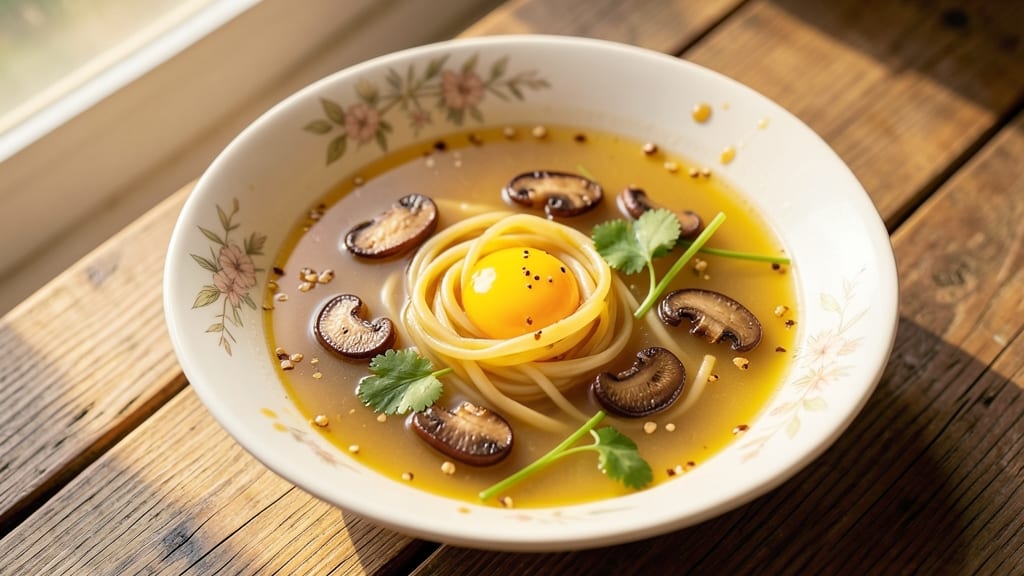
This yellow egg drop soup recipe delivers the perfect balance of silky egg ribbons and aromatic ginger broth—every spoonful is a harmonious blend of texture and flavor.
The secret lies in tempering the eggs just right, creating delicate strands that dissolve on your tongue while the broth infuses with warm spices like ginger, garlic, and a touch of turmeric for that signature golden hue.
What sets this soup apart is the fragrant ginger broth, simmered low and slow to extract maximum flavor without bitterness.
The egg ribbon technique transforms simple beaten eggs into delicate, melt-in-your-mouth strands that float effortlessly in the broth, while traditional garnishes like scallions and chili oil add brightness and heat. It’s a vegetarian dish that feels indulgent yet light.
The result is a restaurant-quality soup that’s surprisingly easy to make at home—no special equipment required. The broth is rich with umami from mushrooms and soy sauce, while the turmeric-infused eggs add a subtle earthiness that ties everything together.
Perfect for a cozy lunch or a comforting dinner, this soup is as nourishing as it is delicious.
Serve it piping hot with a drizzle of chili oil and a sprinkle of fresh scallions for that final touch of freshness.
The beauty of this recipe lies in its simplicity—just a few ingredients, but each one plays a crucial role in creating a bowl of soup that’s both elegant and deeply satisfying.
Ingredients for yellow egg drop soup
A harmonious blend of silky egg ribbons and fragrant ginger broth awaits with these carefully selected ingredients.
| Ingredient | Amount | Notes |
|---|---|---|
| Vegetable Oil 🫒 | 2 tbsp | For high-heat tempering eggs |
| Fresh Ginger 🌿 | 2 tbsp | Finely grated, aromatic variety |
| Garlic Cloves 🧄 | 4 cloves | Minced for aromatic base |
| Dried Shiitake Mushrooms 🍄 | ½ oz | Rehydrated for umami depth |
| Vegetable Broth 💧 | 4 cups | Low-sodium for broth balance |
| Light Soy Sauce 🍶 | 1 tbsp | For umami without saltiness |
| Turmeric Powder 🌶️ | ½ tsp | For signature golden hue |
| Large Eggs 🥚 | 4 whole | Fresh, room-temperature |
| Cornstarch 🌾 | ½ tsp | For ribbon clarity |
| Scallions 🧅 | ¼ cup | Thinly sliced for garnish |
| Chili Oil 🌶️ | 1 tbsp | For finishing heat |
| Sesame Oil 🫒 | ½ tsp | For aromatic finish |
| White Pepper 🌶️ | ¼ tsp | Freshly ground for warmth |
| Salt 🧂 | ½ tsp | Adjust to taste |
The ginger and shiitake mushrooms form the aromatic backbone of this soup—fresh ginger from the produce section (look for plump, firm rhizomes) and dried shiitake from the Asian market aisle for maximum umami. Vegetable broth should be rich but not overly salty; Better Than Bouillon or Pacific Foods brands excel here. The turmeric must be pure powder—no pastes or blends with fillers. For the eggs, room temperature is critical; they should be fresh (within 1 week of purchase) for optimal ribbon formation. Organic Valley or Pete & Gerry’s are reliable sources for high-quality eggs.
No fresh ginger? Substitute with 1 tbsp ginger juice from a bottle, though fresh is ideal. Dried shiitake can be swapped for cremini mushrooms (sautéed first), but they won’t match the depth. Light soy sauce can be replaced with coconut aminos for gluten-free needs, though the flavor profile shifts slightly. For the egg ribbons, cornstarch is non-negotiable—it creates the signature clarity. Chili oil can be homemade (chili flakes + neutral oil) or store-bought (Lao Gan Ma is a classic). The sesame oil should be toasted, not refined—Kadoya or Annie Chun’s are excellent choices.
Store rehydrated mushrooms in their broth for up to 3 days in the fridge. Fresh ginger keeps for 2 weeks in the freezer if grated and portioned. Chili oil lasts 6 months unopened, while sesame oil should be refrigerated after opening. The broth base can be prepped ahead and reheated gently—never boiled to preserve its delicate flavors. Eggs are best used fresh; if prepping ahead, store the cornstarch mixture separately and combine just before cooking. This soup reheats beautifully—1 minute in a microwave or 2 minutes on the stovetop restores its silky texture.
Why You'll Love This Recipe
- No-Chop Needed: I swear by this trick—just soak those dried shiitake mushrooms in hot water for 10 minutes, and they’re ready. No knife skills required, and the umami punch they bring? Chef’s kiss. The garlic and ginger get minced in 30 seconds while the broth heats up.
- Umami Bomb: That first sip of broth with rehydrated shiitake and garlic? It’s like a flavor grenade in the best way. The mushrooms soak up the broth’s depth, while the ginger adds a slow-burn warmth—no heavy cream or weird additives, just pure, satisfying taste.
- Weeknight & Leftovers: I make a big batch on Sundays because it reheats like a dream—just add a splash of water, and it’s fresh again. Perfect for when I’m too tired to cook or when my roommate “forgets” to eat dinner. (Yes, even on a Tuesday night.)
- Pocketbook Hero: Dried shiitake and vegetable broth stretch this recipe into a full meal for pennies. A single jar of broth and a handful of mushrooms feed four people, and the oil and aromatics cost almost nothing. My wallet and my taste buds win.
Step-by-step instructions for yellow egg drop soup
Mastering this soup hinges on precise technique and layering flavors—here's how to achieve silky egg ribbons every time.
Build the Fragrant Ginger-Garlic Base
Heat the 2 tablespoons vegetable oil in a clean soup pot over medium heat until shimmering. Add the 2 tablespoons finely grated fresh ginger and 4 minced garlic cloves, stirring constantly for 1-2 minutes until the ginger becomes fragrant and the garlic turns golden—this prevents burning while developing deep aroma.
Real talk: Don't rush this step. You'll know it's ready when the mixture smells intensely aromatic and the garlic's edges just begin to brown. The foundation of your soup depends on this flavor development—skip it, and you'll end up with flat-tasting broth.
Develop Umami with Shiitake and Broth
Add the 0.5 ounces rehydrated dried shiitake mushrooms (pre-soaked in hot water for 20 minutes and squeezed dry) and the 4 cups vegetable broth to the pot. Stir well to combine, then bring to a gentle simmer over medium-low heat. Let it cook uncovered for 5 minutes to allow the mushrooms to infuse their umami depth into the broth.
While waiting, taste the broth—it should be subtly savory but not salty. If needed, add the 1 tablespoon light soy sauce now to build umami without overpowering. The broth should reduce slightly by the end of this step, concentrating the flavors.
Create the Signature Golden Broth
Reduce heat to low and whisk in the 0.5 teaspoon turmeric powder and 0.5 teaspoon salt until fully dissolved. The broth should develop a vibrant golden hue—this is your visual cue that the seasoning is properly incorporated. Let it simmer gently for 3 minutes to allow the turmeric to fully bloom and the flavors to meld.
This is the moment that matters: The turmeric not only colors the soup but also adds earthy warmth that pairs perfectly with the ginger and shiitake. If the broth appears cloudy, strain it through a fine-mesh sieve into a clean pot to achieve crystal clarity.
Temper and Ribbon the Eggs
In a separate bowl, whisk together the 4 large eggs with the 0.5 teaspoon cornstarch and 0.25 teaspoon white pepper until completely smooth. The cornstarch is crucial—it creates the signature ribbon texture when properly tempered. Gradually whisk in 1 cup of the hot broth from your pot to gently warm the egg mixture without cooking it.
Here's the technique: Pour the warmed egg mixture in a slow, steady stream into the simmering broth while stirring continuously with chopsticks. The gentle heat of the broth will create those delicate, silky ribbons as the egg coagulates. Work quickly but deliberately—once the egg hits the broth, it begins to set immediately.
Finish with Aromatics and Heat
Once the egg ribbons have fully formed (about 1 minute after adding the eggs), remove the pot from heat. Stir in the 0.5 teaspoon sesame oil and 1 tablespoon chili oil for aromatic depth and subtle heat. The sesame oil should perfume the soup immediately, while the chili oil adds a pleasant, lingering warmth.
Finally, distribute the 0.25 cup thinly sliced scallions evenly throughout the soup. Serve immediately in individual bowls, ensuring each serving gets an even distribution of egg ribbons, shiitake pieces, and scallions. The soup should be piping hot when served—this ensures the egg ribbons maintain their delicate texture.
Pro Tips For Making Yellow Egg Drop Soup
- Bloom the Shiitakes First: Soak dried shiitakes in hot—not boiling—water for 15 minutes before slicing. Cold water leaves them tough; hot water opens their fibers so they absorb broth like a sponge. Skip this, and your mushrooms stay chewy instead of melting into the soup. (Yes, even if you’re in a rush.)
- Swirl the Oil, Don’t Dump It: Heat the oil on medium-low, then swirl the pan to coat the bottom evenly. Dumping garlic and ginger straight into hot oil makes them burn before they release flavor. A quick tilt-and-twirl gets them golden without smoke—no charred bits to scrape out later.
- Salt the Broth Early: Add half the salt to the broth before the mushrooms and ginger go in. This lets the seasoning penetrate the soup base first, so the final taste is balanced, not just a burst at the end. I used to wait until the end, and the soup always tasted like it needed more.
- Stir the Egg Slowly: Drizzle the beaten egg into the simmering broth one thin stream at a time, stirring constantly with chopsticks or a fork. A fast pour makes clumps—no matter how gently you stir after. Think "paintbrush strokes," not "dump and hope." (Your future self will curse you if you rush this.)
Essential equipment for perfect results
Basic Pot Essentials
You don’t need anything fancy—just a 3-4 quart heavy-bottomed soup pot with a tight-fitting lid. I recommend All-Clad Stainless Steel for even heat distribution and durability, but any quality stainless steel or enameled cast iron (like Le Creuset) works beautifully.
The key is the pot’s ability to maintain steady, gentle heat without hot spots that can scorch your broth or eggs. 🌡️
Temperature Control Tools
A candy or instant-read thermometer (like Thermoworks Thermapen) is your secret weapon for perfect broth temperature—aim for a gentle simmer between 180-190°F. This keeps the broth fragrant without boiling off delicate flavors.
For the egg tempering, you’ll want to monitor the broth’s heat closely—too hot, and your ribbons will curdle; too cool, and they’ll turn rubbery.
Egg Ribbon Specialists
For the egg ribbon technique, a pair of chopsticks is essential—they give you the precise control needed to stir continuously while pouring the egg mixture. I also keep a small ladle (about 4 oz) on hand to gradually add the warmed broth to the eggs, ensuring even tempering.
A fine-mesh strainer (like OXO Good Grips) comes in handy if you want crystal-clear broth after simmering the mushrooms.
Garnish Tools
A sharp chef’s knife and mandoline (for even scallion slices) make garnishing effortless. I slice scallions on the bias for maximum surface area and flavor release. For chili oil, a small squeeze bottle lets you drizzle evenly over each serving.
A microplane is perfect for freshly grating ginger—it’s faster than a box grater and gives you ultra-fine, aromatic shreds.
Optional Upgrades
If you’re serious about soup-making, consider a slow cooker (like Instant Pot) for the broth base—it develops deeper flavor with minimal effort. For the egg ribbons, a double boiler (or a heatproof bowl over simmering water) ensures gentle, even warming of the egg mixture.
A fine-mesh sieve (like Eberhardt) helps strain out any cloudiness for a restaurant-quality finish. 💫
Nutrition facts
Frequently asked questions
Why does my egg drop soup turn cloudy instead of golden?
The golden color comes from properly dissolved turmeric powder in hot broth. If your soup looks cloudy, strain it through a fine-mesh sieve to remove any undissolved particles. For extra vibrancy, whisk the turmeric directly into the hot broth before adding eggs, and simmer for 3 minutes to fully bloom the color.
Can I make this soup without cornstarch for the egg ribbons?
Cornstarch is key for those signature silky ribbons, but you can substitute 1/4 teaspoon arrowroot powder if needed. Without it, your eggs may turn into curds rather than delicate strands. The starch creates the perfect texture contrast with the broth. For best results, stick with the recipe as written!
How do I fix rubbery egg ribbons in my soup?
Rubbery ribbons usually mean the broth wasn't hot enough when adding eggs. Keep your broth at a gentle simmer (180-190°F) and work quickly when pouring in the egg mixture. For next time, temper the eggs with 1 cup hot broth first to ensure they're properly warmed before hitting the pot.
Is this soup gluten-free?
Yes, this recipe is naturally gluten-free! Just ensure your vegetable broth and soy sauce are certified gluten-free. The original recipe uses light soy sauce, which contains gluten, but you can substitute with coconut aminos for a completely gluten-free version. Always check labels when using store-bought ingredients.
Can I make this soup ahead of time?
You can prepare the broth base up to 2 days ahead and store it refrigerated. When ready to serve, reheat gently on the stove (never boil) and add fresh egg ribbons just before serving. The egg ribbons should always be made fresh—they lose their delicate texture when reheated. For best results, assemble the complete soup and serve immediately.